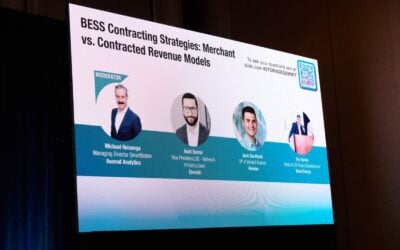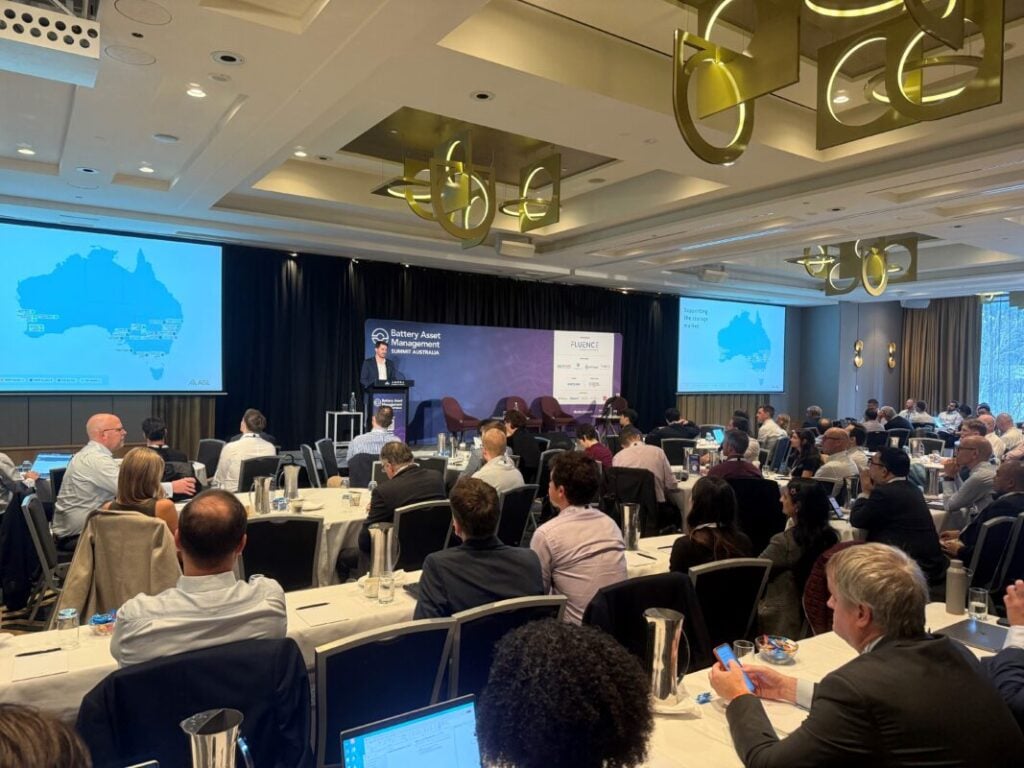
“We’re expecting the results of the Capacity Investment Scheme (CIS) Tender 3 in the coming weeks,” Thimo Mueller, general manager, commercial at AusEnergy Services Ltd (ASL), said in the opening keynote of the Battery Asset Management Summit Australia 2025 this morning.
The CIS Tender 3 opened in March 2025 and closed in May 2025. It sought to secure 4GW of 4-hour duration equivalent dispatchable capacity, or 16GWh. These projects are expected to be operational before 31 December 2029.
Successful bidders in Tender 3 will enter into a Capacity Investment Scheme Agreement (CISA), which provides a revenue safety net through an underwriting approach.
“There will be many more projects, many more battery energy storage systems (BESS) being supported by the Capacity Investment Scheme,” Mueller adds.
Try Premium for just $1
- Full premium access for the first month at only $1
- Converts to an annual rate after 30 days unless cancelled
- Cancel anytime during the trial period
Premium Benefits
- Expert industry analysis and interviews
- Digital access to PV Tech Power journal
- Exclusive event discounts
Or get the full Premium subscription right away
Or continue reading this article for free
Alongside the CIS initiative, which has been instrumental in scaling energy storage and renewable energy generation across Australia, with Western Australia also featuring in the scheme, ASL, formerly AEMO Services, before its rebranding last month, is also supporting New South Wales in a new firming tender.
“We are preparing for a 500MW firming tender in New South Wales. The focus is for projects to provide energy into the region of New South Wales, and projects need to be operational by the summer of 2027 to participate in that tender,” Mueller said.
The 500MW tender was first announced by the New South Wales minister for climate change and energy, Penny Sharpe, at the Clean Energy Council’s Australian Clean Energy Summit 2025 in Sydney last month.
The competitive tender process is targeting projects that must be operational by 2028. It will specifically focus on the Sydney, Newcastle and Wollongong areas where capacity shortfalls are forecast to occur beginning in the summer of 2027-28.
Regarding the 500MW firming tender, Mueller added that ASL is “very keen on receiving bids from aggregated portfolios of smaller batteries, because they usually have a shorter return.”
Upcoming Capacity Investment Scheme tenders in 2025
Last month, the Department of Climate Change, Energy, the Environment and Water (DCCEEW) has announced plans to run four Capacity Investment Scheme tenders by the end of 2025.
These will be for the National Electricity Market (NEM), which spans Australia’s eastern and southern coasts and Tasmania, and the Wholesale Electricity Market (WEM), which covers Western Australia. The tenders will be evenly split between the two markets, with each set to have a generation and dispatchable tender.
Tenders 5 and 6, specific to the WEM, will begin in August 2025. Tenders 7 and 8, for the NEM, will commence in September and November, respectively.
It is worth noting that a consultation on the design of the CIS tender in the WEM ran earlier this year, and the feedback will guide future rounds.