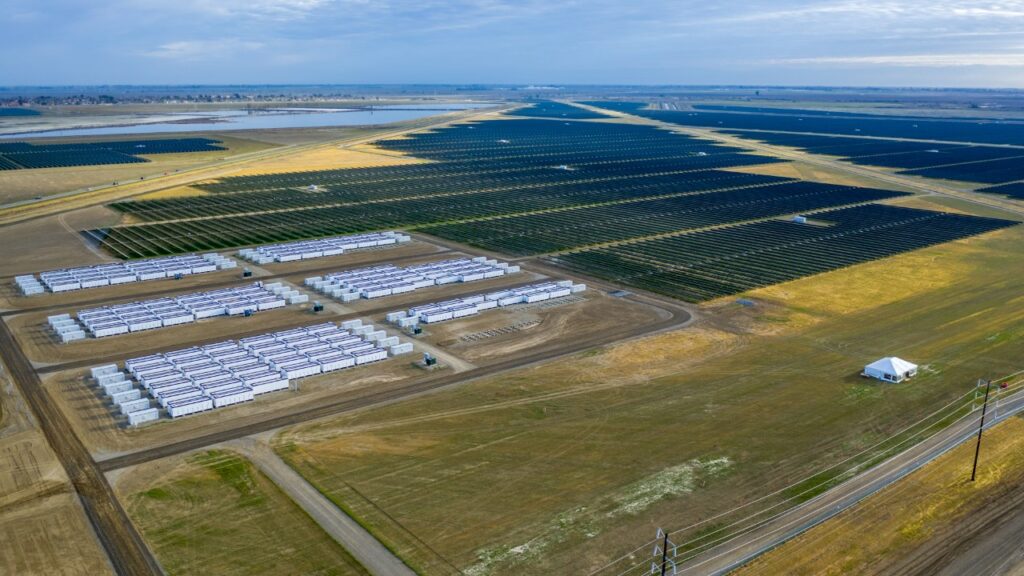
A power purchase agreement (PPA) has been signed for the output of a large-scale solar-plus-storage power plant in Arizona by a group of municipal utilities and local authorities in the US state.
Southwest Public Power Agency (SPPA) collectively represents the interests of different member organisations that include regional water and irrigation districts, municipal electricity suppliers, tribal authorities and towns in Arizona.
Renewable energy power company BrightNight, which specialises in hybrid solar, wind and storage projects typically over 200MW, said yesterday that it has contracted with SPPA for output from Box Canyon, a project in Arizona’s Pinal County.
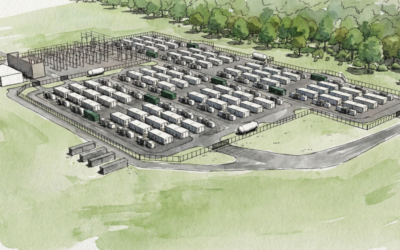
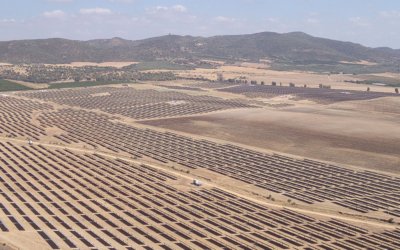
Box Canyon will pair 300MW of solar PV with a 600MWh battery energy storage system (BESS) and having completed the permitting process, should be commissioned and in commercial operation in 2025.
Try Premium for just $1
- Full premium access for the first month at only $1
- Converts to an annual rate after 30 days unless cancelled
- Cancel anytime during the trial period
Premium Benefits
- Expert industry analysis and interviews
- Digital access to PV Tech Power journal
- Exclusive event discounts
Or get the full Premium subscription right away
Or continue reading this article for free
BrightNight responded to a solicitation for renewable energy from SPPA, which is classified as a Joint Action Agency.
The solicitation was launched via a Request for Proposals (RfP) in late 2020, and although it stated that the group’s members sought up to 200MW of gas-fired generation and up to 100MW of solar PV (including solar-plus-battery and standalone solar), the developer said it was able to offer a scope of technology in its proposal that exceeded the requirements of SPPA’s RfP configurations.
BrightNight has partnered with independent power producer (IPP) Cordelio Energy on the Box Canyon project. Canada-headquartered Cordelio owns and manages more than 1,200MW of renewable energy assets in North America including large-scale solar PV and wind.
The IPP is owned by an institutional investor, the Canada Pension Plan Investment Board, which earlier this year made a US$25 million investment into Hydrostor, a technology and project developer for advanced compressed air energy storage (A-CAES).
The BrighNight-Cordelio joint venture (JV) will sell power to 21 of SPPA’s member groups.
This type of deal has been seen elsewhere in the US recently, mostly in California, where several of that state’s Community Choice Aggregator (CCA) non-profit electricity supply groups have made some fairly large collective procurements for solar-plus-storage and notably, long-duration standalone battery storage.
Arizona meanwhile is already home to significant solar PV generation capacity, and this has led to recent new PV projects including battery storage almost as standard. In a recent interview, Lucas Moller, head of energy storage at developer Recurrent Energy said that in southwestern US regions like Arizona, Southern California and Nevada, it makes more sense to add storage than to not.
So much solar energy has been added to the grids in those areas that the value of midday electricity generation is very low in “every marginal megawatt of renewable power,” so that the value in using batteries to shift that power for use at other times of day becomes compelling, Moller said.
In April, Energy-Storage.news reported that Arizona utility companies Tucson Electric Power (TEP) and UniSource Energy were seeking to procure 450MW of firm capacity resources which could be called upon to provide up to four hours of continuous energy during summer peaks in electricity demand. Those procurement drives are currently ongoing.