A subsidiary of Adani Green Energy has signed a power purchase agreement (PPA) with Uttar Pradesh Power Corporation Limited (UPPCL) for a pumped hydro facility.
The renewable energy and energy storage developer, majority owned by multinational conglomerate Adani Group, said it had signed the contract in an announcement to the National Stock Exchange of India on Wednesday (23 April).
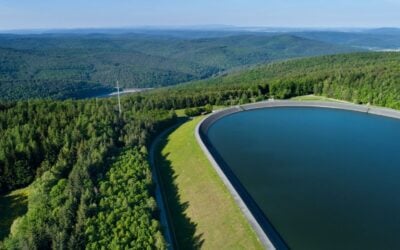
The deal is for the Panaura Pumped Hydro Storage Project (PSP), a 1,250MW pumped hydro energy storage (PHES) project in the northern state of Uttar Pradesh, which is India’s most populous state with around 240 million inhabitants.
Adani Green Energy said the PPA was signed at 3pm that day between Adani Hydro Five Limited and UPPCL, the state government entity responsible for electricity transmission and distribution (T&D).
Try Premium for just $1
- Full premium access for the first month at only $1
- Converts to an annual rate after 30 days unless cancelled
- Cancel anytime during the trial period
Premium Benefits
- Expert industry analysis and interviews
- Digital access to PV Tech Power journal
- Exclusive event discounts
Or get the full Premium subscription right away
Or continue reading this article for free
The developer received its Letter of Award (LoA) for the project in February, as reported by Energy-Storage.news. The contract carries a minimum 40-year term. Adani Green Energy said at that time that PSP would be built within six years.
Adani Green Energy has an operational renewable energy portfolio of 14.2GW as a builder, owner and operator of utility-scale solar PV and wind energy in India.
The company is targeting the deployment of 5GW of pumped hydro in the country by 2030, within its 50GW renewable energy target by that time.
In its FY2024 results release, for the period ending in April last year, Adani Green Energy announced that construction had begun on its first 500MW project on the Chitravathi river in Andhra Pradesh.
Since then, it has commenced work on a further 1,800MW PHES plant in the same state, and another 1,500MW project in Maharashtra.
India could have 27GW of pumped hydro by end of 2030
The Indian government Ministry of Power’s Central Electricity Authority (CEA) has modelled a need for around 47GW/236GWh of battery energy storage systems (BESS) and 27GW/175GWh of long-duration PHES by the end of this decade.
This is to aid the national policy goal of adding 500GW of new non-fossil fuel capacity to the grid by 2030. Further beyond that, CEA modelled in its National Electricity Plan 2023 that around 90GW/540GWh of PHES should be deployed along with 230GW/1,840GWh battery storage, forming a total of 320GW/2,380GWh, by 2047.
According to CEA, around 50GW of new PHES plants are planned across Indian states for delivery in 2031-2032. Around 730MW is expected to be put into operation by the end of this year, just under another 2GW by the end of next year, and the Authority has given fast-track status to a number of projects.
Meanwhile, a CEA report (PDF) published last year on resource adequacy planning in Uttar Pradesh noted that the state is set to experience around a 6% CAGR in electricity energy requirement and peak demand through 2032, said UPPCL is expected to have around 25.4GW/101.7GWh of storage capacity under contract by the 2033-2034 financial year.