Philippines power generator and utility Aboitiz Power will put a 49MW battery energy storage system into commercial operation this month, and has started construction on another.
In the firm’s Q3 2022 earnings call with AB Securities, IR Manager Ivy Manalang revealed that the 49MW Maco Hybrid Battery Energy Storage System had acquired the necessary certifications and permits to go online during November.
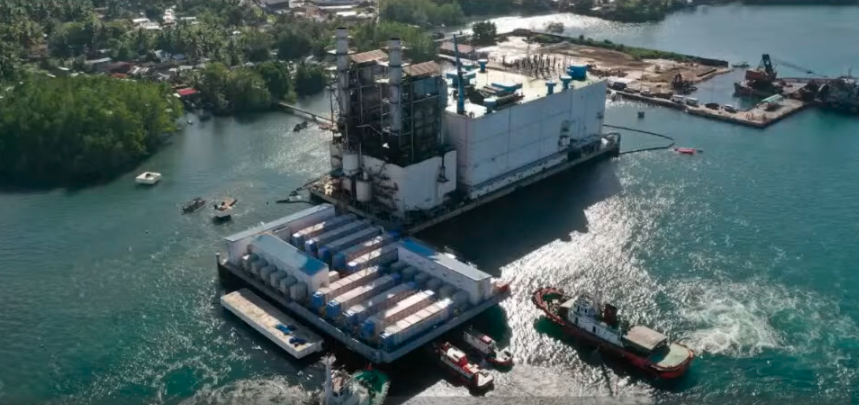
The project integrates a BESS provided by Finnish energy tech firm Wärtsilä with a 100MW diesel-powered floating power plant in Maco on Mindanao island, run by Therma Marine Inc, a customer of Aboitiz’s, as previously reported by Energy-Storage.news. The BESS will reduce the power barge’s ramping time from 15 to three minutes and previous reports have indicated it is a 0.6 hour system.
“It will serve as a model for future battery investments and hybrid renewable energy projects,” said Manalang.
Try Premium for just $1
- Full premium access for the first month at only $1
- Converts to an annual rate after 30 days unless cancelled
- Cancel anytime during the trial period
Premium Benefits
- Expert industry analysis and interviews
- Digital access to PV Tech Power journal
- Exclusive event discounts
Or get the full Premium subscription right away
Or continue reading this article for free
The system is coming online slightly later than expected, with previous statements by Aboitiz saying it would be online during the first half of this year. It will also be used for ancillary services to help balance the local grid.
The company, the largest power generator in the Philippines along with San Miguel Corporation (SMC), also provided an update on another BESS project it is developing.
Construction started on the 24MW Magat BESS in August, a system being provided by Hitachi Energy on behalf of overall project contractor Scatec, the Norway state-owned renewable energy firm. Previous reports said it would be a 20MW system with the potential to expand to 24MW, and Aboitiz still expects it to enter commercial operation in Q1 2024.
That BESS, in Ramon on Luzon island, will be used for ancillary services but will also provide power to the grid during peak demand periods.
Aboitiz has a long-term plan to deploy around 250MW of BESS capacity in the Philippines.
San Miguel meanwhile, through subsidiary SMC Global Power, is rolling out 1,000MW/1,000MWh of projects across the country and recently reached the halfway milestone in its aims as reported by Energy-Storage.news in July.
Fluence is delivering half of the pipeline, with its first system online in January, while Wärtsilä is also delivering part of it.
See all previous coverage of energy storage developments in the Philippines here.
Energy-Storage.news’ publisher Solar Media will host the 1st Energy Storage Summit Asia, 11-12 July 2023 in Singapore. The event will help give clarity on this nascent, yet quickly growing market, bringing together a community of credible independent generators, policymakers, banks, funds, off-takers and technology providers. For more information, go to the website.