Neoen Australia has referred its 3,200MWh Bondo wind-plus-storage project for federal environmental assessment.
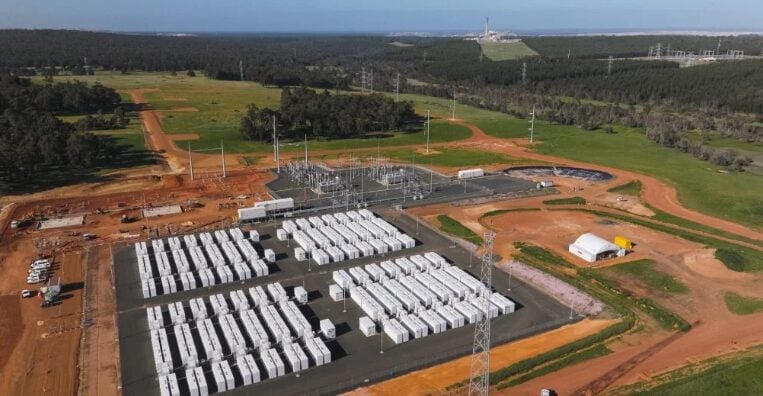
The proposal encompasses up to 164 wind turbine generators with a combined generating capacity of around 1.2GW, paired with two 400MW battery energy storage systems (BESS), each of 4-hour duration for a total of 1,600MWh of storage capacity.
Submitted for assessment under the Environment Protection and Biodiversity Conservation (EPBC) Act, the Bondo Wind Farm is located predominantly within State forest land and plantations at Bondo, Wee Jasper, Billapaloola and Red Hill in southern New South Wales (NSW), approximately 15km north-east of Tumut and 50km west of Canberra.
The development spans the Yass Valley, Snowy Valleys and Cootamundra-Gundagai local government areas, with the project area covering 41,923 hectares, though the actual disturbance footprint is smaller at approximately 1,591 hectares.
Try Premium for just $1
- Full premium access for the first month at only $1
- Converts to an annual rate after 30 days unless cancelled
- Cancel anytime during the trial period
Premium Benefits
- Expert industry analysis and interviews
- Digital access to PV Tech Power journal
- Exclusive event discounts
Or get the full Premium subscription right away
Or continue reading this article for free
Neoen was selected by Forestry Corporation of NSW to investigate the potential for wind farm development within its Radiata Pine plantation estate. The disturbance footprint will be limited in accordance with section 60 of the Forestry Act 2012, occupying no more than 0.7% of the plantation estate and subject to required compensatory plantings.
The company has emphasised that development will not occur in native forests, with an avoidance footprint of approximately 165 hectares established for areas with environmental constraints.
The Bondo Wind Farm benefits from strategic positioning within a robust section of the electricity network, with existing 132kV and 330kV overhead transmission lines traversing the project area.
Neoen’s project also includes a potential connection via the approved 500kV transmission line associated with Transgrid’s HumeLink project, which would provide enhanced grid integration capacity once constructed.
The wind turbine generators are designed with hub heights of up to 200 metres and maximum tip heights reaching 300 metres, reflecting the scale of modern utility-scale wind technology.
Construction of the facility is expected to require an average workforce of 390 personnel, with peak construction periods demanding up to 750 workers. Once operational, the wind farm would require approximately 20 permanent staff and is designed to operate for approximately 30 years.
At the end of its operational life, Neoen will either decommission or repower the facility, subject to approval requirements, with decommissioning involving removal of all aboveground structures and site rehabilitation to pre-existing land use where practicable.
Neoen’s expansion in the Australian market continues to accelerate, with the Bondo project adding to a portfolio of operational and under-construction assets.
As reported by Energy-Storage.news earlier this week, UGL advancing construction on 2.1GWh of battery storage across two Australian states, both of which are owned by Neoen.
These projects include the 1,220MWh Stage 3 of Neoen’s Western Downs BESS in Queensland, as well as the 164MW/905MWh Muchea BESS in Western Australia.
However, the company’s Australian portfolio has also seen recent restructuring. HMC Capital completed an AU$950 million (US$681 million) acquisition of Neoen’s Victoria portfolio, which included operational wind farms and the Victorian Big Battery.