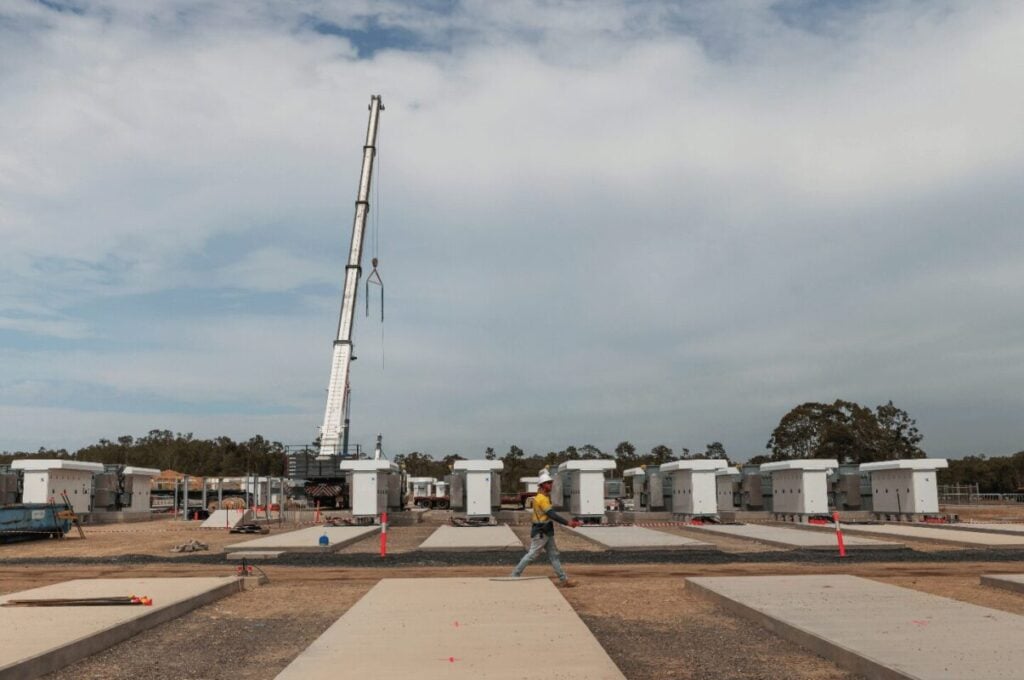
New South Wales (NSW) has concluded Australia’s largest long-duration energy storage tender (LDES), with ASL (formerly AEMO Services) awarding contracts to six battery storage projects totalling 1.17GW/11.98GWh under Long-Term Energy Service Agreement (LTESA) frameworks.
The tender results represent 117% of the indicative 1GW target originally outlined when ASL opened the procurement process for long-duration storage projects.
The successful projects range from 100MW to 330MW in power output, with storage durations of 8.7 to 11.5 hours, positioning NSW as one of the leaders in state-level energy storage procurement. Other LDES initiatives at the state level include South Australia’s 700MW tender.
The awards bring NSW’s total contracted storage capacity to 30GWh, representing significant progress toward the state’s statutory storage requirements of 2GW/16GWh by 2030 and 28GWh by 2034.
Try Premium for just $1
- Full premium access for the first month at only $1
- Converts to an annual rate after 30 days unless cancelled
- Cancel anytime during the trial period
Premium Benefits
- Expert industry analysis and interviews
- Digital access to PV Tech Power journal
- Exclusive event discounts
Or get the full Premium subscription right away
Or continue reading this article for free
ASL CEO Nevenka Codevelle noted that these 8-hour-plus storage projects would not have reached financial close without the LTESA framework, which addresses the “missing money” challenge for long-duration storage investments.
Successful battery projects in the tender include: The Great Western Battery, owned by Neoen Australia, which represents the largest single award at 330MW/3,500MWh, followed by Ark Energy’s Bowmans Creek BESS at 250MW/2,414MWh and BW ESS’ Bannaby BESS at 233MW/2,676MWh.
The Armidale East BESS (158MW/1,440MWh), Ebor BESS (100MW/870MWh), and Kingswood BESS (100MW/1,080MWh) complete the portfolio of successful developments.
LTESA framework delivers market transformation
NSW minister for climate change and energy, Penny Sharpe, celebrated the historic achievement whilst also teasing that the state is just getting started.
“These six big batteries mean we’re on track to smash our storage targets, harvesting the sun and the wind, so we can power NSW around the clock and put downward pressure on prices,” Sharpe said.
“We’re not stopping here – NSW will support more projects, so we’re ready for a grid powered by renewable energy, supported by gas.”
The success of the procurement reflects the effectiveness of the LTESA framework, which Codevelle described as working precisely as intended.
“The tender process and the financial products we’ve designed are working as intended, and NSW is on its way to meet the high bar we’ve set for securing long-duration energy storage. An important objective of the Roadmap was to bring forward investment in long-duration storage, and that’s what we’re seeing.”
This market transformation is already delivering tangible results.
“We’re about to see the first LDES projects contracted through these tenders come online. These are 8-hour-plus storage projects that would not otherwise have reached financial close or delivered energy for NSW consumers. It’s a very exciting time for the NSW energy transition,” Codevelle explained.
“It’s encouraging to see that proponents are continuing to utilise and value the flexibility of the LTESA product to suit their project’s needs. These agreements also deliver value to consumers by unlocking investment into additional capacity that can reduce price volatility.”
Looking ahead, Codevelle provided both opportunity and caution for future market participants.
“We update our development pathway and tender plan at least every two years, and as it currently stands, we have two further long-duration storage tenders scheduled – in the second quarter of 2026 and another in 2027,” Codevelle noted.
“There are no guarantees of further LDES tenders beyond this point, so we expect competition to strengthen even further for these future tender rounds.”
Companies highlight decarbonisation goals and community benefits
The responses from successful proponents have been, to no surprise, overwhelmingly positive, with each highlighting both the technical capabilities and strategic importance of their projects.
Carlo Frigerio, CEO of FRV Australia, positioned the 1,440MWh Armidale East BESS as a “game-changer”.
“Armidale East BESS represents a key milestone in FRV Australia’s strategy to advance long-duration storage solutions across NSW and the wider NEM. With its 8-hour duration capability, this project will provide firm and dispatchable energy over extended periods, enable longer duration energy shifting, and make a decisive contribution toward the decarbonisation objectives of both the state and the country.”
This focus on long-term energy management aligns with broader industry trends toward asset ownership and operational control. Robert Piconi, chairman and CEO of Energy Vault, emphasised this strategic approach. Energy Vault and Bridge Energy successfully secured an LTESA for their joint project, the 870MWh Ebor BESS.
“We continue to execute on our growth strategy in Australia in securing long-term and attractive energy storage infrastructure projects, and our partner Bridge Energy is a key component of that strategy,” Piconi highlighted.
“Supporting Bridge Energy on achieving this award represents another important growth milestone in advancing our Energy Asset Management strategy in owning and operating energy assets over the long term.”
The community benefits aspect has become equally important to project success. Daniel Hamel, CEO of Bridge Energy, highlighted their local engagement.
“The Ebor BESS is a high-quality project that will deliver reliable energy while providing long-term economic benefits to the local community. Ebor BESS will make community benefit contributions for the life of the project, and we are actively engaging with local stakeholders, trades, and service providers to ensure significant local economic activity.”
This hands-on approach to both community engagement and asset management reflects a maturing industry. BW ESS Australia echoed this sentiment in a LinkedIn post hailing the successful results of the tender.
“This is an important milestone for BW ESS Australia and aligns with our strategy to own and operate our projects long-term. We take a hands-on approach throughout the energy storage asset lifecycle, from development through to operations,” it read.
Meanwhile, Iberdrola took the opportunity to emphasise the “strategic importance” of the Australian energy storage market.
“The Iberdrola Group is making progress in its drive for electrification in Australia with two new energy storage milestones in the state of NSW. The company has been awarded a long-term contract from the state government for the Kingswood battery (100MW),” its statement read.
“Australia is a strategic market for the Iberdrola Group, which is committed to energy storage as a key element in accelerating electrification and strengthening reliability of supply and price stability.”
The Energy Storage Summit Australia 2026 will be returning to Sydney on 18-19 March. It features keynote speeches and panel discussions on topics such as the Capacity Investment Scheme, long-duration energy storage, and BESS revenue streams. ESN Premium subscribers receive an exclusive discount on ticket prices.
To secure your tickets and learn more about the event, please visit the official website.