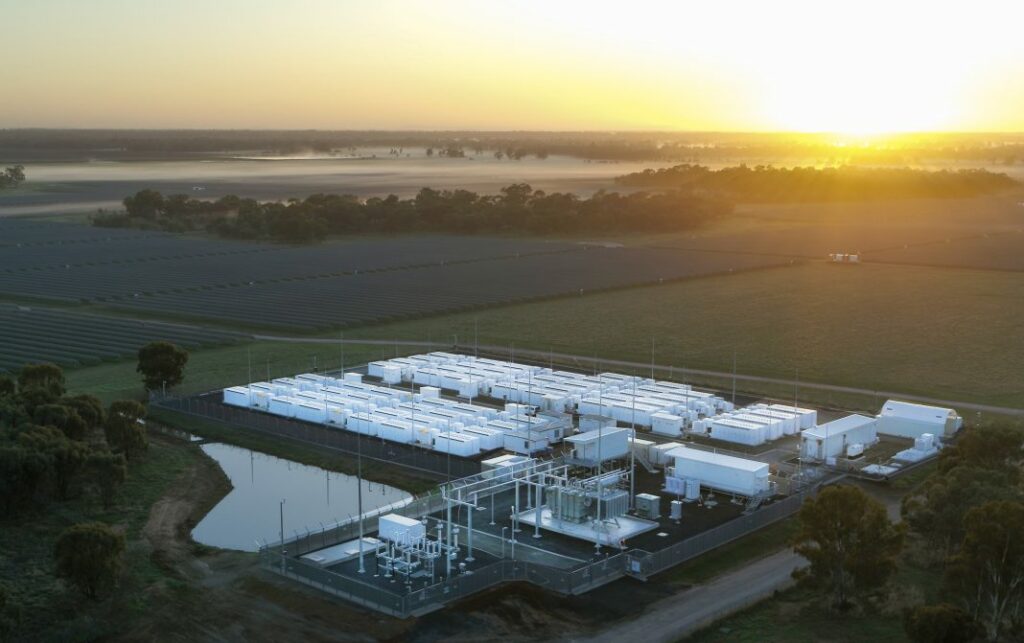
On 10 October, electricity prices in New South Wales, Australia, reached the Market Price Cap of AU$20,300/MWh (US$13,307/MWh), with battery storage capturing the market event.
This marks the first time the threshold has been hit in the National Electricity Market (NEM) since the Australian Energy Market Commission increased the cap and updated it for the 2025-26 financial year.
According to Australian AI-driven energy management company OptiGrid, a price spike occurred during moderate demand conditions, showcasing the structural volatility characterising the NEM as coal-fired generation exits and renewable energy penetration increases.
The extreme pricing event unfolded during the evening trading interval of 19:30, triggered by a combination of thermal generation shortfalls and network constraints that limited power flows across the interconnected grid.
Try Premium for just $1
- Full premium access for the first month at only $1
- Converts to an annual rate after 30 days unless cancelled
- Cancel anytime during the trial period
Premium Benefits
- Expert industry analysis and interviews
- Digital access to PV Tech Power journal
- Exclusive event discounts
Or get the full Premium subscription right away
Or continue reading this article for free
Multiple coal units were offline or operating at reduced capacity, while transmission outages created congestion that prevented cheaper generation from other states from reaching New South Wales’ demand centres.
These conditions culminated in a Lack of Reserve (LOR) condition, forcing the market operator to dispatch the most expensive available generation to maintain system security.
Battery energy storage systems (BESS) across the NEM were tested on their bidding strategies and operational flexibility during the price volatility. Indeed, OptiGrid confirmed that most New South Wales battery storage systems successfully captured revenue from the extreme pricing.
However, some encountered output limitations due to the same network constraints contributing to the price spike.
Earlier this year, the Australian Energy Market Commission increased the Market Price Cap from AU$17,500/MWh to AU$20,300/MWh for the 2025-26 financial year, representing a 16% adjustment based on consumer price index inflation.
The Commission noted that the change acknowledges the higher costs of maintaining system reliability as the electricity system transitions toward renewable energy sources.
The Cumulative Price Threshold, which triggers administered pricing when sustained high prices threaten market stability, was similarly increased to AU$1,823,600/MWh.
The double-edged nature of Australia’s National Electricity Market
The evening’s trading patterns demonstrated the double-edged nature of electricity market participation for storage assets. While the initial price spike to AU$20,300/MWh created substantial revenue opportunities for batteries with available capacity, prices subsequently collapsed below -AU$600/MWh later that evening.
OptiGrid said that energy storage systems that failed to adjust their discharge strategies faced the prospect of paying significant amounts to export power during negative pricing periods.
Network constraints played a dual role in Friday’s events, contributing to the price spike by limiting supply options and restricting some BESS from fully capitalising on the revenue opportunity.
Although the successful revenue capture by most New South Wales BESS demonstrates the value proposition of energy storage in volatile electricity markets, the subsequent negative pricing period serves as a reminder that sophisticated bidding strategies remain essential for maximising returns while avoiding costly operational mistakes.
Indeed, as Matt Grover, director of sales engineering and energy markets at Fluence, said in a recent interview with ESN Premium, to be good at battery optimisation and bidding, you need to be good at “much more than just price forecasting and optimisation.”