
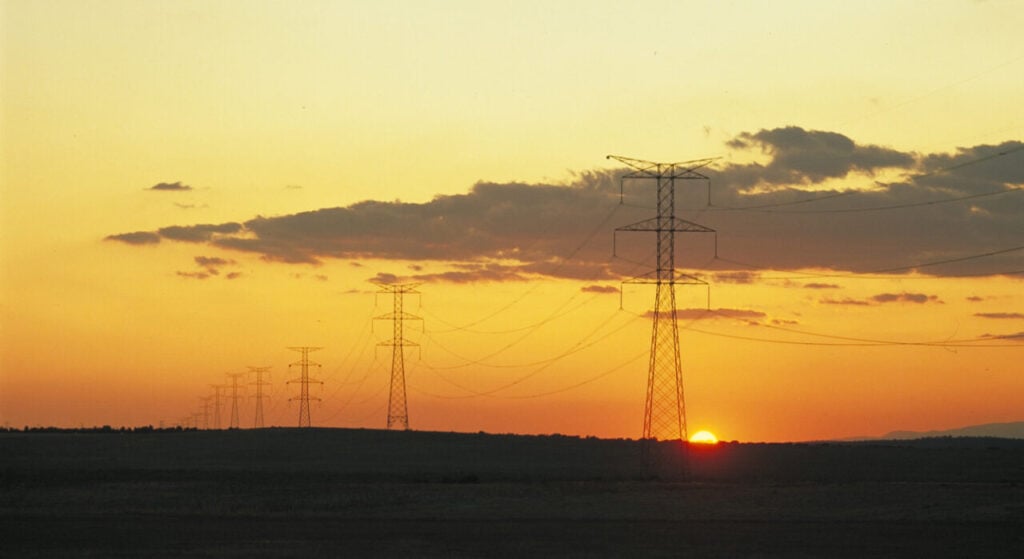
There is a big gap in the industry’s understanding of the Spanish energy storage market, but that gap also creates opportunities for smart operators, writes Ignacio López Martín, chair of developer Capflex Energía.
Spain has the largest permitted standalone BESS pipeline in Europe. The policy backdrop — capacity payments, ancillary services reform, OMIE arbitrage — is finally legible. Capital is moving.
And most of the financial models I see across the table are wrong.
Not wrong in the spreadsheet sense. The formulas work. They are wrong in the way models are wrong when nobody who built them has ever posted a grid-connection bond, negotiated a battery warranty, or sat through an energisation delay.
Try Premium for just $1
- Full premium access for the first month at only $1
- Converts to an annual rate after 30 days unless cancelled
- Cancel anytime during the trial period
Premium Benefits
- Expert industry analysis and interviews
- Digital access to PV Tech Power journal
- Exclusive event discounts
Or get the full Premium subscription right away
Or continue reading this article for free
I chair Capflex Energía, a standalone BESS developer with a self-developed pipeline of more than 500MW across Spain, with grid-connection bonds posted at multiple high-voltage nodes. Before that I co-founded an EV charging platform that went through two industrial due diligences — sold to Shell in 2022, acquired from Shell by Acciona Energía in 2025. I have been on both sides of the data room.
Here are the three items the models keep missing.
The pipeline number you are underwriting does not exist
Every Iberia storage memo starts with the same headline: gigawatts of permitted pipeline. The number is technically true and commercially meaningless.
The filter that matters is not the permit. It is the aval — the grid-connection bond a developer must post, in cash or bank guarantee, to hold a position at a node. Posting it is a real balance-sheet decision. Walking away means losing it.
That single mechanism splits the Spanish pipeline into two very different assets: projects where someone has capital at risk, and projects that exist as paperwork. The ratio between the two is not in any public dataset, but ask any developer who actually posts bonds and you will get the same answer: the second category is the majority.
For an investor, the implication is simple. Diligence the bonds, not the permits. A 200 MW “pipeline” with nothing posted is a watchlist, not an asset. The discipline this mechanism imposes is, incidentally, exactly what US queue reform is trying to recreate — Iberia just got there first, by making developers pay to stay in line.
Merchant spreads on a screen are not merchant revenues in a bank account
The arbitrage math looks clean: OMIE (Spain’s energy market operator) hourly spreads, two cycles a day, add ancillaries, add the capacity mechanism when it lands. The models I see take the historical spread distribution, apply a haircut, and call it conservative.
It is not conservative. It is incomplete.
Three things sit between the screen and the bank account. Dispatch is constrained by the warranty — cycle limits, depth-of-discharge windows, temperature derating — so the battery you financed is not the battery you get to trade. Capture rates degrade as more storage chases the same hours; the spread you backtested is the spread your own asset class is about to compress. And the trading setup itself — route-to-market contracts, balancing exposure, who actually sits at the desk at 3am — is an operating capability, not a line item.
The teams that will make money in Iberian storage are not the ones with the best spread model. They are the ones who treat revenue capture as an operations problem. That is a different hiring plan, a different opex line, and a different risk memo than the one currently circulating.
The O&M line is fiction until proven otherwise
In most models I review, BESS O&M is a flat percentage copied from a solar template. That number survives exactly until the first augmentation conversation.
Storage O&M is not solar O&M. It is degradation management, augmentation capex disguised as opex, firmware and BMS dependency on a single supplier, and an insurance market that is still deciding what it thinks about thermal risk. None of that behaves like a flat percentage. All of it lands in years two to five — conveniently outside the holding-period sensitivities most funds run hardest.
I see the same pattern in wind, where my other company operates blade inspection and cleaning services for utilities: the industry systematically underprices the boring, recurring, operational line — and then acts surprised when it becomes the bottleneck. The EU’s 2026 restrictions on blade disposal did not create that problem; they exposed it. Storage is walking into the same lesson with less operating history.
If you are underwriting an Iberian BESS platform today, stress the O&M line the way you stress power prices. Nobody does. Everybody should.
What this means for the next 18 months
None of this is bearish. I am long this market with my own capital — the bonds are posted. Spain’s storage build-out is real, the policy direction is right, and the assets will get built.
But the gap between modelled returns and operated returns is where the next vintage of disappointments is already being written. The winners will be the funds that pair capital with operating capability early: real dispatch teams, real warranty negotiation, real augmentation planning. The losers will be the ones who bought a permit list and a spread model.
The good news for investors: that gap is also the opportunity. Operating discipline is scarce, which means it prices well. The platforms that can demonstrate it — bonds posted, batteries cycling, O&M line tested against reality — will trade at a premium to the paperwork. As they should.
About the author
Ignacio López Martín is chairman of Capflex Energía, a standalone BESS developer in Spain with a self-developed pipeline of over 500 MW, and CEO of Eolinet Renovables, a drone-based blade services platform for wind. He previously co-founded Cable Energía, an Iberian EV charging platform sold to Shell in 2022 and acquired by Acciona Energía in 2025.
