Australia has surpassed 400,000 home battery storage installations under the federal government’s Cheaper Home Batteries Program, reaching 11.2GWh of cumulative storage capacity in less than a year since the scheme launched.
Climate change and energy minister Chris Bowen announced the milestone on 16 May, noting that installations are proceeding at approximately 2,000 batteries per day.
The 400,000 mark was reached after Bowen said that 380,712 home battery storage systems, representing 10.7GWh, had been installed across Australia at the Smart Energy Conference on 6 May.
“400,000 Australian households are reducing their bills very dramatically but also helping the grid and helping all Australians reduce their bills,” Bowen stated. “11.2GWh of extra storage introduced in less than a year.”
Try Premium for just $1
- Full premium access for the first month at only $1
- Converts to an annual rate after 30 days unless cancelled
- Cancel anytime during the trial period
Premium Benefits
- Expert industry analysis and interviews
- Digital access to PV Tech Power journal
- Exclusive event discounts
Or get the full Premium subscription right away
Or continue reading this article for free
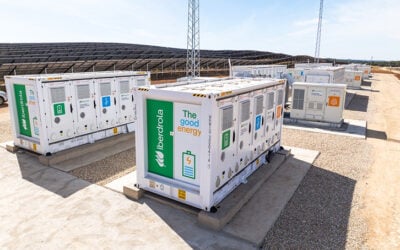
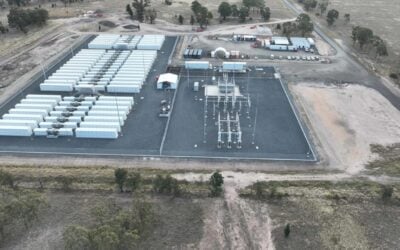
The 11.2GWh of residential battery capacity now equals the volume of utility-scale battery storage added to the National Electricity Market (NEM) over the past 12 months.
According to the Australian Energy Market Operator (AEMO), 4,445MW and 11,219MWh of new large-scale batteries were commissioned in the 12 months to 31 March, more than doubling total installed battery storage in the NEM.
The rapid deployment of home batteries has coincided with changes to the program’s subsidy structure.
Rebate adjustments that came into effect on 1 May favour smaller battery systems over larger installations, with average battery size declining from approximately 28kWh to 25kWh following the policy change.
The programme has faced criticism over equity concerns, with research indicating that wealthier households in metropolitan areas have been the primary beneficiaries of the subsidy scheme.
However, the tiered subsidy structure introduced in May aims to address fairness concerns by reducing support for larger systems, which are typically installed by higher-income households.
Australia’s Cheaper Home Batteries Program
The Australian government launched the Cheaper Home Batteries Program subsidy last year following the 2025 federal election.
Initial estimates of AU$2.3 billion (US$1.63 billion) in support through the scheme grew to AU$7.2 billion by 2030, representing more than a threefold increase from the original projections announced.
By November 2025, roughly 8,000 applications per week were being processed through the scheme, which provides approximately 30% discounts on the upfront cost of home battery systems.
In early March, rumours began circulating that the government was exploring additional modifications to its Cheaper Home Batteries Program, including the possibility of an early wind-up, in the May budget.
Those rumours appeared to be just that, as the subsidy was not altered; however, the same cannot be said for various other clean energy programmes, such as the Battery Breakthrough Initiative, with the government announcing it would claw back AU$1.3 billion in unallocated clean energy funding.
Solar analytics firm SunWiz expects 400,000 household battery storage systems to be installed over calendar 2026, reflecting sustained demand despite the subsidy phase-down mechanism that will reduce support levels on a semi-annual basis until the programme concludes in 2030.
Interested in Australia? Read Energy-Storage.news’ Energy Storage Summit Australia coverage and related content.