
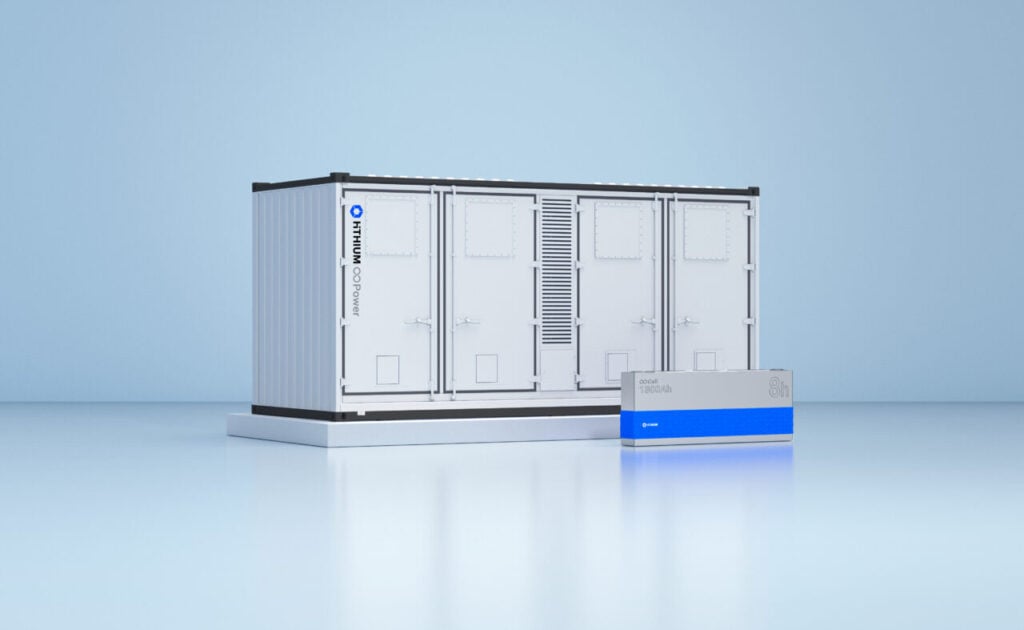
and 1,300Ah battery cell designed for 8-hour applications. Image: Hithium
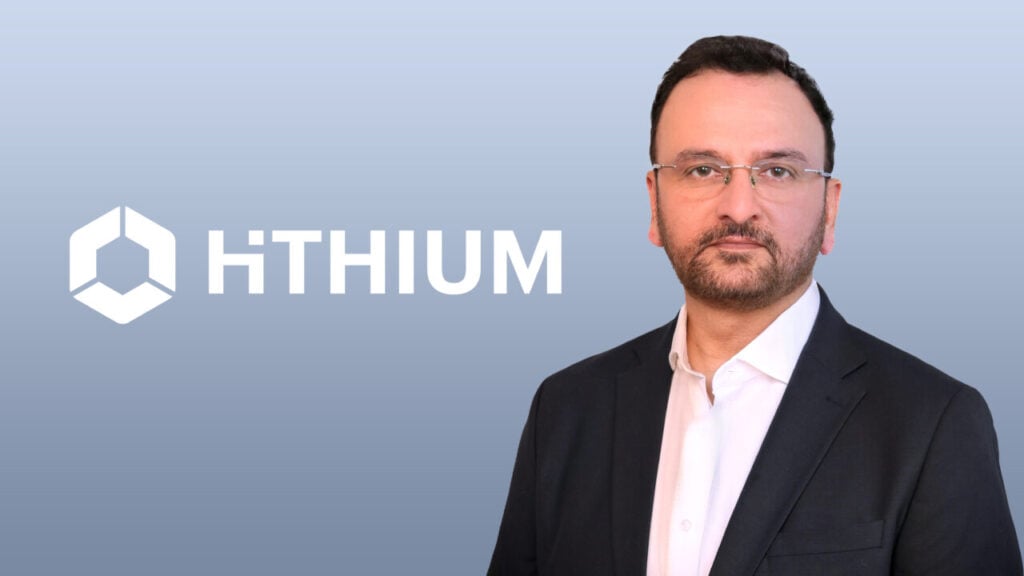
Giriraj Rathore, senior director of global business development at Hithium, discusses market and technology development dynamics as part of our annual Q&A series.
China-headquartered lithium-ion (Li-ion) OEM and energy storage solutions provider Hithium had a busy 2025 across the board from the opening of new production facilities in the US, to project deals signed in emerging markets in Eastern Europe and the Middle East, all the way to the launch of dedicated battery cells and complete BESS systems for 8-hour long-duration energy storage (LDES) applications in December.
Hithium is also mid-way through its process of launching an IPO to float on the Hong Kong Stock Exchange (HKEX), as some of its peers have already done in the past few months, and others are also planning to do so.
What did 2025 mean for the energy storage industry from your company’s perspective and the bigger picture?
Try Premium for just $1
- Full premium access for the first month at only $1
- Converts to an annual rate after 30 days unless cancelled
- Cancel anytime during the trial period
Premium Benefits
- Expert industry analysis and interviews
- Digital access to PV Tech Power journal
- Exclusive event discounts
Or get the full Premium subscription right away
Or continue reading this article for free
2025 will be recognised as the year when energy storage began to be truly recognised as system-critical infrastructure. Globally, storage moved beyond renewable integration into capacity adequacy, flexibility, and grid resilience planning. BESS, in particular, has moved from a supporting role to a system backbone, and its impact on grid stability, cost optimisation, and renewable integration has set the tone for the next decade of energy systems.
For Hithium, this reinforced a clear market signal that scale alone is no longer enough. Customers are prioritising advanced technical features, longer duration, safety, and lifecycle credibility. And this core message is at the heart of our product innovation and service.
What do you think 2026 will hold, in terms of both things to look forward to and in terms of challenges ahead?
We expect 2026 to mark a shift from rapid expansion to meaningful differentiation. While the demand for energy storage remains strong globally, markets are becoming more structured, with higher expectations around localisation, bankability, and application-specific performance.
For the industry, the focus is moving beyond low price and delivery, to reliability. The next phase of growth will be defined not by how quickly capacity is deployed, but by how reliably and sustainably systems perform over their lifecycle. The market is now mature enough to expect OEMs to align technology, manufacturing, and system design with local regulations and policy requirements. Tier-1 players like Hithium will continue to focus on safety, quality, and long-term value for our customers.
Which areas will Hithium be focusing its R&D efforts on, and what do you hope to achieve next year?
At the Hithium Eco-Day in Xiamen, our Founder and President Mr Jeff Wu emphasised that energy storage must match wind and solar not only in lifespan but also in cost. That principle reflects our company’s emphasis on long-duration performance and economic competitiveness.
In 2026, Hithium will focus on four priorities: developing ultra-large, high-safety, long-life cells; building safer, more integrated, and more efficient systems; advancing intelligent manufacturing; and delivering fully integrated energy storage solutions.
We are consciously moving the focus away from headline grabbing deployment figures, towards cell design and system architecture that delivers predictable performance, controlled degradation, and credible lifecycle economics.
Hithium will continue to expand its leadership in long-duration energy storage. As a pioneer in lithium-based LDES, we are driving continuous product evolution through technology innovation, strengthening the competitiveness in the lithium long-duration energy storage market, and accelerating its path toward large-scale, mainstream deployment.
Which markets do you think will be interesting to watch in 2026, either by geography, market segmentation, or both?
In 2026, we expect segmentation by application rather than geography. High-renewables grids are valuing longer-duration and flexibility-focused storage, while data-intensive users are integrating storage into their core power strategies. Emerging markets, meanwhile, are embedding storage earlier in grid planning.
While we will continue to strengthen our presence in China, we also expect to capitalise on our strong brand recognition in the US, Europe, the Middle East and Australia. Our ‘local for local’ approach, supported by dedicated regional teams and service capabilities, has proven highly effective, particularly in addressing requirements in emerging markets.
In December, Hithium launched new products, including dedicated long-duration cells and systems and solutions for data centres. How do you see the adoption of these new use cases for energy storage developing?
Adoption of long-duration storage and AI data-centre (AIDC) solutions is being driven by a fundamental shift in how customers think about power reliability and sustainability. At Hithium’s Eco-Day in Xiamen, our Co-founder and CEO Mr Jason Wang highlighted that the key to moving green power from “weather-dependent” to “stable and easy to use” lies in energy storage, particularly long-duration energy storage.
This perspective resonates strongly with what we are seeing in the market. AIDC loads require both sustained, round-the-clock capacity and fast, high-power response. This is driving interest in architectures that combine long-duration capability with high-performance system design. As demand scales, these solutions will be relied upon more to effectively deliver always-on, predictable power.