
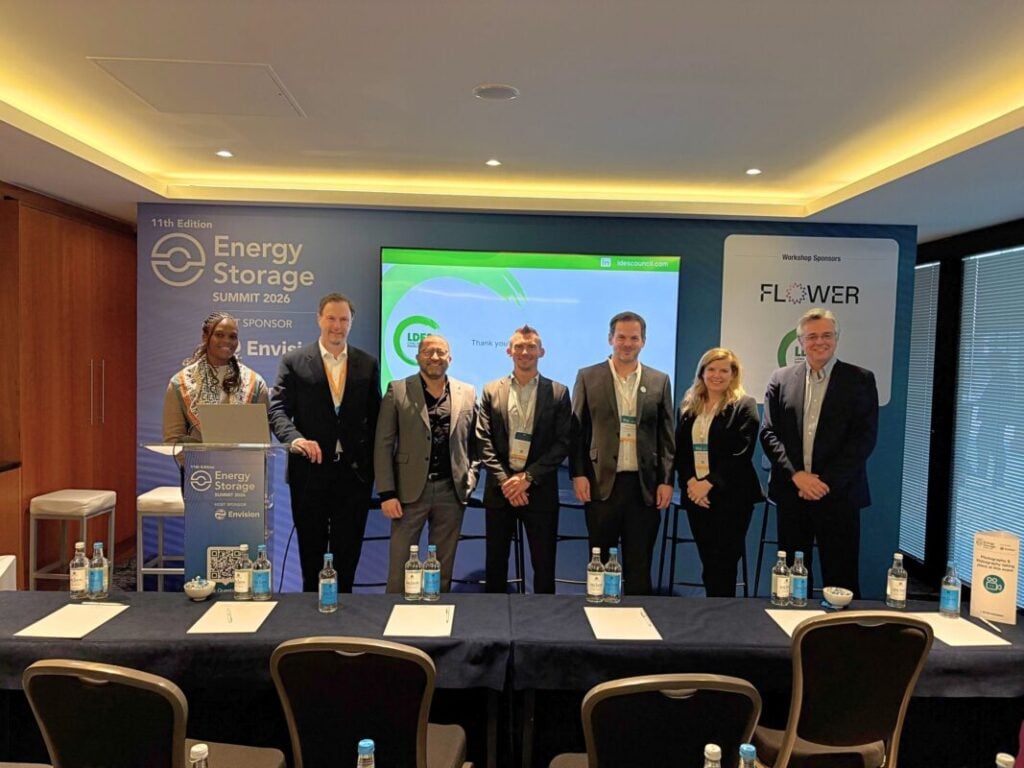
The LDES Council’s policy team discusses the role of policy and markets in scaling long-duration energy storage globally with ESN Premium.
There is a growing recognition that the increased penetration of variable renewable energy (VRE) into energy systems requires an increase in balancing and flexibility resources.
At lower levels of penetration, 1-hour to 4-hour duration battery energy storage systems (BESS), coupled with other resources like natural gas and interconnection with neighbouring grids, can perform these roles pretty well.
However, as the Long Duration Energy Storage Council (LDES Council) has advocated since its launch in 2021, if we want to get towards higher shares of renewables while maintaining the stability of the grid and security of energy supply, filling the gaps when the sun doesn’t shine and wind doesn’t blow becomes a question of multiple hours of storage, and potentially even multiple days.
Try Premium for just $1
- Full premium access for the first month at only $1
- Converts to an annual rate after 30 days unless cancelled
- Cancel anytime during the trial period
Premium Benefits
- Expert industry analysis and interviews
- Digital access to PV Tech Power journal
- Exclusive event discounts
Or get the full Premium subscription right away
Or continue reading this article for free
There is no shortage of technologies vying to fill those gaps, from existing and widely deployed pumped hydro energy storage (PHES) and longer-duration lithium-ion (Li-ion) BESS, to a plethora of emerging tech, of varying types, whether electrochemical, mechanical or thermal energy storage (TES).
As reported yesterday by Energy-Storage.news in our coverage of a new LDES trends report from Wood Mackenzie, while the technologies are there, the market structures that enable their widespread deployment often are not.
Wood Mackenzie found that 15GWh of LDES was deployed globally in 2025, which sounds impressive, and is, but ultimately, 93% of cumulative installations to date have been in China and directly driven by policy support.
Under net-zero scenarios, the market research firm modelled that the average duration of energy storage needs to go from around 2.5-hour today to closer to 20-hour. Without changes in market structures to encourage investor appetite and build scale to drive cost reductions, emerging LDES technologies look set to be outcompeted by lithium-ion (Li-ion) battery storage, Wood Mackenzie warned.
According to LDES Council global director of policy Will Broad, the trade association—which counts technology providers and end customers among its membership—the key is to focus on “priority markets” where long-duration storage can gain traction earliest.
Speaking in an interview at last month’s Energy Storage Summit 2026 in London, UK, Broad tells ESN Premium that the trade association has done a good job of “advocating and educating policymakers about LDES globally.”
“For us to really make it a success, we want to really zoom in on the markets where we think the opportunity is greatest to support policymakers, to get the right framework for LDES, so that we can then demonstrate that framework as a use case to other countries around the world.”
There are a number of factors at play when it comes to selecting those markets, including high levels of renewable energy penetration, capital already being deployed into energy storage technologies, and “clear, transparent regulatory structures,” Broad says.
“The markets we’re focusing on most at the moment are the US and Canada, and particularly certain states (or provinces) there: Ontario, California, New York, recently, Virginia, especially with all the data centres. Then in Europe, the UK, Ireland, Italy, Germany, Spain, also to a degree, Denmark and the Netherlands. We also have Chile on our list.”
The UK’s cap-and-floor scheme to procure long-duration storage is a good example where LDES Council is working to influence the design of the underwriting scheme, with Ireland set to follow suit. Another would be Italy’s MACSE auctions, which augment the existing capacity market with up to 50GWh of 8-hour duration energy storage assets.
In the Asia-Pacific region, some Australian states that have already launched LDES procurements have got some of the most advanced LDES policy design in the world, Broad says, while China is, of course, advancing well, and India has “huge potential.”
Islands in the spotlight
“We think LDES is important in all sorts of markets, but if you’ve got high renewable penetration, it really, really becomes apparent to policymakers that they’re going to need longer durations of storage,” Broad says, adding that markets where capital is already being deployed mean an industry ecosystem is already in place, while the aforementioned “clear and transparent regulatory structures” enable stakeholders to understand and advocate for the roles of long-duration energy storage.
At the same time, it isn’t just in those more mature renewable energy markets that LDES can quickly gain traction.
Oghosa Erhahon, LDES Council policy officer, has been working on advancing LDES on island grids, and many of these emerging markets could have huge potential, the organisation believes.
LDES Council has partnered with Greening the Islands Foundation, which supports the sustainability and self-sufficiency of islands globally, focusing on knowledge-sharing, multi-stakeholder dialogue and building capacity for 8-hour+ duration energy storage solutions.
“Not surprisingly, islands are making a realisation for energy storage and looking into LDES, especially the solutions that provide those 8-hour+ durations. They probably didn’t have the space, or the need to keep scaling up existing energy storage facilities,” Erhahon says and while the island regions are not strictly among those “priority” regions named above.
Nonetheless, LDES Council is “keeping the spotlight on them to see how they move in the next few months,” Erhahon says.
In some senses, island territories are already quite advanced in adopting renewable energy technologies paired with energy storage. For instance, the absence of centralised grid infrastructure based on large thermal generators means that the provision of inertia and other system stability services using grid-forming inverters has been proven on islands for some time.
Many island communities already use solar-plus-storage microgrids. These are typically combined with diesel generators for backup, replacing the historical use of diesel and other fuels as the main generation source.
“There’s a big security of supply [concern] that a lot of the islands are being exposed to, in the sense that those that actually use diesel have to import, which is the majority of them. A lot of the leaders and governments are now trying to make sure there’s energy security on their islands,” Erhahon says.
“Despite this, there are some islands that are so disconnected and isolated that they don’t have strong connectivity to the mainland regions anyway, so LDES and energy storage solutions provide that energy security long-term to avoid any supply chain [issues].”
Erhahon namechecks a number of specific islands and island regions LDES Council and Greening the Islands Foundation is working with, including Curacao in the Caribbean, Pacific Island governments in the Seychelles and Fiji, and Rodriguez Island in the Philippines.
“These are islands that are really just trying to make sure that they have that stability and security, and they are now making recognition for energy storage, which includes LDES,” Erhahon says.
“The need for them is creating the right enabling markets to actually have procurement set in place to support this.”
Quantifying benefits beyond the obvious balancing angle
LDES Council CEO Julia Souder has written and contributed to numerous articles for Energy-Storage.news and our journal PV Tech Power over the past five years.
In Souder’s most recent contributed piece in August 2025, the CEO wrote about the challenges facing energy systems that short-duration storage alone cannot solve, explaining that the “impact of LDES expands beyond decarbonisation; it enables an affordable, secure and resilient energy system.”
“LDES acts as the shock absorber and stabiliser for energy systems, such as firming renewables, shifting surplus energy, replacing fossil fuel peakers and enhancing grid resilience.”
It’s been fascinating to see a growing recognition of LDES benefits reflected in the programme of the Energy Storage Summit conference. The event has been hosted by our published Solar Media (part of the Informa Group) annually for over a decade now.
It would be fair to say that for much of that time, long-duration had been a niche topic for the more curious technology enthusiasts and those minded towards longer-term decarbonisation planning than in the mainstream of market discussions.
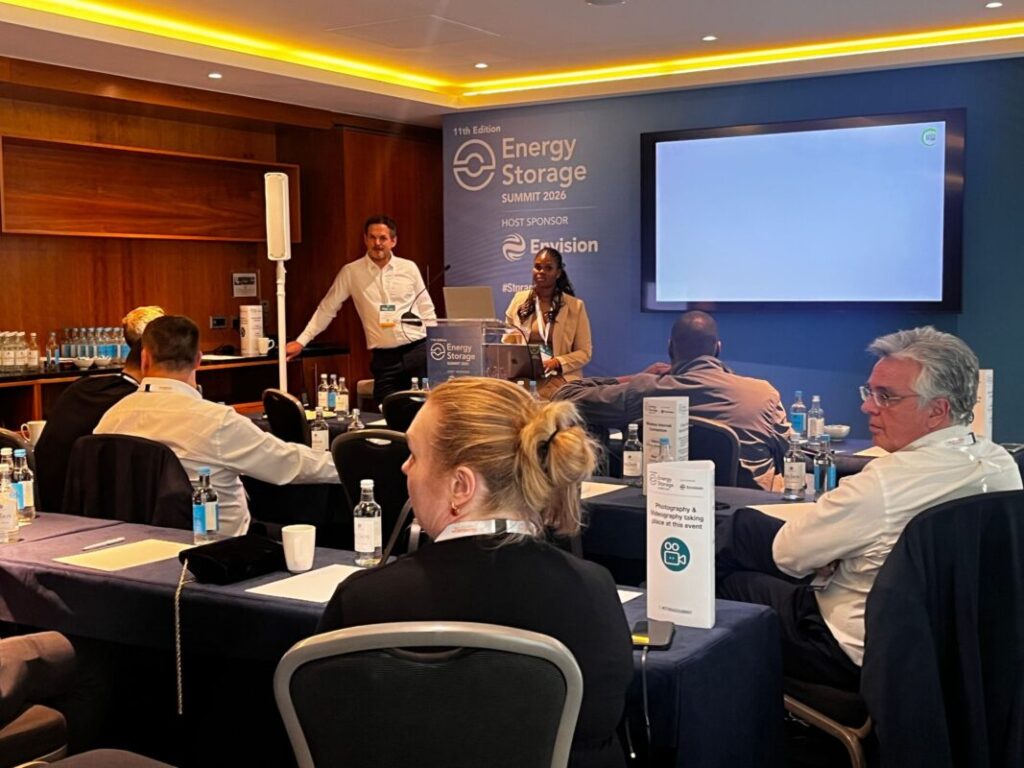
Then, over the last couple of years, that interest has really broken out into a much broader audience and, alongside panel discussions and presentations on the subject, the LDES Council hosted workshops at the 2026 edition last month.
Broad and Erhahon were joined by five member companies that showcased the capabilities of their technologies: Invinity Energy Systems (vanadium redox flow battery), Energy Dome (CO2 Battery), Redox One (iron-chromium flow battery), Hydrostor (advanced compressed air energy storage) and Malta Inc (thermal energy storage), each presenting on projects already in operation or moving toward deployment.
At the same time, the workshops highlighted a number of key messages, the first and most important being that “LDES is essential,” Will Broad says.
Picking up the themes of CEO Julia Souder’s recent article, Broad said that it was important to emphasise the impact of LDES that extends beyond what is perhaps immediately obvious.
“We set out all the different things that LDES can do on the system. A lot of people think about balancing over days and weeks and even seasons, and that’s obviously one of the main things it can do, but it can do so much more: it can tackle congestion and curtailment, defer grid Investment, provide central system services over longer durations than short duration storage can, firm up renewables, provide 24/7 clean power and heat to industrial customers and to data centres.”
It’s that “whole suite of benefits” that is driving interest in LDES, he says, from industries to data centres and system operators, to policymakers.
Historically, LDES Council has been “knocking on doors,” urging stakeholders to consider the importance of duration and quantify the benefits of long-duration technologies.
“Now, more and more jurisdictions are doing this, and actually, they’re coming to us. More and more frequently, people come and speak to us, saying, ‘We’re really interested in long-duration storage, what information do you have? What data have you got? What use cases do you have? Because we really want to get the modelling right, we can see that we’re going to need it in our future system.’”
Seven enablers for long-duration storage
In late 2024, LDES Council published a seven-point framework of enablers to LDES adoption. Our interview concludes with Will Broad’s recap of what those are, why they matter, and the impact they would have:
- “Education and raising awareness: ensuring policymakers understand the benefits of LDES and everything it can do.”
- “Needs assessment: making sure that system planners look out over a long period of time, model duration, accurately, model the multiple benefits that LDES can provide. It’s hard to get all of them into a single model, but it’s important that you do, because when you do, you really see how much LDES you’re going to need.”
- “Set targets: we’re seeing that in some countries [already]. Whether it’s a specific mandate that you see in some US states, or whether it’s a procurement target, like in the UK, with cap-and-floor, giving investors some certainty about how much LDES is going to be deployed is absolutely critical to crowd-in investment.”
- “Catalytic funding: a lot of countries will do big innovation funding rounds, or other bodies might do that as well, and then they might think about what the right market signals are, but there’s the missing middle, and providing that catalytic funding to take innovative technologies through to commercialisation is really, really important. We hope that, for example, GB Energy does that, things like the UK National Wealth Fund, and in other countries, like looking at the Australian Renewable Energy Agency (ARENA) funding model, was a really excellent example.
- “Markets: we tend to talk about three aspects of the markets case. First, get your flex signals right. Similarly to short-duration storage, whether that’s ancillary service design, capacity market design, etc. On top of that, make sure these markets reward longer-duration technologies that provide greater benefit, ensuring that duration is valued appropriately. You can do all of those things, but high-capex LDES projects need some form of de-risking, just as we do for renewables, nuclear, grids, and hydrogen. Long-duration storage needs that. Different markets go in different directions. Some states in the US and India will provide long-term utility procurements. Some places, like the UK and Ireland, and to a degree Australia, have some sort of cap-and-floor model. Then other places like Italy are looking at augmented capacity markets that value duration. We like all of these models. We haven’t picked a favourite, but it’s really important that you try and de-risk investment in high capex solutions.”
- “Grid pricing: we could talk about that for hours, you know how complex it is. Make sure that transmission and distribution costs are passed through in a way that not only incentivises grid-scale storage, but also encourages demand customers like data centres and industrial heat users to reduce peaks and use solar and wind to produce their industrial output.”
- “Grid connections and permitting: to quote from the LDES Council’s implementation best practices report, ‘Efficient planning, permitting and connection will avoid bottlenecks in resource and infrastructure deployment, including LDES. Delays increase costs for investors and reduce overall system benefits.’”
Finally, Broad says, while it isn’t part of that seven-point framework, policies, market structures and regulatory regimes that value a diversity of energy storage technologies, both in terms of duration capabilities, manufacturing scale and supply chain risk, are also “really important.”