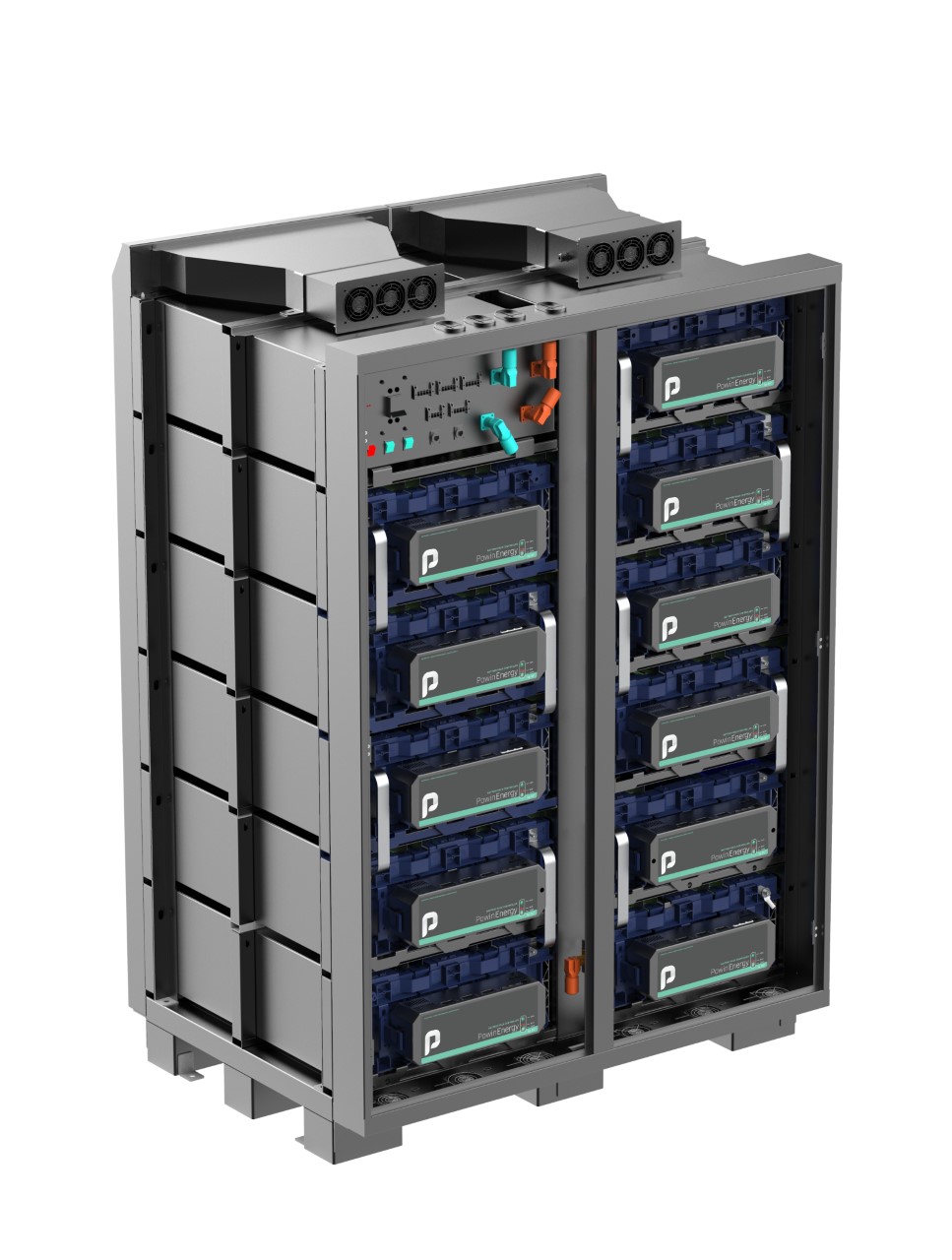
Energy storage system integrator and manufacturer Powin Energy has signed a deal to supply its new DC-coupled solutions to developer Amp for projects in the Northeast US.
Company senior director of product KJ Plank told Energy-Storage.news that “Powin is ready” for an expected exponential growth in the grid-scale DC-coupled solar-plus-storage segment of the energy industry “in the next few years”.
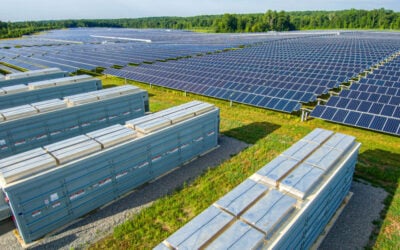
Powin will supply products for four solar-plus-storage projects that Amp, a renewable energy infrastructure investor, is developing in Massachusetts, with construction expected to begin early next year. While more details on the location and sizing of projects was not available, these will be Powin Energy’s first to incorporate the DC-coupled solution.
The technology solution incorporates DC-to-DC power converters made by Dynapower. DC-coupling allows batteries to be charged directly from solar PV panels without incurring the conversion losses that the more typical AC-coupled solar solutions can experience.
Try Premium for just $1
- Full premium access for the first month at only $1
- Converts to an annual rate after 30 days unless cancelled
- Cancel anytime during the trial period
Premium Benefits
- Expert industry analysis and interviews
- Digital access to PV Tech Power journal
- Exclusive event discounts
Or get the full Premium subscription right away
Or continue reading this article for free
Certainly Powin is not the only technology provider that is working to meet increasing demand for DC-coupled solutions from developers and their customers and the potential is clear, although it won’t be the right answer for every project. The first grid-scale DC-coupled battery storage solution in the US is thought to have been installed by utility Florida Power + Light in 2018.
More recently, PV inverter maker Sungrow, which also integrates energy storage systems in a joint venture with battery maker Samsung SDI, supplied a high voltage DC-coupled solution for a municipal utility in Florida in late 2019, while Fluence’s COO John Zahurancik gave an interview for this site that year in which he talked up the potential – and the potential limits – of DC-coupled storage system architecture.
It’s been a big year for Oregon-headquartered Powin, with the company launching Stack 225, Stack 230 and Stack 230P, its first suite of products integrating CATL’s large-format lithium iron phosphate (LFP) battery cells for a range of stationary storage market segments and applications from short duration to 4+ hours. Among several contracts it has announced this year, the company was revealed a few weeks ago to be working with developer Key Capture Energy on 200MW of battery projects in Texas.
The DC-coupled solution is part of the same suite and runs on Powin’s StackOS control platform, which president Geoff Brown claimed allows customers “the flexibility they need to address evolving use-cases without being overly complex”.
KJ Plank said Powin’s hardware and software are “purpose-built for each other,” and the DC-coupled tech is “tightly integrated” with the company’s cloud-based optimisation engine, which he said makes it “straightforward for our customers to turn energy into money for both front-of-the-meter and behind-the-meter applications”.
“One challenge with existing control solutions is that they do not allow paralleling of DC/DC converters, resulting in small, distributed DC blocks and a brittle architecture from an operational perspective,” Plank said.
“Powin’s solution allows seamless paralleling of DC/DC converters out of the gate, so customers will see increased resiliency and reduced operating costs.”
Read ‘Go big, go DC: an in-depth look at DC-coupled solar-plus-storage’, a 2019 feature article by Sara Verbruggen, here.
Quotes from Powin senior director of product used in this article were originally incorrectly attributed to the company’s president, Geoff Brown.