Wärtsilä has said it will supply what it claims is the first large-scale DC-coupled hybrid battery storage system connected to Australia’s National Electricity Market (NEM) for Octopus Group.
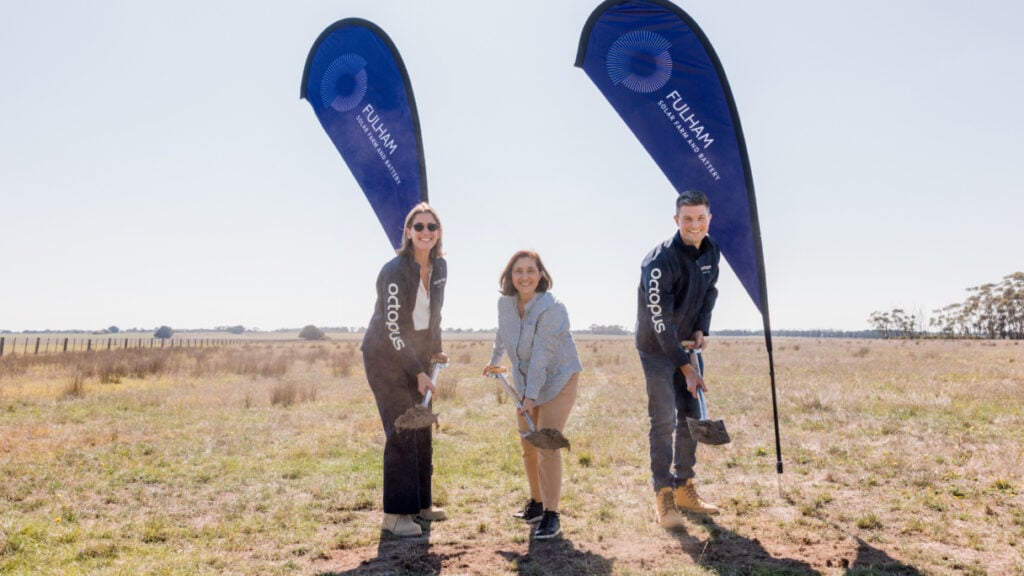
Renewable energy and energy storage developer Octopus Australia confirmed it has started construction and completed the financial close of the 128MWh Fulham solar-plus-storage project in Victoria, Australia.
The project has been supported by the state government’s second Victorian Renewable Energy Target auction (VRET2) and is valued at over AU$300 million (US$185 million).
Equity capital contributions from key investors, including Rest, the Clean Energy Finance Corporation (CEFC), and clients of Westpac Private Bank, through Octopus’ managed funds, have supported the project.
Try Premium for just $1
- Full premium access for the first month at only $1
- Converts to an annual rate after 30 days unless cancelled
- Cancel anytime during the trial period
Premium Benefits
- Expert industry analysis and interviews
- Digital access to PV Tech Power journal
- Exclusive event discounts
Or get the full Premium subscription right away
Or continue reading this article for free
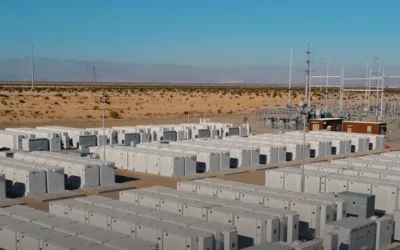
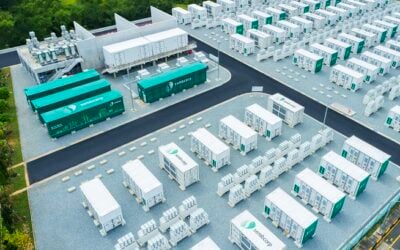
The project plans to incorporate a 64MW/128MWh DC-coupled utility-scale battery energy storage system (BESS).
DC-coupled batteries offer varying bonuses in comparison to AC. For instance, DC coupling allows solar generation to flow directly to the battery via a DC/DC converter, minimising energy conversion losses and maximising the use of available solar energy. This can increase the economics of a battery system while also improving grid stability.
Wärtsilä also confirmed the battery system will utilise a digital energy management and controls platform, GEMs, which has been deployed at numerous utility-scale BESS projects in Australia, such as Amp Energy’s 150MW/300MWh 2-hour duration Bungama BESS in South Australia. It will also be deployed at varying stages of the 2.8GWh Eraring BESS project in New South Wales.
Rest’s interim co-chief investment officer, Simon Esposito, noted that its members will benefit from the “attractive risk-adjusted return prospects of the Fulham Solar Farm and Battery project, as well as from having additional renewable energy assets in their communities.”
GRS, a part of Gransolar Group, has been appointed the Engineering, Procurement and Construction (EPC) contractor.
Victoria’s VRET scheme helps bring renewables and energy storage to the state
Construction on the project is set to be completed by 2027, and Octopus highlighted its intention to use locally manufactured materials and supply chains throughout. Specifically, a Victorian government media statement said the project would use 67% of local services, goods and materials during construction and 97% once operational.
Octopus must adhere to this framework as part of the content requirement across all VRET2 projects to support local supply chains.
“This project is a fantastic example of how we’re working with industry to provide opportunities for local supply chains and local communities to benefit from our renewable energy future,” Victorian energy and resources minister Lily d’Ambrosio said.
Victoria’s VRET scheme was established to help the state reach its renewable energy targets of 45% renewable energy in the electricity mix by 2025 and 50% by 2030 by providing long-term contracts that create investment certainty for prospective developers.
The state’s government claimed in its announcement of the project’s start of construction that the scheme, once completed, will have attracted more than AU$2.48 billion in investment into renewable energy projects and supported more than 1,720 jobs in Victoria.
VRET2 projects will also help meet Victoria’s new renewable energy storage target of at least 2.6GW of energy storage capacity by 2030. Six projects were selected as part of the VRET2 scheme. This included a total of 600MWh of BESS.
The projects included the 100MWh Derby solar-plus-storage project being pursued by Sungrow Renewable Energy, the Fulham solar-plus-storage site, Total Eren’s 300MWh Kiamal solar-plus-storage project, the 77MW Frasers Solar Farm being developed by South Energy, Pacific Partnerships’ 102MW Glenrowan Solar Farm and a 100MWh segment of the SEC Renewable Energy Park – Horsham.