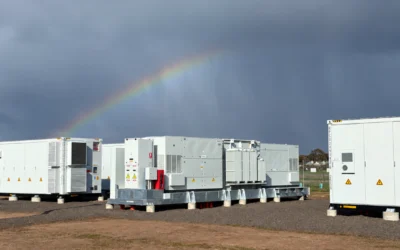
Today (29 August), the Victoria government announced it has streamlined the planning process to deliver the state’s “largest” battery energy storage system (BESS), ACEnergy’s 350MW/700MWh Joel Joel project.
The project has become the first to be fast-tracked by Victoria’s minister for planning Sonya Kilkenny with it having been processed under the new process in nine weeks. According to the project website, the development approval was estimated to take 18 months.
Located around 23 km east of Stawell in the Wimmera region of Victoria, Australia, the project is expected to begin construction in the second quarter of 2025, ahead of energisation in 2027. It will cover 10 hectares of land.
It is expected to cost around AUS$250 million (US$170 million) and will store energy and release it into the grid during peak demand via a connection at Bulgana Terminal Station. This will support the integration of more renewable energy into Victoria’s electricity network and put downward pressure on power prices.
Try Premium for just $1
- Full premium access for the first month at only $1
- Converts to an annual rate after 30 days unless cancelled
- Cancel anytime during the trial period
Premium Benefits
- Expert industry analysis and interviews
- Digital access to PV Tech Power journal
- Exclusive event discounts
Or get the full Premium subscription right away
Or continue reading this article for free
Victoria previously established energy storage targets of at least 2.6GW of energy storage capacity by 2030 and at least 6.3GW by 2035. At the time, it was dubbed as one of the most ambitious targets globally.
This energy storage target complements its existing renewable energy generation target, which aims to have 95% renewable energy in the energy mix by 2035.
Victoria’s minister for energy and resources, Lily D’Ambrosio, said streamlining the planning approval process for projects such as the Joel Joel BESS will be crucial for grid stability as Victoria’s coal-fired power plants begin to close.
Kilkenny added: “This streamlined process allows us to bring good renewable projects like battery storage systems online faster so that we can provide more Victorians with cheaper and cleaner energy.”
ACEnergy sees voluntary planning agreement rejected in New South Wales
Readers of Energy-Storage.news may be aware that ACEnergy recently saw its voluntary planning agreement for its 250MW/1,100MWh Yanco BESS rejected by the Leeton Shire Council in New South Wales.
For the project’s construction, ACEnergy will be required to pay a development levy for the project, as specified in Leeton Shire Council’s Section 7.12 Plan. This levy amounts to 1% of the development cost, so in this instance, ACEnergy will be required to pay the council AUS$2.5 million.
In a bid to reduce this amount ACEnergy, the developer submitted a voluntary planning agreement. This deal would have seen the company pay AUS$730,000 over five years – 29% of the traditional agreement.
The council rejected the proposal, stating that the 1% developer contributions would significantly help in funding public facilities and addressing long-term development pressures. The council also considered the figure to be a “reasonable amount relative to the size of the project.”