Green Mountain Power (GMP), a utility in the US state of Vermont, has requested approval on US$30 million in funding to expand a home battery energy storage scheme.
The utility filed a request with the Public Utility Commission of the state of Vermont earlier this month for an extra US$30 million for customer and community energy storage programmes during the last two years of its current multi-year regulation plan (MYRP), 2025 and 2026.
That is alongside US$250 million of transmission and distribution (T&D) infrastructure ‘hardening’ investment to increase resiliency in light of more extreme weather conditions.
It comes after the PUC lifted the cap on how many participants could enrol in GMP’s battery schemes, which subsidise the cost of a home battery storage system, in August. That came after the third devastating storm in three months for the state, during which batteries can provide backup power.
Try Premium for just $1
- Full premium access for the first month at only $1
- Converts to an annual rate after 30 days unless cancelled
- Cancel anytime during the trial period
Premium Benefits
- Expert industry analysis and interviews
- Digital access to PV Tech Power journal
- Exclusive event discounts
Or get the full Premium subscription right away
Or continue reading this article for free
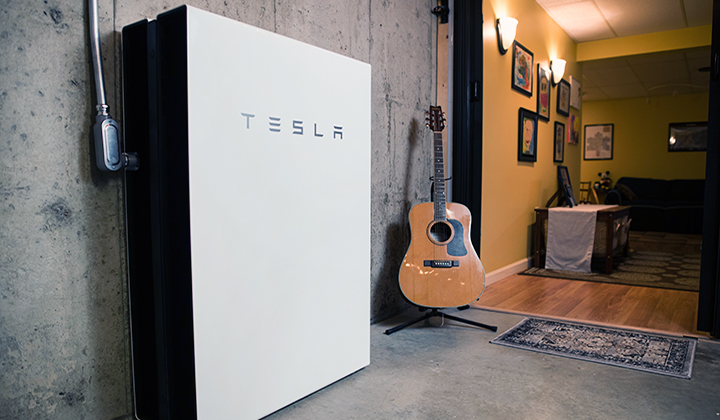
The Powerwall scheme allows customers to lease Tesla’s home storage product for US$55 month while a Bring Your Own Device (BYOD) scheme provides up to US$10,500 in incentives for other home storage products.
In the request for funding, GMP said: “For customers, storage provided by GMP to certain customers will be an efficient solution to keep those powered up when outages threaten and will also provide all the other flexibility benefits to both the individual customers and to the grid as a whole.”
“Looking forward, between utility-provided storage solutions and customer-provided storage opportunities such as vehicle-to-home and vehicle-to-grid, GMP envisions a future where all customers have access to this flexible, critical resiliency resource.”
Both schemes entail agreeing to provide some of the home battery’s energy to the grid during peak demand periods.
GMP has been installing Tesla home battery systems since 2015 and was the first utility to aggregate Powerwalls into a virtual power plant (VPP), although its BYOD scheme was also opened to batteries from other providers including Enphase last year.