Agilitas, a developer of distributed solar PV projects in the northeast US, has acquired an energy storage company in New England and its three operational projects.
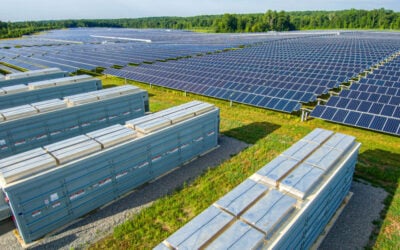
Agilitas has developed around 450MW of solar projects ranging from around 1MW to 10MW capacity since its founding in 2013 and already works on energy storage engineering and construction, delivering standalone battery storage and solar-plus-storage in various New England states and New York.
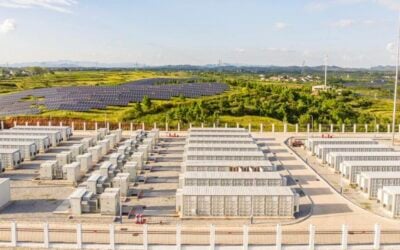
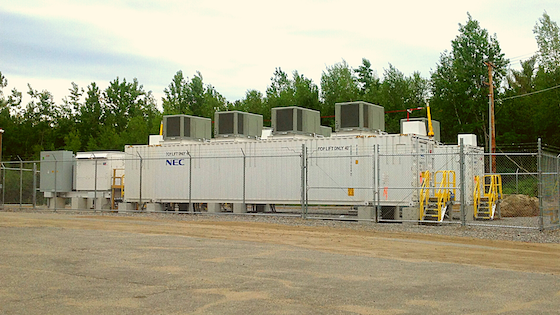
With the acquisition of New England Battery Storage (NEBS), it has also become an operator of two merchant battery storage projects which play into the wholesale markets of regional network and market operator ISO-New England and a front-of-meter battery storage system. The latter, a 4.99MW / 10MWh battery energy storage system (BESS) solution, reached commercial operations at the beginning of June while the other two are already in operation.
The portfolio of three, all in Maine, totals 25MWh of battery capacity. As well as playing into the ISO’s day-ahead and real-time energy markets, the systems provide operating reserve, frequency regulation and forward capacity on a market basis. One of the three systems also helps a municipal electricity supplier to reduce its peak load while also participating in front-of-the-meter opportunities. Acquisition target NEBS’ CEO and president Jeff Perry has become Agilitas’ VP for asset management.
Try Premium for just $1
- Full premium access for the first month at only $1
- Converts to an annual rate after 30 days unless cancelled
- Cancel anytime during the trial period
Premium Benefits
- Expert industry analysis and interviews
- Digital access to PV Tech Power journal
- Exclusive event discounts
Or get the full Premium subscription right away
Or continue reading this article for free
Agilitas only began its energy storage activities last year, but has already won a New York project which was notable for being an example of a utility company selecting to procure BESS as an alternative to more costly and complex transmission and distribution (T&D) infrastructure buildout — a so-called non-wires alternative.
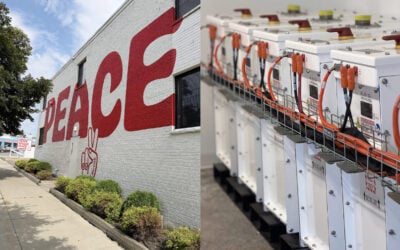
Last month, Energy-Storage.news reported on another Agilitas project in New England: construction began in May on a 3MW / 9MWh lithium-ion BESS in Rhode Island. While modestly-sized, that project in the Rhode Island village of Pascoag is in fact the biggest battery storage project in the US state — which in fact is also the smallest US state — so far.