The Department of Business, Energy and Industrial Strategy (BEIS) in the UK has given the green light to the country’s biggest ever battery storage project.
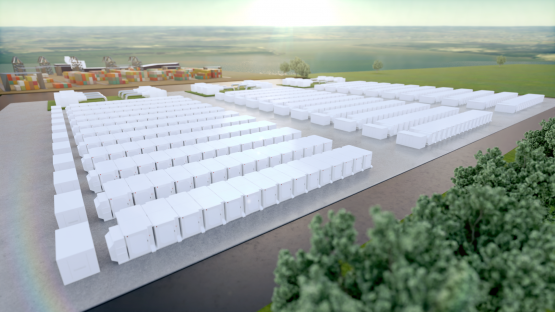
InterGen has gained planning permission for a 320MW / 640MWh lithium-ion battery site at DP World London Gateway, a new port and logistics centre on the Thames Estuary in Essex, south-east England. The £200 million (US$267 million) project will also have the potential for further expanding, as far as 1.3GWh.
Fluence is providing the technology for the site, having worked in partnership with InterGen for the past two years following a competitive tender process. The companies initially signed an exclusivity agreement for another project at Spalding, which was since been extended to the Gateway project.
According to the company, this puts it at 10 times the size of the largest battery currently operating in the UK. Indeed it will dwarf the UK’s biggest active project so far, the 50MW / 75MWh Thurcroft battery storage site in South Yorkshire, which was recently acquired by stock exchange listed specialist fund Gresham House Energy Storage.
Try Premium for just $1
- Full premium access for the first month at only $1
- Converts to an annual rate after 30 days unless cancelled
- Cancel anytime during the trial period
Premium Benefits
- Expert industry analysis and interviews
- Digital access to PV Tech Power journal
- Exclusive event discounts
Or get the full Premium subscription right away
Or continue reading this article for free
In terms of international context, the world’s largest battery project already under development is Vistra Energy’s Moss Landing project in California, which is permitted for an eventual 400MW / 1,600MWh, to be built in phases. The world’s largest project in operation today is the Gateway project developed by LS Power, also in California. That project is currently at 230MW output and 230MWh capacity, as of August, with a futher expansion to 250MW / 250MWh already underway. Australian utility AGL recently said it is planning a 250MW battery storage project with up to 1,000MWh of capacity, while The Red Sea Development Company, developing a huge luxury resort in Saudi Arabia said last week that it plans to use 1,000MWh of battery storage to integrate local renewable energy resources.
With the share of renewables continuing to grow, the need to balance the grid through the use of technologies such as storage is continuing to grow alongside it. As such, InterGen’s battery – which is set to be used to support and stabilise existing electricity supplies – will represent a major piece of the system architecture.
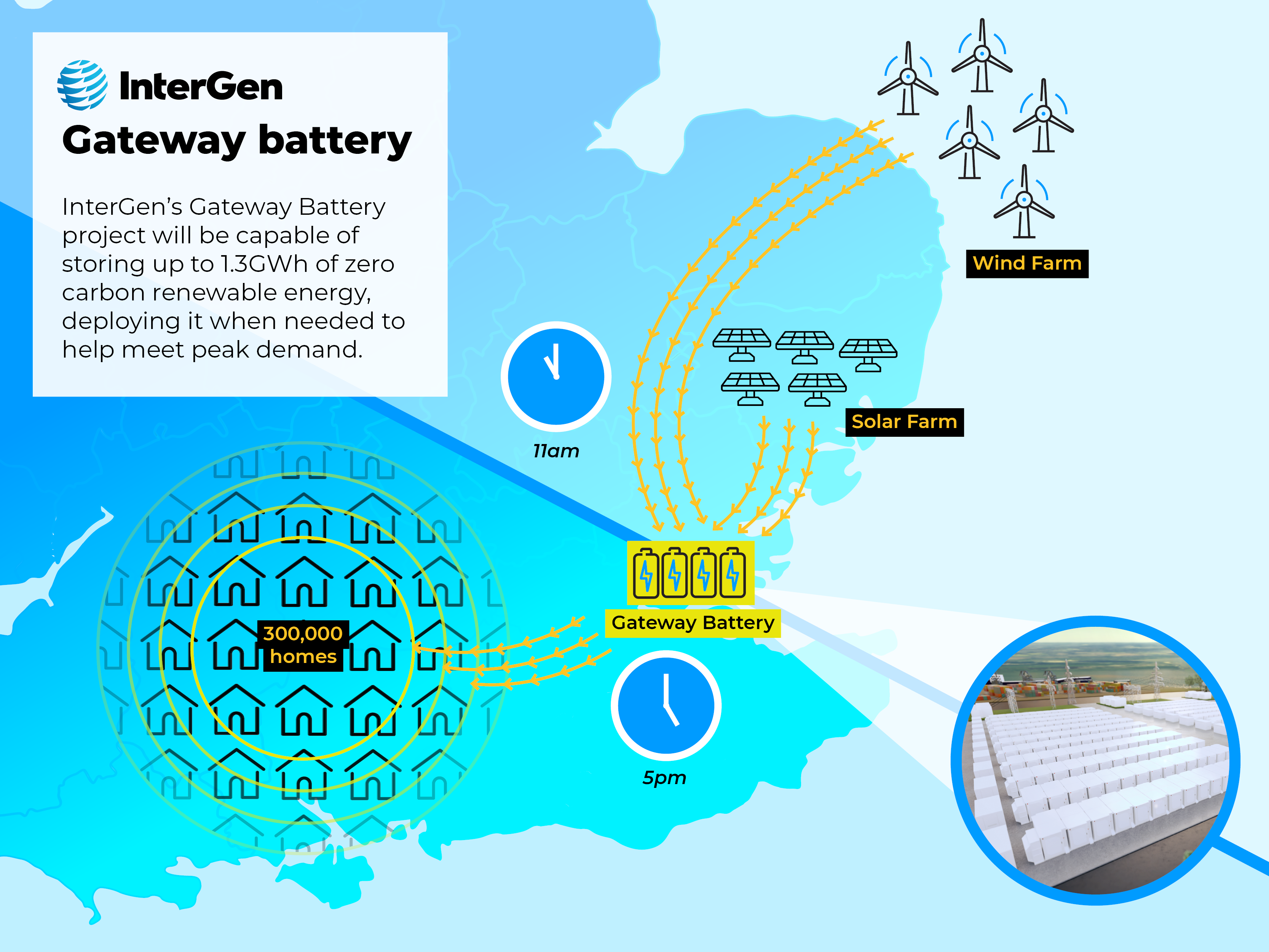
InterGen CEO Jim Lightfoot said the company was “delighted” to be granted consent for the Gateway project, as its mission was to deliver the “flexible electricity solutions” needed for a low carbon world.
“We are excited to be entering a new phase in our growth as an organisation, and will continue to explore opportunities to develop projects which can support the energy transition.”
Till recently, large scale energy storage projects were not possible in the UK, as planning legislation limited storage project to 50MW in England and 350MW in Wales. These were relaxed in July, to help increase flexibility.
InterGen’s storage project will become one of the largest in the world, topping the biggest single-site battery project currently, a 250MW site switched on in August in California by its developer, infrastructure company LS Power.
Construction of the DP Word London Gateway is expected to get under way in 2022, and the battery to become operational in 2024.
Additionally, InterGen is looking to develop another large scale battery project at its site in Spalding, Lincolnshire. This would be a 175MW / 350MWh site, and planning permission is already in place.
The Edinburgh-headquartered independent energy generator currently supplies around 5% of the UK’s generating capacity, with natural gas sites in Coryton in Essex (800MW), Spalding in Lincolnshire (1,250MW) and Rocksavage in Cheshire (810MW).
A version of this story for local audiences was first published on Solar Power Portal.