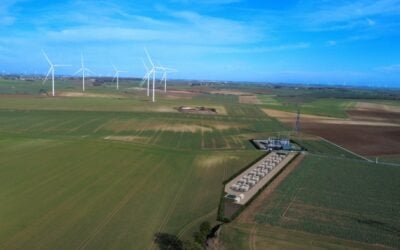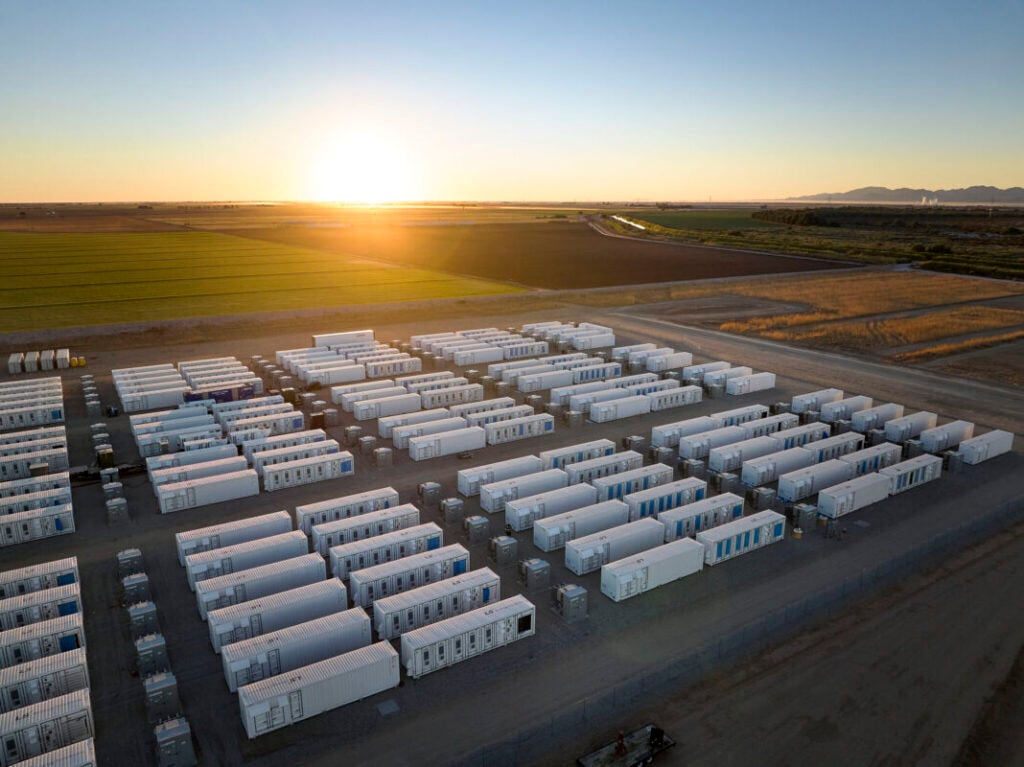
Gore Street Capital has completed a first close for its GS EU Fund SCSp, which will target battery storage investments mainly in the European Union.
The fund has received cornerstone commitments include the European Investment Fund and the Ireland Strategic Investment Fund, alongside other institutional, strategic and family office entities.
Gore Street is on track for its next interim closing and is targeting final close for the fund by the end of 2026, with a target of €500 million (US$584 million).
The new fund will focus on focus on acquiring, constructing, and managing battery energy storage system (BESS) projects with 80% minimum target exposure to European Union member states.
Try Premium for just $1
- Full premium access for the first month at only $1
- Converts to an annual rate after 30 days unless cancelled
- Cancel anytime during the trial period
Premium Benefits
- Expert industry analysis and interviews
- Digital access to PV Tech Power journal
- Exclusive event discounts
Or get the full Premium subscription right away
Or continue reading this article for free
“The Fund is well timed to take advantage of the sharp declines in battery costs, driven by technology improvements and economies of scale, reduced entry costs, and improved economics of longer-duration systems,” Gore Street said.
The firm is mainly known for the UK-focused Gore Street Energy Storage Fund (GSF), which has invested primarily in GB and Ireland with a handful of smaller assets in Germany and Texas, plus a 200MW/400MWh system in California.
But now the wider European market beyond UK and Germany has emerged as an attractive avenue for large-scale energy storage investment, often driven by long-term government-backed capacity procurement schemes enabling longer durations of projects.
Examples are MACSE in Italy and the capacity markets (CM) in Italy, Poland and Belgium. Most projects are 4-hours in those countries, sometimes going to 8-hours. Spain and numerous other Southern and Eastern European countries benefit from capex support schemes supported by EU-wide funding schemes including Recovery and Resilience. The Baltics and Nordics meanwhile are a more merchant business case driven by high ancillary service prices.
Alex O’Cinneide, CEO of the Portfolio Manager, commented: “The European market is entering a period of significant growth, and we look forward to continuing to play a leading role in shaping its future.”
O’Cinneide spoke to Energy-Storage.news when the company first started expanding BESS activities abroad, in 2022.
Energy-Storage.news publisher Solar Media is hosting the Energy Storage Summit EU 2026 in London, UK, on 24-25 February 2026 at the InterContinental London – The O2. See the official website for more details, including agenda and speaker lists. Plus, ESN Premium users can get a 30% discount on tickets.