The decision by the new owners of UK gigafactory startup Britishvolt to pivot its initial focus towards energy storage rather than EVs has pros and cons, a senior industry consultant told Energy-Storage.news.
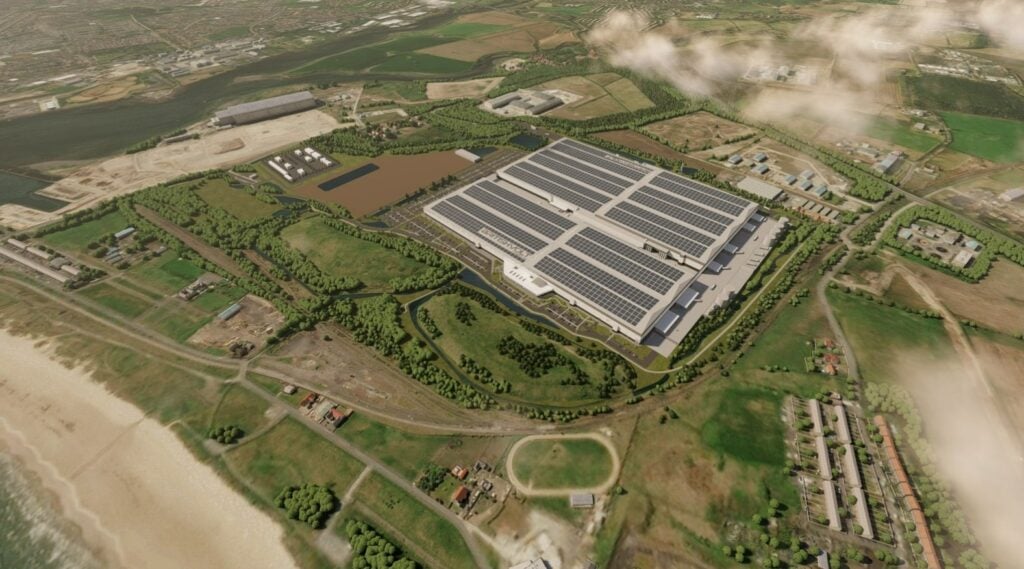
Australia-based Recharge Industries acquired Britishvolt in February after the company startup went into administration at the start of 2023, having failed to secure the additional investor funding to continue trading. Britishvolt has been aiming to build a lithium-ion battery plant near the Port of Blyth in Northumberland, with a required investment of around £4 billion (US$4.9 billion).
Recharge is owned by New York-based investment fund Scale Facilitation. Scale’s CEO David Collard told BBC News in an interview last month that Britishvolt now plans to focus on energy storage and hopes to have the first products available by 2025.
Energy-Storage.news has requested additional comment from both Recharge Industries and Scale Facilitation numerous times about the decision, and how the company views the energy storage system (ESS) market, but has not received a response.
Try Premium for just $1
- Full premium access for the first month at only $1
- Converts to an annual rate after 30 days unless cancelled
- Cancel anytime during the trial period
Premium Benefits
- Expert industry analysis and interviews
- Digital access to PV Tech Power journal
- Exclusive event discounts
Or get the full Premium subscription right away
Or continue reading this article for free
Dr. Nicolo Campagnol, manager of global consultancy McKinsey’s Battery Insights subsidiary, told Energy-Storage.news there are pros and cons to a switch in target market from EVs to ESS.
“Looking at battery cell supply/demand dynamics in Europe today, there is still space for producing non-captive battery cells for OEMs. Of course, your cost/performance etc has to be right, but that’s a problem in every market. A change in tack towards ESS can have some advantages but also downsides,” he said.
“First, you can sell what you produce while you ramp up rather than being closely tied to the OEMs’ production schedule, and you face fewer entry barriers than in the e-mobility market where only 3-4 suppliers at most are selected for each platform.”
“At the same time, in the ESS market the competition is more global than regional, and the market is also comparatively smaller. Pivoting to the ESS market also means you will face the dilemma of whether to integrate downstream with a full ESS solution or not.”
While the vast majority of lithium-ion battery supply goes to the EV sector, there is a growing number of ESS-focused gigafactories being developed in geographies with the more advanced existing energy storage ecosystems, like the US, Europe and China.
Lithium-ion battery OEM LG Energy Solution this week announced it will build a new battery cell factory in Arizona, US, which will have 16GWh of annual production dedicated to the ESS market. Turkish firm Pomega is building a smaller, 6GWh facility in South Carolina which will be entirely dedicated to ESS as will one from new company American Battery Factory (ABF), also in Arizona. All are set to come online between 2024 and 2026.
In Europe, Swedish gigafactory firm Northvolt is setting up a facility in Poland which will manufacture ESS solutions using the firm’s own lithium-ion cells, while China is significantly ramping up its ESS-dedicated gigafactory capacity.