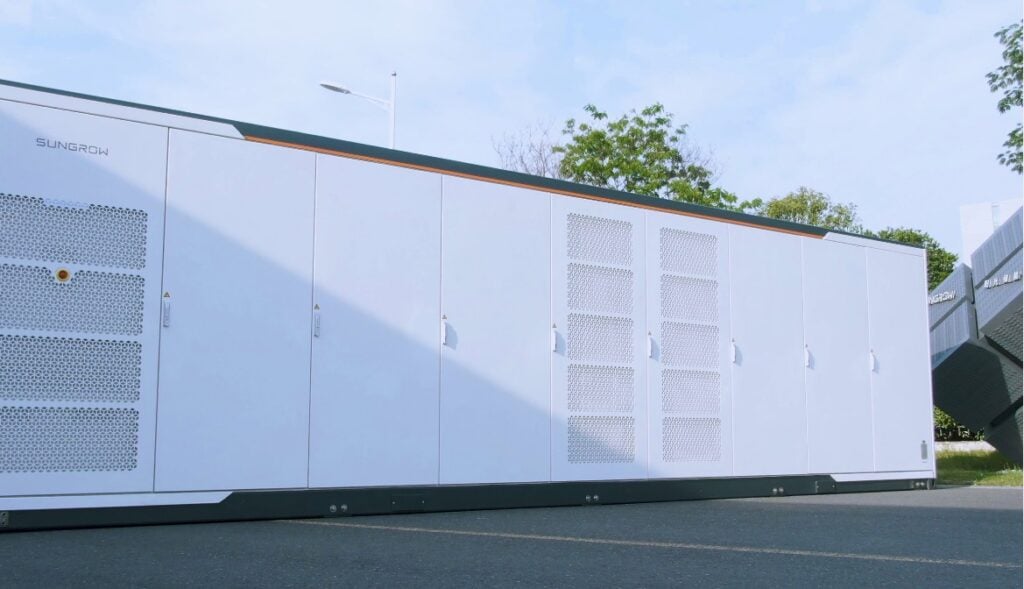
Global PV inverter and energy storage system manufacturer-integrator Sungrow has signed another deal in Israel, agreeing to supply battery storage solutions for EDF Renewables.
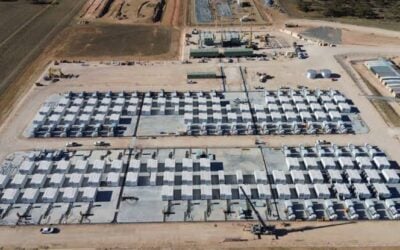
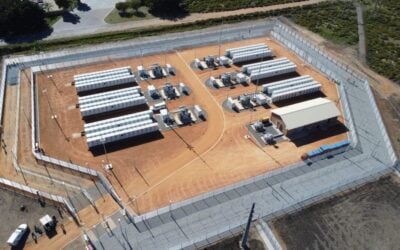
China-headquartered Sungrow said last week (11 August) that it will supply 127MWh of its PowerTitan liquid-cooled battery energy storage system (BESS) technology for deployment across six locations around the country.
Sungrow did not provide details on the type of projects or individual sizes, capacities or storage duration, but said the battery storage will be DC-coupled, meaning it will likely be used to hybridise the operation of solar PV plants.
According to the Chinese company, it holds around a 40% market share in Israel’s nascent energy storage space. The deal continues a relationship with EDF Renewables Israel that saw Sungrow sign a prior agreement to supply a 50MWh project, it said.
Try Premium for just $1
- Full premium access for the first month at only $1
- Converts to an annual rate after 30 days unless cancelled
- Cancel anytime during the trial period
Premium Benefits
- Expert industry analysis and interviews
- Digital access to PV Tech Power journal
- Exclusive event discounts
Or get the full Premium subscription right away
Or continue reading this article for free
It also marks the continuation of Sungrow’s expansion in Israel that has seen Energy-Storage.news report on deals such as a 430MWh BESS contract with developer and independent power producer (IPP) Enlight Renewable Energy in January 2022.
Then, in March of that year it announced it would supply a 16MW/64MWh BESS for co-location at a 912MW combined cycle gas turbine (CCGT) plant responsible for 8% of Israel’s entire electricity production.
That was followed up a month or so later with a 253MWh BESS deal with another developer, Doral. Other notable developments in Israel for Sungrow include another deal signed with Doral towards the beginning of this year for “several hundred megawatt-hours” more.
Meanwhile EDF Renewables Israel – local subsidiary to French national energy company EDF’s renewables business – has put 572MW of wind and solar into operation in the country across 33 projects to date.
Energy storage key to Israel’s renewables goal
Israel’s national target of sourcing 30% of its electricity from renewable sources by 2030 means leaning on rich solar PV resources, compared with limited opportunities for wind or other renewables.
Israel is currently at about the 12% mark, and according to modelling from the national Electricity Authority if Israel (PUA), is expected to need about 2GW/8GWh of energy storage to help integrate an anticipated 12GW of solar deployments by the end of this decade.
PUA has been working for the past three years or so to stimulate the market’s adoption of storage, with its key initiatives including tenders for distribution grid-connected solar and storage in 2020 and 2021 – the first of which awarded contracts for 168MW of solar with 672MWh of energy storage, the second selecting winning bids from 609MW of solar PV and more than 2,400MWh of storage.
Earlier this year, PUA implemented a supplementary electricity tariff for distributed solar PV paired with energy storage to enable behind-the-meter self-consumption of onsite generated power.
Then in May, the national Ministry of Energy and Infrastructure said it will support the construction of four separate 200MW/800MWh BESS plants in the northern Gilboa mountain region of the country totalling 800MW/3,200MWh. The Ministry described it as a “programme of great importance for the energy sector”.
Watch our 2020 webinar with Clean Horizon, looking at the role of energy storage in Israel’s “electricity revolution” and the 2020-2021 tenders held by PUA, here.