This article was amended today (29 February 2024) after it was initially published yesterday. A director originally told Energy-Storage.news that Sungrow had aspirations to launch its own lithium-ion battery manufacturing line, however the company has since told us that it has “no plans to build our own lithium-ion production line at the moment”.
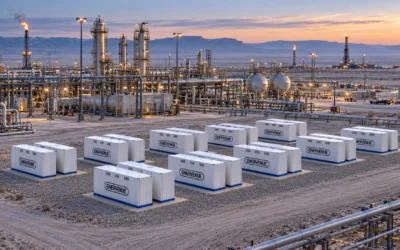
Sungrow tells Energy-Storage.news that it does not currently have plans to launch its own lithium-ion battery cell production for battery energy storage system (BESS) products, a route being taken by other China-based system integrators.
In a statement, a spokesperson for the Hefei-headquartered inverter and BESS company said:
“Sungrow has combined the electrochemistry, power electronic and grid support technology to being a qualified ESS system provider. We have our cell technology to ensure the battery system performance and quality to be controlled in the best way.”
Try Premium for just $1
- Full premium access for the first month at only $1
- Converts to an annual rate after 30 days unless cancelled
- Cancel anytime during the trial period
Premium Benefits
- Expert industry analysis and interviews
- Digital access to PV Tech Power journal
- Exclusive event discounts
Or get the full Premium subscription right away
Or continue reading this article for free
“As such, our approach is to continue our strategic partnerships with lithium-ion battery suppliers. There are no plans to build our own lithium-ion production line at the moment.”
For clarity, the firm’s ‘cell technology’ means its cell performance analysis, cell assembly & testing technology, early identification of thermal runaway and internal short circuits, as well as SOC (state of charge) balancing optimisation.
Other China players vertically integrating upstream and downstream
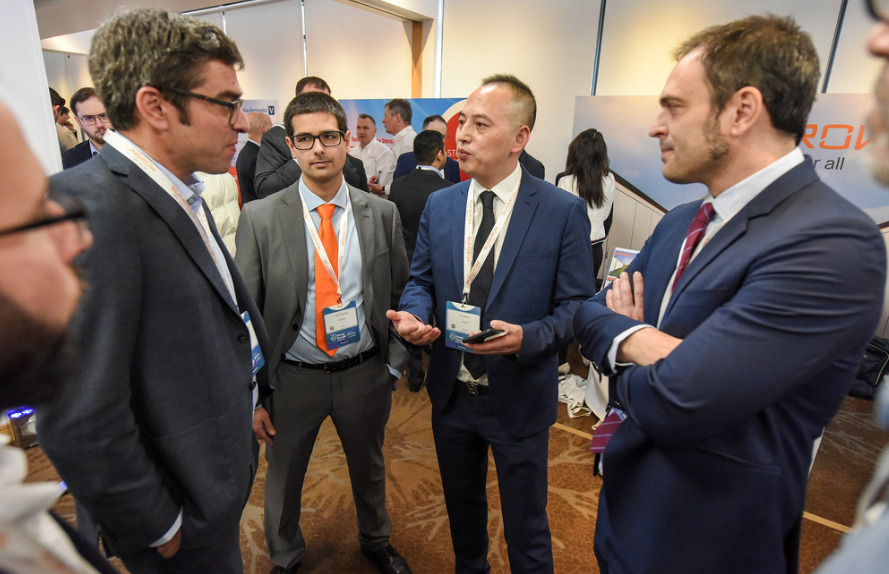
The company was speaking to the site at the Energy Storage Summit EU for a Premium interview last week. Solar PV giant Trina Storage launched its latest BESS solution which uses in-house manufactured lithium-ion cells at the event.
Trina’s move is part of a wider industry trend of China’s BESS providers moving upstream and manufacturing their own battery cells to integrate into BESS systems. The trend has been noted previously by industry commentators including BloombergNEF’s head of energy storage Yayoi Sekine when it launched its BESS Tier 1 list in January (Premium access).
Downward vertical integration has already happened, with battery manufacturing companies like CATL, BYD and LG Energy Solution launching their own integrated BESS products. Sungrow, Huawei and BYD were in the top five BESS providers by 2022 deployments according to Wood Mackenzie.
Benefits of using in-house cells in BESS solutions include a more integrated design, potentially allowing integrators to better maintain quality and for mitigate potential fire safety risks.
It also allows providers to offer an energy density superior to pure-play system integrators, whose modular design allows for optionality but at the expense of energy density. Energy density is becoming key for the industry.