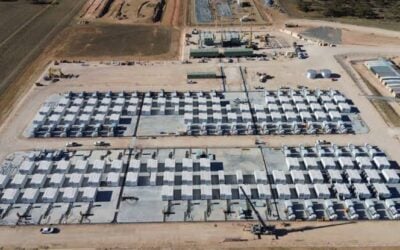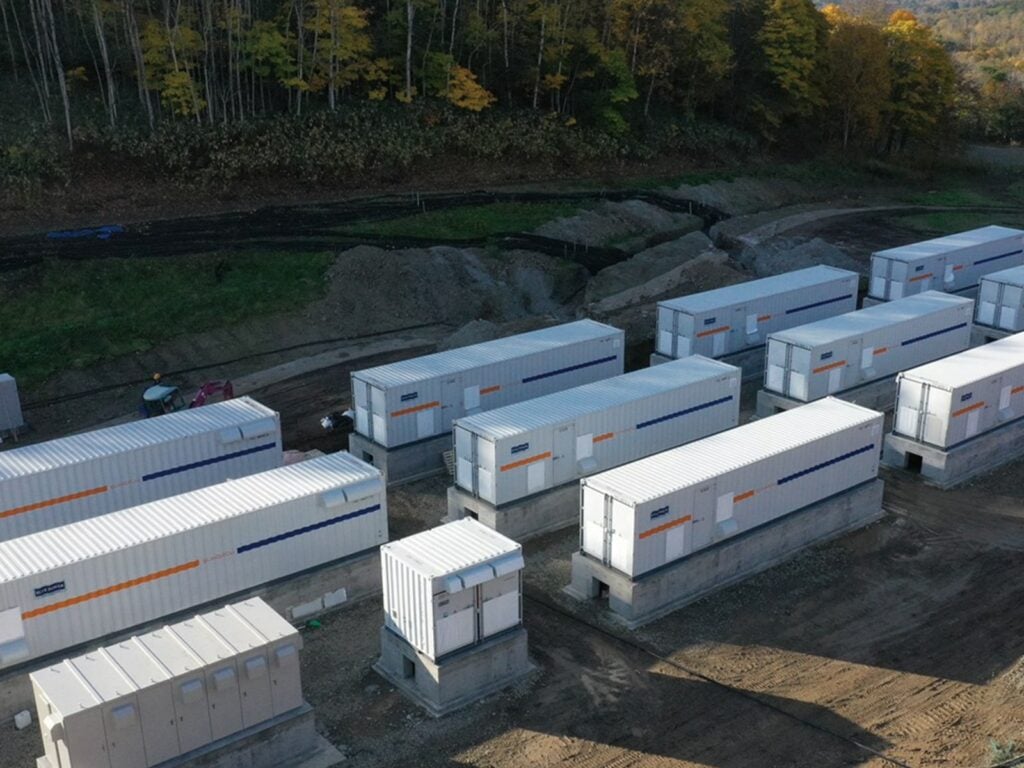
What is thought to be Southeast Asia’s single largest battery energy storage system (BESS) to date will be supplied to a solar PV-plus-storage project in Thailand by Sungrow.
The China-headquartered inverter manufacturer said a few days ago that it will supply a comprehensive solution — including 49.01MW of PV inverters and a 45MW / 136.24MWh BESS — for partner Super Energy, a Thai renewable energy and independent power producer (IPP) company.
While the location and name of the project were not provided in Sungrow’s release a few days ago, some details were offered of its business model and the applications the combination of solar with BESS will achieve. Super Energy’s president described it as a “big step in technology to provide the Thai people with solar power 24/7”.
The development of the plant is in line with Thailand National 4.0 Strategy, a set of programmes by the government to raise economic prosperity, equitable social development, education and environmental protection in a fourth industrial revolution.
Try Premium for just $1
- Full premium access for the first month at only $1
- Converts to an annual rate after 30 days unless cancelled
- Cancel anytime during the trial period
Premium Benefits
- Expert industry analysis and interviews
- Digital access to PV Tech Power journal
- Exclusive event discounts
Or get the full Premium subscription right away
Or continue reading this article for free
Increasing the share of renewable energy used in the country is an important facet of the 20-year strategy and a national Power Development Plan sets a target of 2,766MW of renewables, or 37% of the national total by 2037, up from about 11% as of this year.
Sungrow noted that the Thai government has accepted that energy storage is vital to making renewable energy sources reliable and dispatchable. This led Sungrow and Super Energy, already partnered on a number of renewable energy projects in Southeast Asia, to proceed with the new plant’s development.
The facility will also benefit from the Electricity Generating Authority of Thailand’s SPP Hybrid Firm Power Purchasing Programme, which was introduced in 2017. The scheme introduced a competitive bidding process for renewable power plants that could sell electricity to the grid in both a “firm period” from 9am to 10pm and a “non-firm period” from 10pm to 9am.
While many biomass projects bid into the auctions, renewables backed with storage were also eligible to compete for 300MW of capacity from power plants between 10MW and 50MW capacity each.
Sungrow, which launched its energy storage system (ESS) solutions business globally in 2016 as a partnership with battery maker Samsung SDI, said it will supply its advanced liquid-cooled ESS to the project.
The liquid-cooled technology enables costs savings on logistics and installation as well as prolonging the life of the system and the company also claimed the high protection level of the battery cabinet and power conversion system (PCS) enclosure make the equipment suitable for Thailand’s often hot and wet climate conditions.
The system will be fully integrated including Sungrow’s energy management system (EMS) and monitoring. The company has provided ESS solutions into a number of markets, recently winning a 390MW BESS order from US project developer Key Capture Energy.
Southeast Asia market showing its promise
The Southeast Asian energy storage market meanwhile is gradually beginning to see the development of battery projects in other regions including the Philippines, Taiwan and Singapore. Sungrow said the region is of strategic long-term importance to the company for both solar and storage.
At an industry event hosted by our publisher Solar Media earlier this year, Alexander Lenz, regional Asia-Pacific CEO for Aquila Capital, said that Southeast Asia has excellent potential for energy storage. Grids are less interconnected than in other major world regions and the share of variable renewable energy is growing in the mix, both major drivers for storage to help keep networks stable and allow for that growth of wind and solar.
Speaking at the Solar and Storage Finance Asia event in July, Lenz said that the regulatory environment in much of the region however, does not yet enable energy storage assets to generate revenue streams to give investors the certainty they require and grid operators are not yet all aware of the benefits of storage. It may be up to the industry, Lenz said, to become proactive in helping other stakeholders including policymakers to become educated and understand the value proposition.