ESS Inc’s recent special purpose acquisition company (SPAC) merger, which listed the iron flow battery manufacturer’s shares and warrants on the New York Stock Exchange, has raised US$246 million cash.
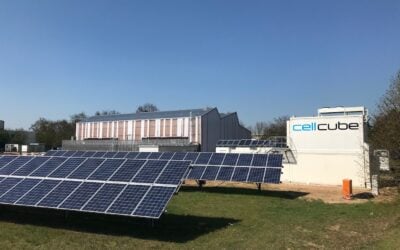
A commercial fish farm in Austria has opted to use CellCube’s vanadium redox flow batteries (VRFBs) with eight hours’ duration, in combination with solar energy, to reduce the carbon footprint of its operations.
What is thought to be Southeast Asia’s largest battery energy storage system (BESS) to date will be supplied to a solar PV-plus-storage project in Thailand by Sungrow.
Horizon Power, an electricity supplier owned by the state government of Western Australia has begun commissioning community battery storage to allow nine remote towns to use more rooftop solar power.
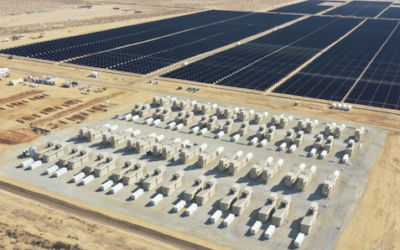
Battery capacity has started to come online at what is claimed to be the world’s largest project to combine solar PV and battery storage at the same site, in California.
Two pumped hydro energy storage (PHES) projects at very different stages of development in Hawaii and Wyoming would enable hundreds of additional megawatt-hours of clean energy use in each region.
Sunamp, a Scotland-headquartered manufacturer of a thermal energy storage technology, has just signed an agreement with a distributor to target nearly US$70 million of sales in China and open a factory in the Asian country.
A 1,200 hectare site in South Australia has been secured by a developer hoping to use it to build a 300MW solar power site with 3.6GWh of energy storage, based on a novel technology solution.