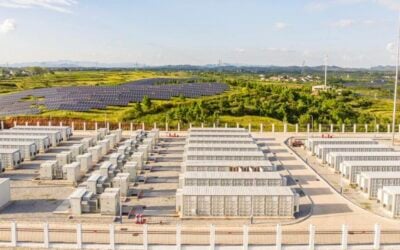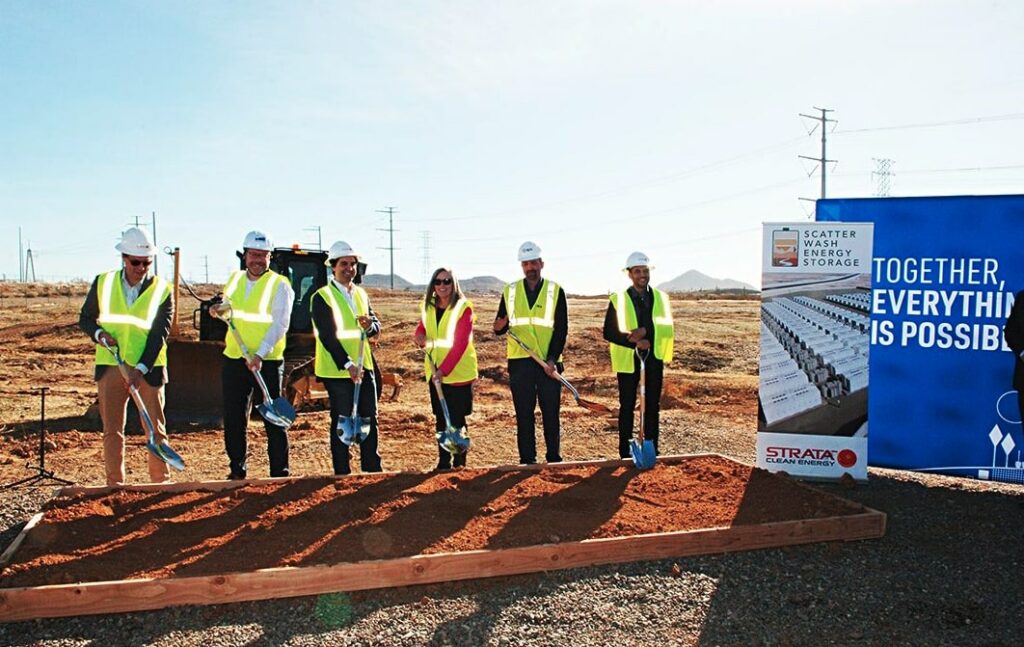
Developer-operator Strata Clean Energy has completed a US$559 million financing package for its 1.02GWh Scatter Wash BESS project in Arizona, US.
The package is comprised of debt and tax equity investment for the 255MW/1,020MWh battery energy storage system (BESS) near Phoenix, on which construction started last month.
The banks involved were J.P. Morgan, Nomura, The Korea Development Bank, Norddeutsche Landesbank, CoBank, Siemens, Regions and and U.S. Bancorp Impact Finance, which was also the primary tax equity investor. Standalone energy storage become eligible for the clean energy investment tax credit (ITC) at the start of last year as part of the Inflation Reduction Act.
Scatter Wash will come online in April 2025 and provide power and energy to utility Arizona Public Service under a 20-year tolling agreement signed in May 2023.
Try Premium for just $1
- Full premium access for the first month at only $1
- Converts to an annual rate after 30 days unless cancelled
- Cancel anytime during the trial period
Premium Benefits
- Expert industry analysis and interviews
- Digital access to PV Tech Power journal
- Exclusive event discounts
Or get the full Premium subscription right away
Or continue reading this article for free
Long-term tolling agreements – where developer-operators own the project but all its energy is provided to another company or companies under the agreement – have driven the large-scale storage market in Arizona, for both standalone and solar-plus-storage projects. While California and Texas continue to be the leading state for storage deployment, Arizona is not far behind.
In the past 12 months, Energy-Storage.news has reported on projects from other developer-operators such as Enlight (940MWh and 824MWh projects), Longroad Energy (1,200MWh), NextEra (400MWh) and Recurrent Energy (1,200MWh), to name just a few.
All are four-hour duration systems to help shift solar generation into the evening hours, and all have secured long-term tolling or power purchase agreements (PPAs) with Arizona utilities.
Energy-Storage.news’ publisher Solar Media will host the 5th Energy Storage Summit USA, 19-20 March 2024 in Austin, Texas. Featuring a packed programme of panels, presentations and fireside chats from industry leaders focusing on accelerating the market for energy storage across the country. For more information, go to the website.