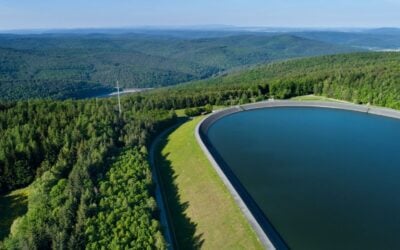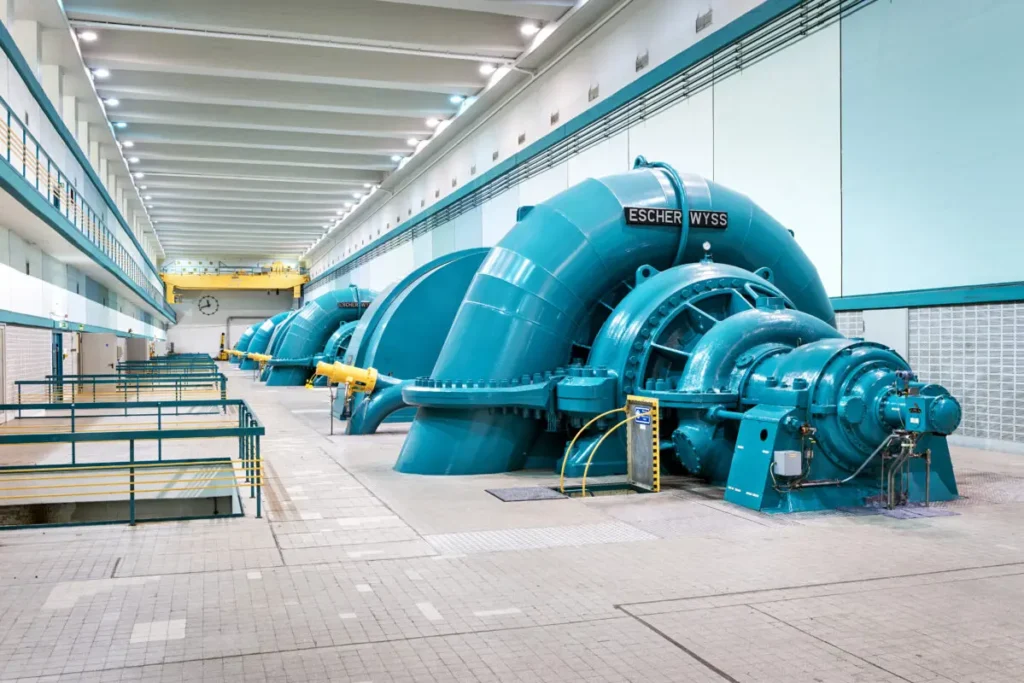
Norwegian power company Statkraft has agreed to acquire a 450MW pumped storage hydro project being developed near Loch Ness in Scotland, UK.
Confirmed on Friday (15 December), Statkraft will secure the Red John Pumped Storage Hydro Scheme from Intelligent Land Investments Group (ILI), a clean energy development company based in Hamilton, Scotland.
Red John, which is being developed approximately 14km south-west of Inverness in the Scottish Highlands, was first conceived in 2015 and granted consent by the Scottish government in June 2021.
Pumped storage hydro could well be an important technology in achieving net zero, as it can be used to complement intermittent energy generation by releasing power when there is a spike in demand. This is done by using reversible turbines to pump water from a lower reservoir to an upper reservoir, which stores excess power from sources such as wind farms when supply outstrips demand.
Try Premium for just $1
- Full premium access for the first month at only $1
- Converts to an annual rate after 30 days unless cancelled
- Cancel anytime during the trial period
Premium Benefits
- Expert industry analysis and interviews
- Digital access to PV Tech Power journal
- Exclusive event discounts
Or get the full Premium subscription right away
Or continue reading this article for free
These same turbines are then reversed to bring the stored water back through the plant to generate power when the country needs it.
Kevin O’Donovan, UK managing director of Statkraft, expressed his delight in securing the “significant pumped hydro storage scheme,” believing that it will play a “key role” in strengthening the UK’s energy security and net zero transition.
Despite the positives, O’Donovan urged the UK government to develop an appropriate support mechanism to support pumped storage hydro, something that Scottish ministers have also done in recent months.
“There needs to be an appropriate support mechanism in place, so we’re now looking to the UK government to provide the certainty that will allow us to proceed with confidence,” O’Donovan said.
To read the full version of this story, visit Solar Power Portal.
Energy-Storage.news’ publisher Solar Media will host the 9th annual Energy Storage Summit EU in London, 20-21 February 2024. This year it is moving to a larger venue, bringing together Europe’s leading investors, policymakers, developers, utilities, energy buyers and service providers all in one place. Visit the official site for more info.