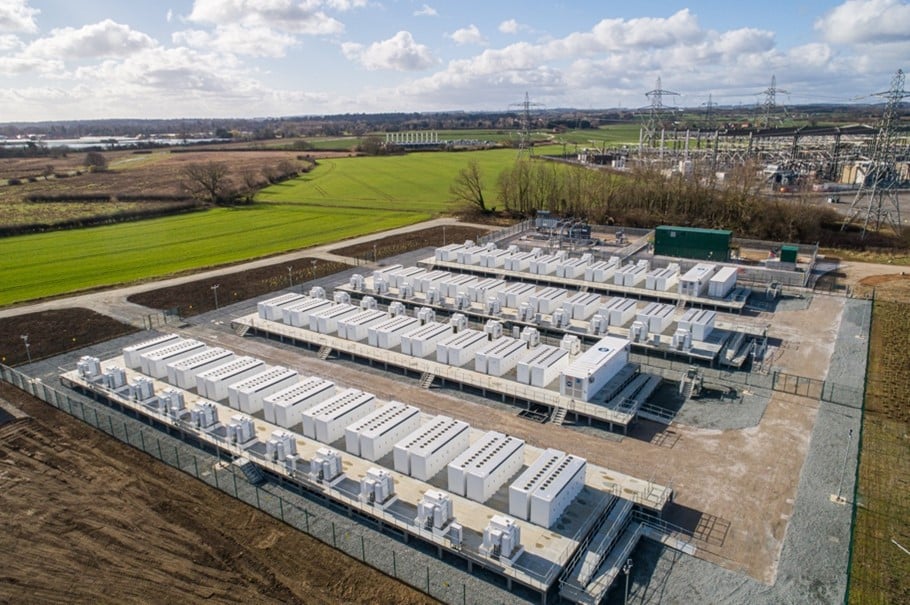
The renewable energy IPP arm of UK utility SSE is to start building a 320MW/640MWh battery energy storage system (BESS), which could be the largest under-construction in the country.
The company has taken a final investment decision (FiD) on the Monk Fryston project in Yorkshire, north England, and will now proceed with construction, it said yesterday (1 November). The project is located next to a substation operated by UK transmission system operator (TSO) National Grid in the village of Monk Fryston.
“It’s fantastic that we have taken a Final Investment Decision on the Monk Fryston BESS project, one of the largest battery storage projects in the UK,” said Richard Cave-Bigley, solar and battery director for SSE Renewables.
The project is the largest BESS in the UK to enter the construction stage that Energy-Storage.news is aware of, and a senior director at another UK developer agreed with this.
Try Premium for just $1
- Full premium access for the first month at only $1
- Converts to an annual rate after 30 days unless cancelled
- Cancel anytime during the trial period
Premium Benefits
- Expert industry analysis and interviews
- Digital access to PV Tech Power journal
- Exclusive event discounts
Or get the full Premium subscription right away
Or continue reading this article for free
Larger projects, such as an 800MWh system from Innova and a 2,080MWh project from Carlton Power have secured planning permission so are free to start building, but neither has announced the start of construction with potential additional steps such as FiD still to be completed.
It is SSE Renewables’ third BESS project to reach the construction stage. Last month saw BESS units from system integrator Wärtsilä arrive on-site at the 50MW Salisbury project while construction started on the 150MW Ferrybridge project in August.
Energy-Storage.news has asked SSE Renewables to comment and will update this article when a response is received.
The UK energy storage market is among the most mature markets in the world along with select US states like California and Texas, with over 3GW of BESS online. Most projects being developed or built today have moved to 2-hour durations as ancillary service markets saturate requiring more energy-intensive activities to make up the shortfall due to falling ancillary service prices.
Energy-Storage.news’ publisher Solar Media will host the 9th annual Energy Storage Summit EU in London, 21-22 February 2024. This year it is moving to a larger venue, bringing together Europe’s leading investors, policymakers, developers, utilities, energy buyers and service providers all in one place. Visit the official site for more info.