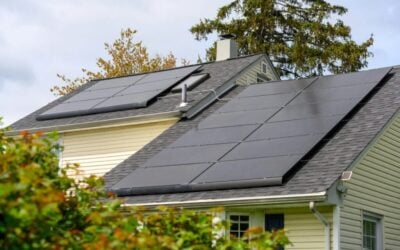
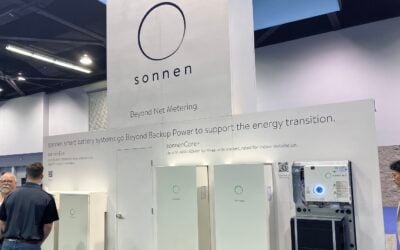
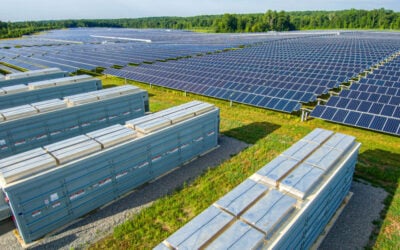
Sonnenbatterie is the first Technology Partner to sign up with Solar Media’s Energy Storage division. Image: Sonnenbatterie.
Germany’s market leader for intelligent lithium ion energy storage systems has signed up as the first Technology Partner for the new Energy Storage division of PV Tech Storage’s publisher, Solar Media.
Energy Storage is working with an alliance of energy storage industry stakeholders to launch a series of media and event platforms to communicate key industry information. The division’s director, experienced UK renewable energy industry figure Dan Caesar, announced today that Sonnenbatterie has formally put pen to paper to support its activities in promoting energy storage.
Based in the UK, Solar Media will focus not just on the domestic market in its homeland, but also continue to look at the international picture. However, there will be an initial focus on the UK, with the company keen to leverage the success of its other British-leaning brands, including the hugely popular Solar Power Portal and the annual Solar Energy UK show, which takes place in October.
Energy Storage has already hosted two round table events during the summer, at which a broad range of domestic and overseas stakeholders discussed drivers for storage, the opportunities and the challenges that exist in the UK market at residential and utility scale. While recently proposed cuts to support for solar at government level have added a level of uncertainty to the UK market, there are approximately 750,000 solar rooftops already in the UK, representing a good starting point for the energy storage industry to help add value to those. In the longer term, the industry sees market reform, not subsidies, as a path to recognising the value storage can provide, to the individual and at network level.
Try Premium for just $1
- Full premium access for the first month at only $1
- Converts to an annual rate after 30 days unless cancelled
- Cancel anytime during the trial period
Premium Benefits
- Expert industry analysis and interviews
- Digital access to PV Tech Power journal
- Exclusive event discounts
Or get the full Premium subscription right away
Or continue reading this article for free
On the initial focus, Christoph Ostermann, Sonnenbatterie CEO said the company had “identified the UK as a market with genuine potential for residential and commercial storage systems and is actively preparing to enter the market”.
Sonnenbatterie makes “intelligent” lithium-ion battery-based storage systems, focusing initially on solar self-consumption but increasingly diversifying into other areas including the US commercial energy storage market. Image: Sonnenbatterie.
Sonnenbatterie’s intelligent lithium-ion storage systems have been installed “in a vast number of homes, farms, and commercial businesses in Germany and other European countries“ since 2010, Ostermann pointed out. Sonnenbatterie’s core business model is to optimise solar self-consumption, allowing end users to reduce electricity bills by up to 90%.
“It gives the end user a complete overview of electricity generation and consumption anywhere and anytime via Sonnenbatterie app or internet access. With the new Sonnenbatterie eco, launched in 2014, lithium-ion storage systems are affordable and economical for everyone,” Ostermann said.
However, in addition to focusing on solar self-consumption in European markets, the company has also launched a commercial offering for peak shaving in the US, opening up a North American subsidiary this year. Demand charges levied on businesses in the US can vastly inflate electricity bills, with monthly peaks of electricity usage determining the rate paid. Storage can be used to mitigate these peaks, making the amount of electricity drawn from the grid appear as a flatter curve.
The innovation and forward thinking does not end there for Sonnenbatterie. The company is among those trialling various other interesting use cases for storage, including demonstrations and pilots for aggregating connected storage devices, sometimes referred to as the ‘virtual power plant’ concept. Aggregated small storage systems can, in effect, act in concert and scale up to provide grid-balancing services more commonly associated with utility-scale systems, while they could also be used for peer-2-peer electricity trading at household level, just two of the business models being trialled by the German company and its partners.