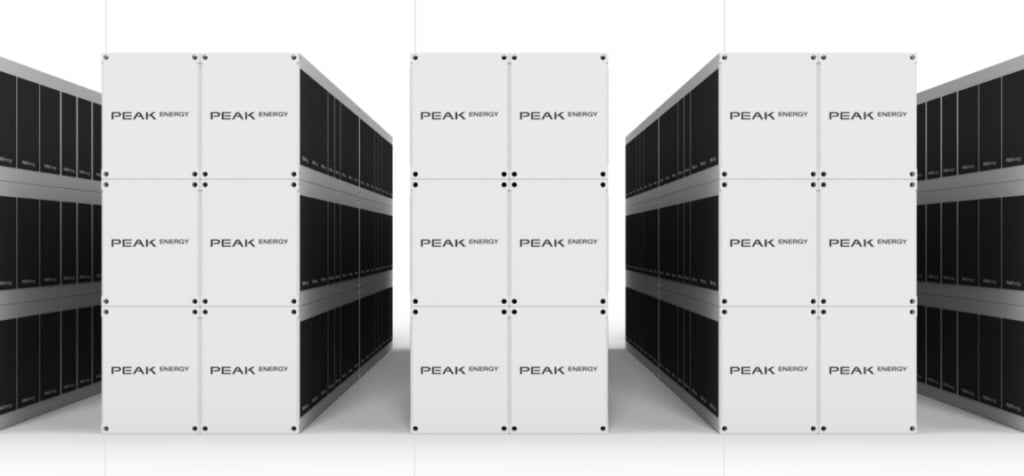
Sodium-ion battery technology firm Peak Energy has emerged from stealth, with US$10 million in funding and a management team comprising ex-Northvolt, Tesla, Enovix and SunPower executives.
The company announced its launch yesterday (4 October) following a US$10 million seed funding round led by venture capital (VC) firm Eclipse with participation from another VC firm, TDK Ventures.
Peak Energy will focus on the rapid scaling of sodium-ion battery manufacturing to address widespread demand for lithium-ion alternatives, it said.
Though US$10 million is not a significant amount for a manufacturing ramp-up, it is relatively large for a seed round. The median and average seed rounds in the US in Q1 2023 were US$2.3 million and US$3.7 million respectively, according to company intelligence provider Crunchbase.
Try Premium for just $1
- Full premium access for the first month at only $1
- Converts to an annual rate after 30 days unless cancelled
- Cancel anytime during the trial period
Premium Benefits
- Expert industry analysis and interviews
- Digital access to PV Tech Power journal
- Exclusive event discounts
Or get the full Premium subscription right away
Or continue reading this article for free
“Sodium-ion is the key to unlocking the potential of renewable energy and will finally enable power providers to fully decarbonize the grid,” said Landon Mossburg, co-founder and CEO of Peak Energy.
“The timing could not be better to build a company in this space, and we already have momentum with key customers and partners like Doral Energy. There is a massive opportunity for the United States to emerge as the global leader in sodium-ion production and deployment, and Peak Energy is at the forefront of that effort.”
Sodium-ion technology is widely seen as the alternative battery storage technology to lithium-ion which is the furthest along the path to mass commercialisation. Commodity reporting price agency Fastmarkets recently wrote that it, along with solid state lithium-ion tech, are the two technologies offering the most potential to ease the pressure on conventional lithium-ion in a guest blog for Energy-Storage.news.
Electric vehicles (EVs) with sodium-ion batteries have been launched in China, but Peak Energy appears to be focusing primarily on the grid-scale stationary energy storage system (ESS) market.
It said the “high cost structure, supply chain insecurity, safety concerns and large carbon footprint make (lithium-ion) non-ideal for grid-level storage”.
The company has a target to lower energy storage costs by up to 50%.
Max Reid, research analyst in Wood Mackenzie’s Battery & Raw Materials Service segment, told Energy-Storage.news last year he estimated there would be around 1GWh of global annual sodium-ion battery production capacity in 2023 rising to 5-10GWh by 2025.