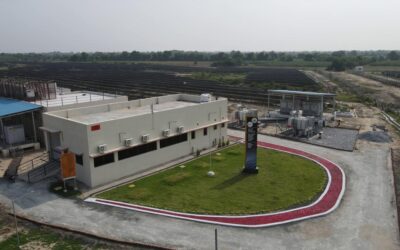
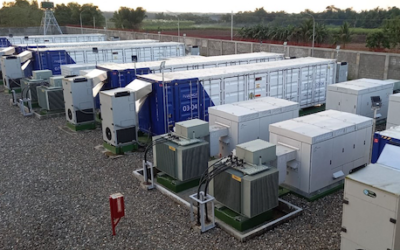
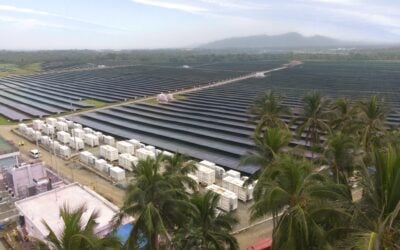
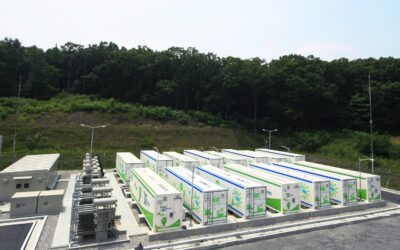
Italy-headquartered solar inverter manufacturer FIMER supplied 1MVA inverters to a solar-plus-storage project with a 18MWh battery energy storage system (BESS) in Gujarat, India.
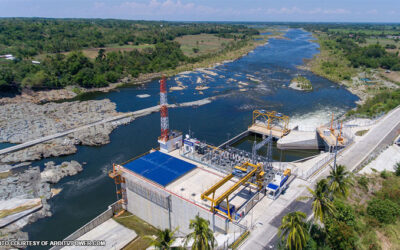
Philippines’ investor-owned utility AboitizPower and Norwegian renewables group Scatec have signed a EPC agreement with Hitachi Energy for it to build a 20MW/20MWh battery storage system, set to go online in 2024.
The World Bank’s International Finance Corporation is taking part in a study to assess how technologies like solar-plus-storage hybrids can provide baseload power in the Philippines.
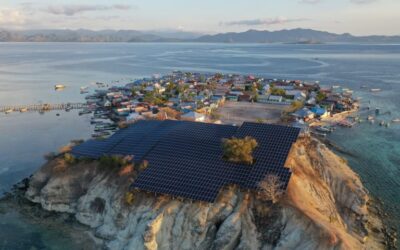
Indonesia’s state-owned utility and battery producer have launched a 5MW battery energy storage system (BESS) pilot project, the first up to 2GW of battery storage it could deploy on its national grid.
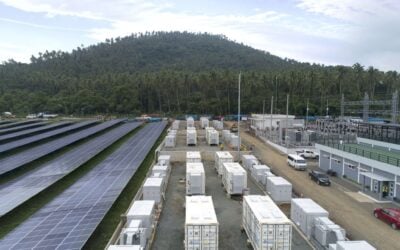
The first ever solar-plus-storage hybrid resources system in the Philippines is now in operation after energy company AC Energy (ACEN) switched on the site’s battery energy storage system (BESS).
Asia-Pacific will overtake North America as the biggest utility-scale energy storage (UES) market by annual installed gigawatts (GW) by 2024-2025, according to a new report by Guidehouse Insights, one to two years later than in the firm’s previous forecasts.
Battery storage companies raised 159% more corporate funding in 2021 than in 2020, with funding activity reflecting the “significance of battery energy storage in the energy transition,” analysis group Mercom Capital has said.