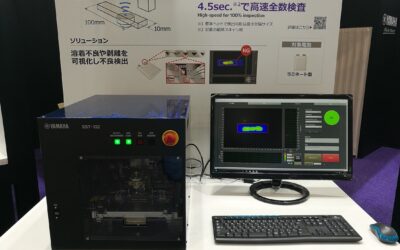
Japanese maker of precision equipment, Yamaha, was exhibiting its recently launched products for testing and inspecting lithium-ion batteries at a major smart energy trade show in Tokyo this week.
Tesla Inc. today showed off recent activities in the virtual power plant (VPP) space at Tokyo’s Smart Grid Expo, with a view to bringing them at scale into the country’s rapidly changing energy market.
Dimitrios Pappas, analyst at new energy consultancy Delta-EE, considers the impact the novel coronavirus (COVID-19) could have on the energy transition, particularly for batteries used in EVs and ESS, while Energy-Storage.news editor Andy Colthorpe adds his own take.
Solar industry players target opportunities in the residential energy storage market in the US and elsewhere with the rollout and launches of new products.
Mining giant Rio Tinto is to develop a large-scale solar-plus-storage system at an iron ore mine in Western Australia, continuing a trend of hybrid renewables-plus-storage projects in the region.
For Japan, the famous 4Ds of the energy transition – creating a distributed, decarbonised, decentralised and digitised grid – will involve a huge scaling up of smart solutions on a market basis, various sources have told Energy-Storage.news.
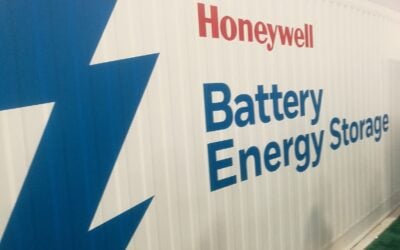
The fire unit at global multinational engineering firm Honeywell made its first move into lithium-ion safety in recognition of battery storage’s “huge potential” for decarbonisation and to help the world move “in a more energy efficient way”, the company has said.
A 1.2GW hybrid tender in India coupling pumped hydro, batteries, solar and wind power has achieved tariffs that are highly competitive against coal power, according to prominent industry figures.