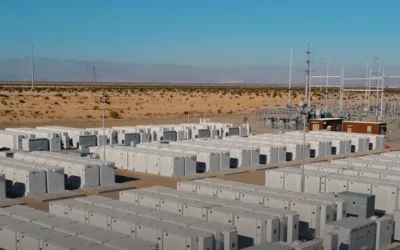
The ZBM is now available for US$0.2/kWh, down from US$0.48 six months ago. Credit: ZBM
Australia-based flow battery provider Redflow has halved the price of its zinc-bromide battery (ZBM) to the point where the cost of energy produced from its battery drops below the price of energy from the grid.
The company’s ZBM battery is suitable for storing and shifting renewable energy, managing peak grid load and supporting off-grid power systems and telecommunications, according to Redflow.
The ZBM is now available for US$0.2/kWh, down from US$0.48 six months ago due to improved technology and reduced manufacturing costs, Redflow claimed.
The recommended retail price for the company’s 10kWh ZBM2 product has also been reduced by 16% to US$8,000 and its 11kWh ZBM3 has decreased by 10% to US$8,800.
Try Premium for just $1
- Full premium access for the first month at only $1
- Converts to an annual rate after 30 days unless cancelled
- Cancel anytime during the trial period
Premium Benefits
- Expert industry analysis and interviews
- Digital access to PV Tech Power journal
- Exclusive event discounts
Or get the full Premium subscription right away
Or continue reading this article for free
Redflow has outsourced most manufacturing processes for the ZBM to OEM giant Flextronics in North America.
The ZBM electrode, currently manufactured in Brisbane, Auatralia, will soon also be outsourced to Flextronics, along with Redflow’s latest electrode surface coating, ACN13, which is used in its batteries.
Redflow has been transitioning to the use of the ACN13 product after 12 months of research and development work. Testing has demonstrated that ACN13 brings improvements in operation and projected lifetime of the batteries.
In order to bring in the manufacturing changes efficiently, Redflow said production of ZBMs will be “substantially reduced” until the transition is complete.
Redflow chairman Simon Hackett said: “We are pleased to announce substantial enhancements to our ZBM electrode lifetime expectations, manufacturing warranty and base pricing. Our ZBM battery is now the best priced energy storage product in the market and today’s price per kWh is a game changer that should generate substantial amounts of interest among customers. We have received orders for ZBM products from Europe and Australia, with further progressive orders expected.”
Back in June, Redflow claimed to have been the first flow battery maker to achieve large-scale manufacturing through its deal with Flextronics. It also entered the European market by operating through a Germany-based subsidiary, Redflow Europe. Interviews given to various outlets last month, CEO Hackett said the company will also eventually target residential and small commercial markets. Smaller scale use of flow batteries has so far been limited.