The Q2 2024 edition of our downstream solar PV journal, PV Tech Power, is now available to download.
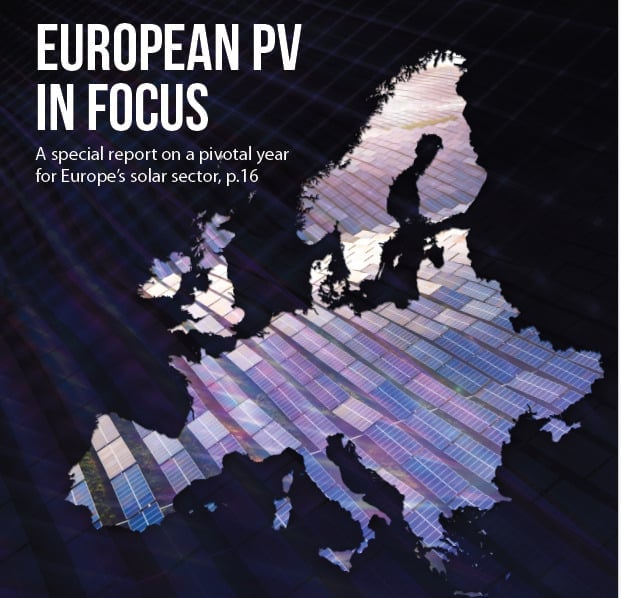
Volume 39 leads with an in-depth report on the latest developments and future outlook for Europe’s solar sector, which finds itself at a critical juncture.
Following Russia’s invasion of Ukraine and the ensuing energy crisis, the EU made several major policy interventions to safeguard the bloc’s energy security. This led to a period of record-breaking growth for PV deployment as solar moved centre-stage in efforts to break Europe’s dependence on Russian oil and gas. But the drivers of that period of growth are receding, and a number of clouds are building on the horizon, from the prospects of political upheaval to lagging grid development.
Our cover feature in this edition of PV Tech Power explores the forces shaping the fortunes of European PV and drills into the mounting challenges it faces.
Try Premium for just $1
- Full premium access for the first month at only $1
- Converts to an annual rate after 30 days unless cancelled
- Cancel anytime during the trial period
Premium Benefits
- Expert industry analysis and interviews
- Digital access to PV Tech Power journal
- Exclusive event discounts
Or get the full Premium subscription right away
Or continue reading this article for free
As always, ‘Storage & Smart Power’, the section of the journal contributed by our team at Energy-Storage.news, returns.
Articles in this edition include:
- Advanced grid-forming inverters: Providing inertia to the grid has perhaps been overlooked as an application where inverter-based resources can step in and directly replace the role of thermal generators. SMA’s Aaron Philipp Gerdemann writes about the potential for inertia and other vital system stability services to be provided by battery storage systems equipped with grid-forming inverters, with reference to some real-world examples.
- Shipping battery storage systems: The logistics of getting BESS equipment on site can be complex, and rules and best practices are evolving almost as quickly as the technologies. Canadian commercial and industrial (C&I) specialist TROES looks at the different aspects of shipping BESS to projects safely and on time, and some of the strategies that can be considered.
- Ireland’s first 4-hour BESS: A battery storage project at Cushaling wind farm in Ireland’s midlands sets a new standard for duration in the country’s large-scale energy storage market. Rory Griffin, head of grid services at Statkraft Ireland, tells the story behind its development and considers what the project means for the future of BESS development on the Irish grid.
You can download your digital copy of PV Tech Power 39 via our subscription service.
Energy-Storage.news Premium subscribers receive every copy of PV Tech Power as part of their subscription as soon as they are published, as well as exclusive content on Energy-Storage.news.
Find out more on Energy-Storage.news Premium, including how to subscribe.