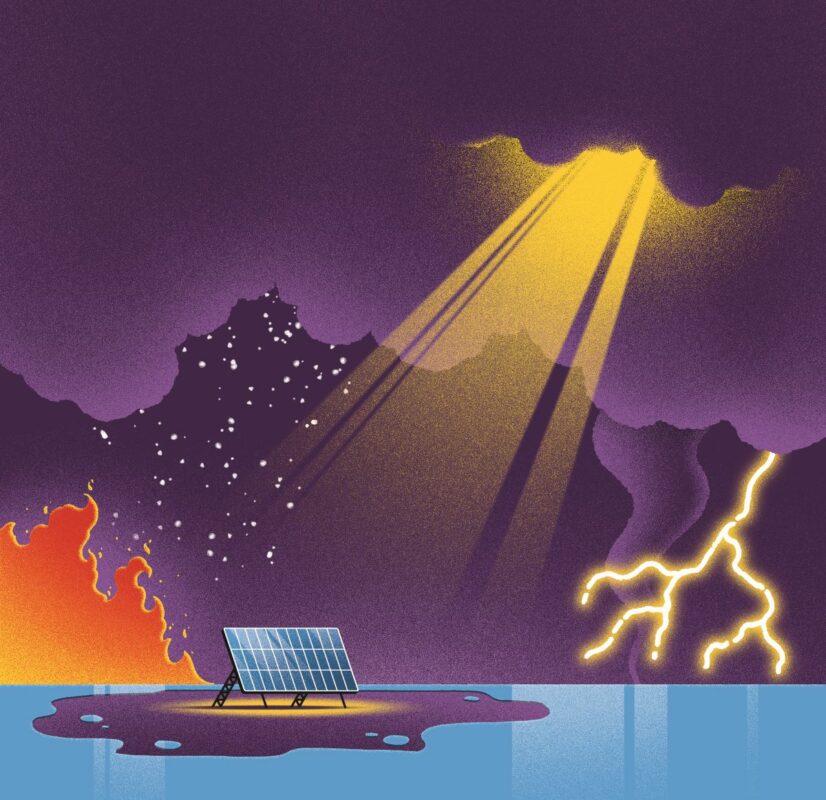
The Q4 2023 edition of our downstream solar PV journal, PV Tech Power, is now available to download, leading with a focus on solar PV’s resilience against extreme weather.
The cover story of Volume 37 is an in-depth look at how the solar industry is addressing the question of resilience, as extreme weather events are more frequent and can impact solar PV projects across the globe. This issue looks at how extreme weather events can have long-term impact on the energy production of PV systems, the importance of design and construction to withstand extreme nature conditions as well as emerging technologies and strategies that help build PV resilience.
‘Storage & Smart Power’ by Energy-Storage.news
As always, ‘Storage & Smart Power’, the section of the journal contributed by our team at Energy-Storage.news, returns.
Just like the main PV Tech Power journal, our dedicated coverage includes in-depth looks at the US market post-IRA, asking what the industry has learned so far, and what might be expected going forward. Articles in this edition include:
Try Premium for just $1
- Full premium access for the first month at only $1
- Converts to an annual rate after 30 days unless cancelled
- Cancel anytime during the trial period
Premium Benefits
- Expert industry analysis and interviews
- Digital access to PV Tech Power journal
- Exclusive event discounts
Or get the full Premium subscription right away
Or continue reading this article for free
- Augmentation strategies to manage long-term battery degradation
Strategies for managing and mitigating degradation of batteries come under the spotlight in a piece from Giriraj Rathore, business strategy manager at Wärtsilä Energy.
- Energy storage and energy density: an EPC’s view
Ben Echeverria and Josh Tucker from Burns & McDonnell on how the industry should be thinking about energy density and its impact on everything from footprint to cost.
- Australia needs renewables, transmission and lots of storage to quit fossil fuels
The country voted for a government that ran on a climate-friendly platform, for the first time taking on the net zero challenge. Stephanie Bashir of Nexa Advisory looks at what needs to happen for Australia to quit coal.
You can download your digital copy of PV Tech Power 37 via our subscription service here.
Energy-Storage.news Premium subscribers receive every copy of PV Tech Power as part of their subscription as soon as they are published, as well as exclusive content on Energy-Storage.news.
For more details on Energy-Storage.news Premium, including how to subscribe, click here.