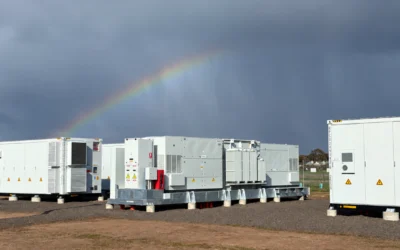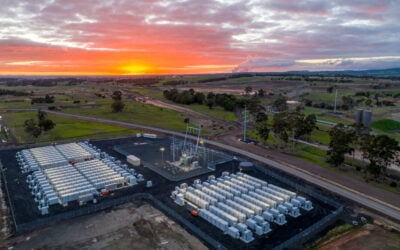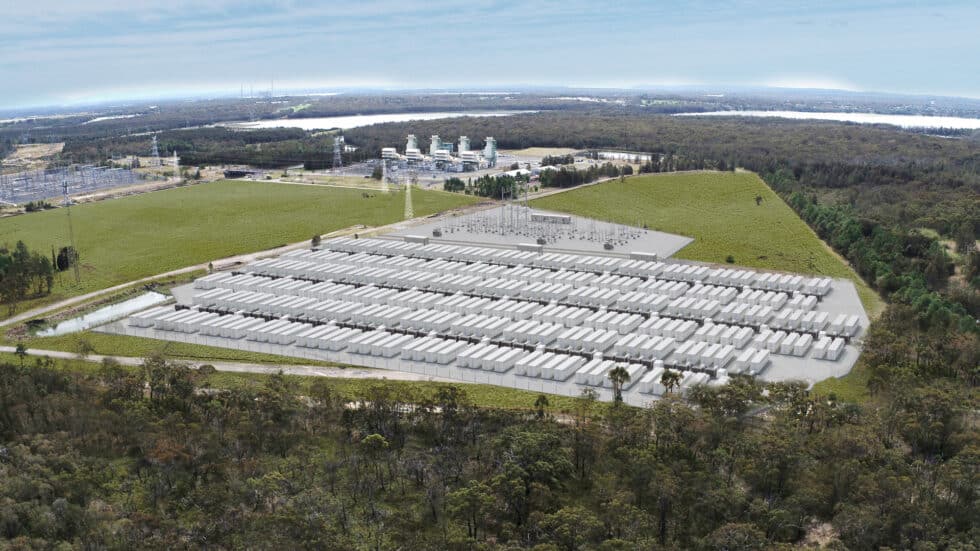
Planning approval has been given for the Waratah Super Battery, which is being developed in Australia to help fill the gap in energy supply from a retiring coal power plant.
The government of New South Wales (NSW) said this morning that it had granted planning approval to the project, which will help the state overcome the 2025 decommissioning of Eraring, a 2,880MW coal power plant.
Scheduled to come online that same year, the NSW government has awarded the project the status of Critically Significant Infrastructure, fast-tracking its development.
The battery storage project has a contract in place to deliver System Integrity Protection Services (SIPS) with developer Akaysha Power – owned by Blackrock – handed a SIPS contract to guarantee at least 700MW/1,400MWh to secure the stability of the network and reliability of electricity supply.
Try Premium for just $1
- Full premium access for the first month at only $1
- Converts to an annual rate after 30 days unless cancelled
- Cancel anytime during the trial period
Premium Benefits
- Expert industry analysis and interviews
- Digital access to PV Tech Power journal
- Exclusive event discounts
Or get the full Premium subscription right away
Or continue reading this article for free
In 2020, a 250MW SIPS contract was handed to developer Neoen for its 300MW/450MWh Victorian Big Battery, currently Australia’s largest battery storage plant in operation.
Another key contract awarded by the government is to high voltage grid operator and manager Transgrid to carry out connection work, while Akaysha Power has contracted US-headquartered battery energy storage system (BESS) integrator and manufacturer Powin Energy to deliver the BESS.
Speaking with Energy-Storage.news earlier this week at the Energy Storage Summit EU in London, Powin Energy executive VP Danny Lu said that the SIPS contract might be comparable to California’s resource adequacy (RA) structure, through which energy suppliers in California’s CAISO grid have to guarantee their reliability of supply. RA has largely driven California’s huge growth in BESS installations.
“[With RA], the utility has a right to call on your system a few times per year, and if you’re available for those times, you meet the requirement. If you’re not available, you get penalised,” Lu said.
That said, there is one key difference.
“…it’s the same thing for Australia, except the impact of the system, not delivering the energy or power will result in catastrophic blackouts or brownouts for the City of Sydney. The use case and how it’s being called on per year, and how it’s structured, is very similar to RA, except the impact of the system not being online, is much, much more devastating.”
The planning approval was given following a period of consultation with stakeholders including local communities. An Environmental Impact Statement is being prepared, including input from the approval process.
Energy-Storage.news’ publisher Solar Media will host the 1st Energy Storage Summit Asia, 11-12 July 2023 in Singapore. The event will help give clarity on this nascent, yet quickly growing market, bringing together a community of credible independent generators, policymakers, banks, funds, off-takers and technology providers. For more information, go to the website.