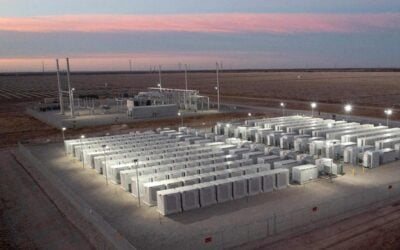
A European Commission (EC) proposal to add domestic content requirements for energy storage will ‘significantly impact’ the industry but may not reduce overall dependence on China.
We heard from Danske Commodities’ principal originator Rimshah Javed at the Energy Storage Summit 2026, to discuss trends in BESS offtake, optimisation, FCAs in Germany and the Danish market. The latter has taken off in the past year.
Software and optimisation firms Flower, Volkswagen’s Elli and Nuvve have progressed large-scale BESS projects under own-and-operate models; Flower and Elli in Germany and the latter in Sweden.
Thailand is increasing its renewable generation but its energy storage market still lags behind, while there is support for the upstream industry, writes analyst Charlotte Gisbourne.
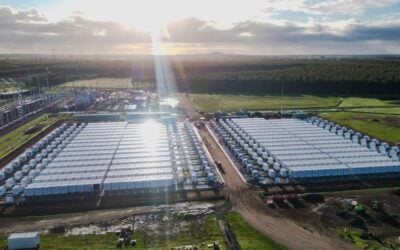
We caught up with the CEO of owner-operator BW ESS, Erik Strømsø, about the firm’s next deployment plans, tolling trends, procurement and LDES, with its 11.5-hour Bannaby BESS in Australia further proof of lithium-ion’s long-duration potential.
Global long-duration energy storage (LDES) deployment figures soared in 2025, but newer technologies risk being outcompeted by the incumbent, lithium-ion (Li-ion).
Joshua Murphy, head of energy storage for IPP Econergy, sat down with Energy-Storage.news for a video interview to discuss various business and financial topics at the Energy Storage Summit 2026 in London last month.
Residential energy storage startup Base Power is collaborating with utility Denton County Electric Cooperative (CoServ) to deploy 100MW of residential energy storage across North Texas, US.
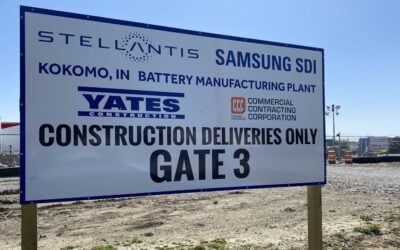
Hanjung America, a subsidiary of South Korea-based battery manufacturer Hanjung NCS, will build its first US energy storage system (ESS) manufacturing facility in Huntington, Indiana, US.
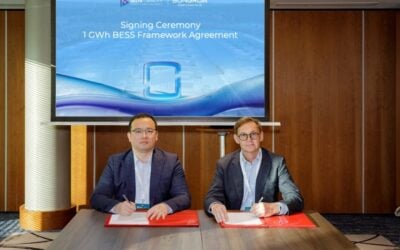
Inverter and BESS firm Sungrow and BESS owner-operator Delta Capacity signed a 1GWh framework supply agreement for European projects at the Energy Storage Summit 2026 in London last week.
Construction has officially commenced on a network upgrade in Australia’s New South Wales Upper Hunter region, which is set to boost transfer capacity by at least 1GW by 2028, in support of the state’s renewable energy transition.
The Australian government is reportedly exploring additional modifications to its Cheaper Home Batteries Program, including the possibility of an early wind-up, as the government seeks budget savings ahead of the May federal budget.