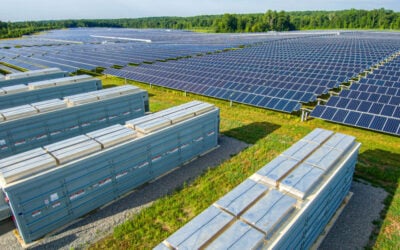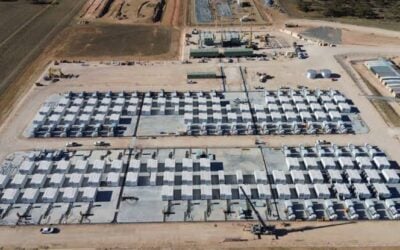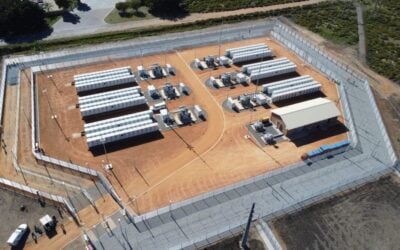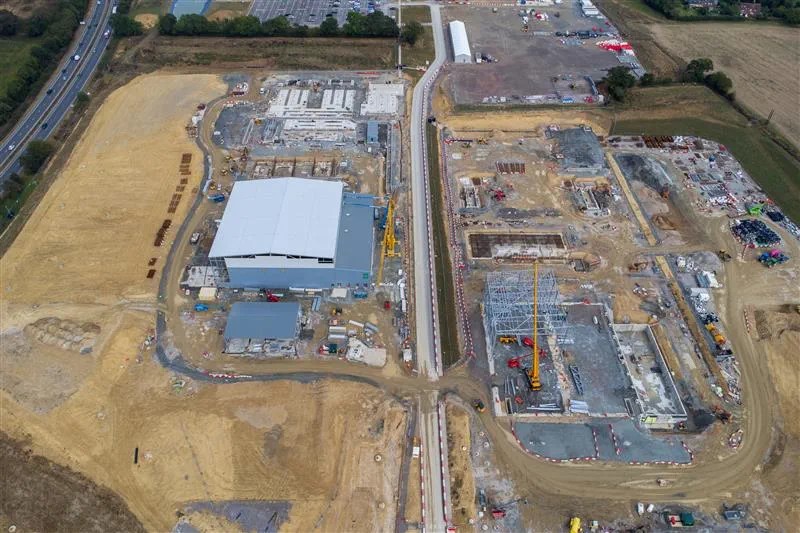
A 300MW/600MWh battery energy storage system (BESS) developed by Ørsted will be co-located with its Hornsea 3 Offshore Wind Farm onshore substation.
Dubbed the Boudica Project, the BESS will be owned by Ørsted ICENI Energy Storage UK, the storage-focused branch of the Danish energy company and developer. It is a novel project in that the storage system will be co-located with an onshore substation, sharing a connection with an offshore wind power plant. The BESS site and substation are near Norwich in Norfolk.
Ørsted currently operates more than 5GW of offshore wind capacity and has an additional 5GW under construction or in development in the UK, including the Hornsea 3 and Hornsea 4 projects. In this year’s Contracts for Difference (CfD) auction round, Hornsea 3 re-bid and was awarded a 1,080MW contract. Ørsted claims that Hornsea 3, with a 2,400MW capacity, is the largest wind energy plant globally.
The co-located BESS development is the result of three years of collaboration between Ørsted, NESO and National Grid Electricity Transmission (NGET), designated a Pathfinder project by the UK government’s Offshore Transmission Network Review (OTNR). OTNR aimed to improve coordination between projects to incorporate increasing amounts of renewable energy coming onto the network.
Try Premium for just $1
- Full premium access for the first month at only $1
- Converts to an annual rate after 30 days unless cancelled
- Cancel anytime during the trial period
Premium Benefits
- Expert industry analysis and interviews
- Digital access to PV Tech Power journal
- Exclusive event discounts
Or get the full Premium subscription right away
Or continue reading this article for free
After working through the Pathfinder process, the Boudica BESS is expected to come online in 2026.
Bridgit Hartland-Johnson, chief specialist of system integration at Ørsted, called the project a “blueprint for the future”, pointing out that similar projects are entering the pipeline “demonstrating that it is a best-in-class solution”.
John Twomey, director of customer connections at National Grid Electricity Transmission, said: “Co-locating assets in this way can help maximise the benefits of new renewable generation planning to connect to the electricity network, ensuring excess wind power can be stored and used when needed.”
To read the full version of this story visit Current.