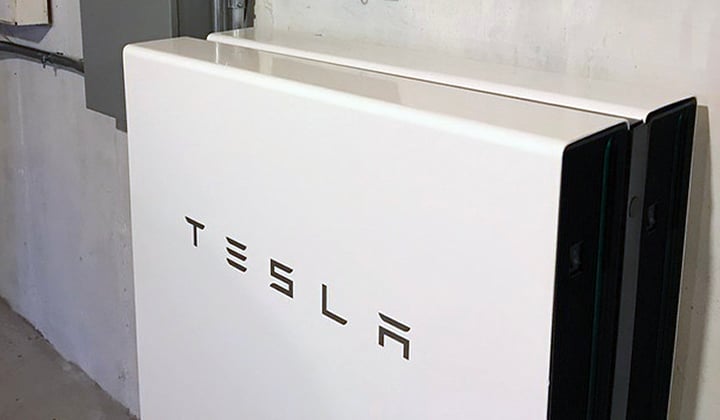
A planned increase in battery storage investments has been announced by Green Mountain Power, the Vermont utility which was first in the US to deploy Tesla Powerwalls in a virtual power plant (VPP).
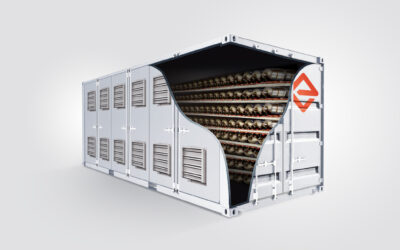
Green Mountain Power said this week that it will up its deployment of grid-connected battery storage from an existing 30MW, comprising residential and large-scale systems, to 55MW.
The utility plans to install the additional 25MW in six communities in its service area within the next two years.
Its customers have already benefited from the existing storage plants’ ability to manage Green Mountain Power’s peak demand requirements, lowering network and energy costs as well as reducing carbon emissions for its customer base of just over a quarter of a million.
Try Premium for just $1
- Full premium access for the first month at only $1
- Converts to an annual rate after 30 days unless cancelled
- Cancel anytime during the trial period
Premium Benefits
- Expert industry analysis and interviews
- Digital access to PV Tech Power journal
- Exclusive event discounts
Or get the full Premium subscription right away
Or continue reading this article for free
Green Mountain Power was in fact the first utility in the US to sell the first generation Tesla residential battery storage system when it was launched in 2015 before rolling out a VPP programme in 2017 to aggregate Powerwalls and leveraging the stored energy as capacity and playing it into wholesale markets.
It then went a step further in 2021 by putting the VPP to perform grid-balancing frequency regulation ancillary services. The programmes were expanded to include battery storage equipment from other providers like Enphase into its ‘bring your own device’ (‘BYOD’) programme.
The utility said that its fleet of batteries saves customers about US$3 million overall each year at the current level of deployment.
In late July, following heatwaves in the eastern US, GMP highlighted the crucial role customer batteries played in helping the utility supply energy when demand peaked as air condition units went on around Vermont.
Just over a period of roughly a week, about US$1.2 million costs were saved and demand for energy from the grid reduced by about the equivalent of 50,000 households worth of consumption.
The idea behind the BYOD programme is that customers buy battery storage to enable home solar self-consumption and backup power, and the utility then pays them a fee or discounts that battery purchase in exchange for being able to leverage the stored energy.
Companies GMP is working on the new larger-scale battery energy storage system (BESS) deployments with include developer Agilitas Energy, which earlier this month began construction on a 3MW/6MW project in the Vermont town of Bristol.
As with other facilities in and joining GMP’s portfolio, the Agilitas project will play into the regional ISO-New England energy markets.
“Higher demand for electricity, rising costs and climate change all negatively impact consumers in a way that wasn’t true even a few years ago,” Agilitas Energy CEO Blake Bilotta said a couple of weeks ago as the project was announced.
“By turning to energy storage — a solution we believe is paramount when talking about cost-effective energy — the benefits are shared among customers, the grid and the energy transition, all at the same time.”