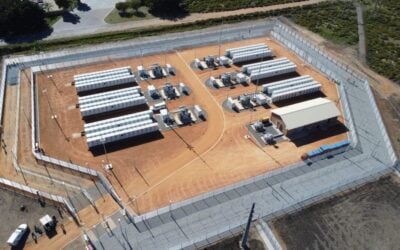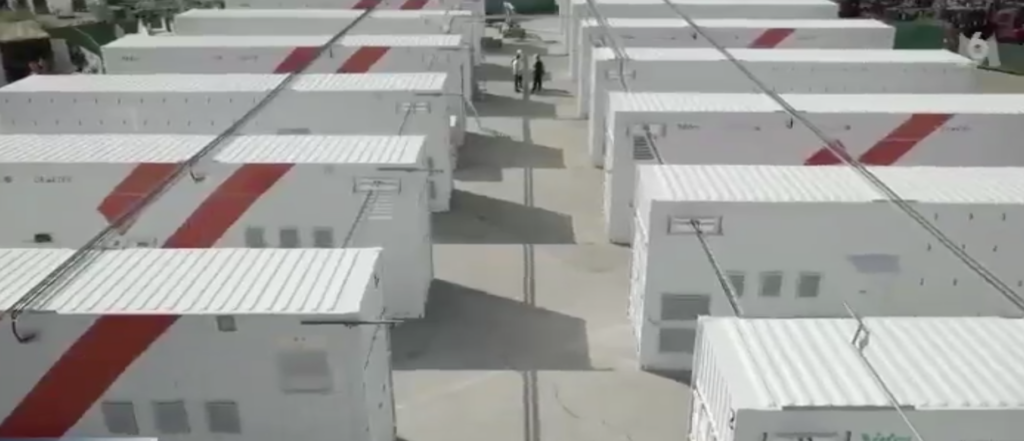
Nidec ASI, the Italy-based industrial solutions division of Japanese conglomerate Nidec Group, has won a contract to deploy 5.4GWh of battery energy storage systems in its home market.
The contract for 18 four-hour energy storage systems totalling 1.35GW/5.4GWh was awarded to Nidec ASI by an unnamed ‘important company in the sector’, a press release said.
Six of the projects will be deployed in Sardinia while the remaining 12 will be in the Centre-North region. Italy’s national transmission grid network is divided up into six regional Transmission Departments for its mainland, of which Centre-North is one, while Sardinia is one of two separate Transmission Districts, along with Sicily.
The company said the projects, which will comprise a total of 372 of the its modular storage units, should be up and running by January 2024.
Try Premium for just $1
- Full premium access for the first month at only $1
- Converts to an annual rate after 30 days unless cancelled
- Cancel anytime during the trial period
Premium Benefits
- Expert industry analysis and interviews
- Digital access to PV Tech Power journal
- Exclusive event discounts
Or get the full Premium subscription right away
Or continue reading this article for free
Nidec added that three factories in Italy and one in France would be at full production capacity for 8-10 months in order to deliver the project. Conversion panel manufacturing, wiring operations and assembly will be done in the Cinisello Balsamo plants, inverters will be manufactured in Montebello Vicentino and the auxiliary and control systems in Roche-la-Molière, in France.
The initiative is in response to REPowerEU, the EU’s recent acceleration of its decarbonisation goals which set a target of 45% renewable energy by 2030.
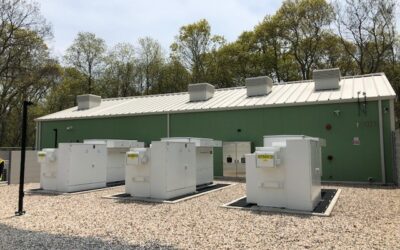
The battery storage units Nidec is delivering will help the Italian grid to integrate more renewable energy by storing it when it is abundant and discharging it when needed most. The four hour duration will enable such load shifting and 4-5 hours appears to be a popular choice for large-scale systems in the country.
Grid operator Terna has 50MW/250MWh of its own energy storage while Spain-based Ingeteam recently announced it would deploy a 4.8 hour system totalling 340MWh next year.
Nidec ASI is one of the largest battery energy storage system integrators in the world with 1.6GW deployed to-date in 21 countries, just making it into the top ten in IHS Markit’s 2021 battery storage system integrators ranking.
Dominique Llonch, CEO of Nidec ASI and Chairman of Nidec Industrial Solutions commented: “This initiative demonstrates the excellence of Italian technology and can help Europe move towards energy savings.
“This is important news for the decarbonisation of our country, which, by creating similar systems, will be able to strategically exploit its immense wealth of renewable energy sources and definitively lower the need of traditional energy sources while drastically reducing the cost of energy.”