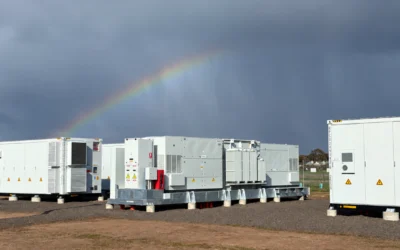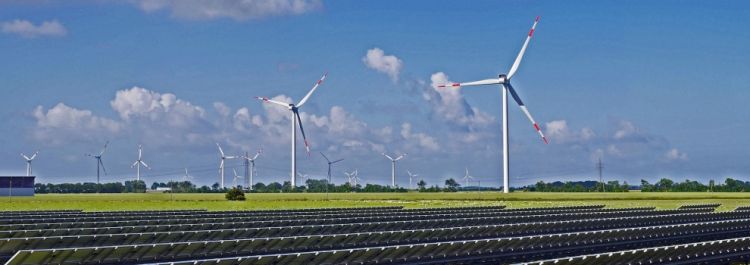
The Clean Energy Finance Corporation (CEFC) and the Australian Renewable Energy Agency (ARENA) have both financed the Kennedy hybrid solar, wind and storage project in north Queensland, which is being developed Windlab and Eurus Energy.
CEFC will provide AU$94 million (US$74 million) in debt finance for what will be Australia’s first large-scale project using all three of these technologies.
ARENA had also already provided up to AU$18 million in recoupable grant funding for the project, announced last year.
The AU$170 million 60MW project will consist of 43.2MW of wind, 15MW of solar PV, a 2MW / 4MWh lithium-ion battery and a synchronous condenser. It will connect to the local grid and Windlab has secured a 10-year PPA with Queensland government-owned CS Energy to purchase the renewable energy and some of the large-scale generation certificates (LGCs) from the project.
Try Premium for just $1
- Full premium access for the first month at only $1
- Converts to an annual rate after 30 days unless cancelled
- Cancel anytime during the trial period
Premium Benefits
- Expert industry analysis and interviews
- Digital access to PV Tech Power journal
- Exclusive event discounts
Or get the full Premium subscription right away
Or continue reading this article for free
The hybrid project is expected to be fully operational by the end of 2018.
CEFC wind sector lead Andrew Gardner. “Financing three separate technologies on one site was a complex undertaking that had not previously been achieved in Australia. As the sole debt financier for this project, our goal was to demonstrate the bankability of large-scale, integrated hybrid renewable energy projects for the future. We expect such projects to become an increasingly important part of Australia’s electricity system, with complementary battery storage addressing the intermittency of wind and solar generation to support grid stability.”
Windlab chairman and chief executive Roger Price said: “Successfully completing this project will also help unlock the enormous potential of Big Kennedy, the 1,200MW wind resource 80 kilometres north of Kennedy Energy Park that will be critical in balancing the large amounts of solar generation that is being added to the Queensland network.”
This week, however, the Australian indusrty was concerned about the government’s decision to drop the Clean Energy Target in favour of a “technology-neutral” policy.