The US state of California’s Senate has approved a bill that would provide rebates to customers for the purchase of energy storage systems, bringing the legislation a step closer to introduction.
The bill, SB 700, was introduced by Democratic Senator Scott Wiener, along with SB 71, which is a mandate for new buildings to include rooftop solar in their construction. Both passed the Senate by a 23-13 vote and are now to be passed over to the State Assembly for consideration.
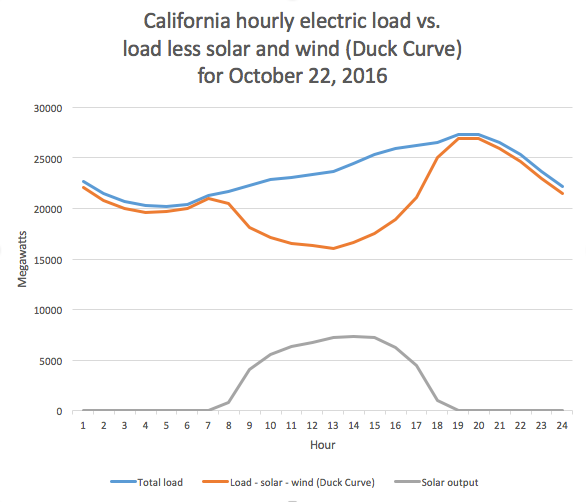
SB 700 is designed to encourage the use of energy storage to load shift solar, particularly for use at night. It should help the state mitigate its famous “duck curve”, the graphical representation of solar overproduction in the morning until early afternoon and lack of solar to meet demand in the evening peak. Smoothing and shifting solar generation loads into the late afternoon and early evening would cut into that difficult peak of demand, when normally solar would not be able to cover it.
“By supporting and incentivizing the development of better and more efficient energy storage technologies, SB 700 will reduce the costs for energy storage just as previous rebate programs did for solar power,” a statement from Scott Wiener’s office said.
Try Premium for just $1
- Full premium access for the first month at only $1
- Converts to an annual rate after 30 days unless cancelled
- Cancel anytime during the trial period
Premium Benefits
- Expert industry analysis and interviews
- Digital access to PV Tech Power journal
- Exclusive event discounts
Or get the full Premium subscription right away
Or continue reading this article for free
Also known as the Energy Storage Initiative, SB 700 would take money authorised for the state’s existing SGIP (Self-Generation Incentive Programme), which is due to expire in 2019, and add a separate energy storage programme, which would be in place until 2027. Securing funding for a whole decade would add stability to an energy storage market and help bring down costs. The bill also stipulates that 30% of the rebate is reserved for low income residential and disadvantaged communities and for job training and workforce development.
“California can continue to lead the clean energy revolution that is cleaning our air and staving off the worst impacts of climate change. We can’t continue to use fossil fuels when we have better options. SB 700 allows solar power to work at night,” Dan Jacobson, state director of non-profit Environment California said.
The state’s Senate also passed a bill updating its renewable portfolio standard to 50% by 2026 and 60% by 2030 from the current “50% by 2030” target, at the same time as SB 700 and SB 71 were passed. SB 100 would clear a pathway to 100% renewables by 2045. Meanwhile California’s governor, Jerry Brown, has been one of the most outspoken US politicians in condemning Donald Trump’s controversial decision, announced last Thursday, to withdraw from the international Paris Agreement on climate change. At last week’s Intersolar Europe / ees Europe trade show in Germany, Energy-Storage.News and sister site PV Tech’s reporters found the industry to be in a defiant mood, with many citing a view that the US economy would likely be the biggest loser if the US pulls out.