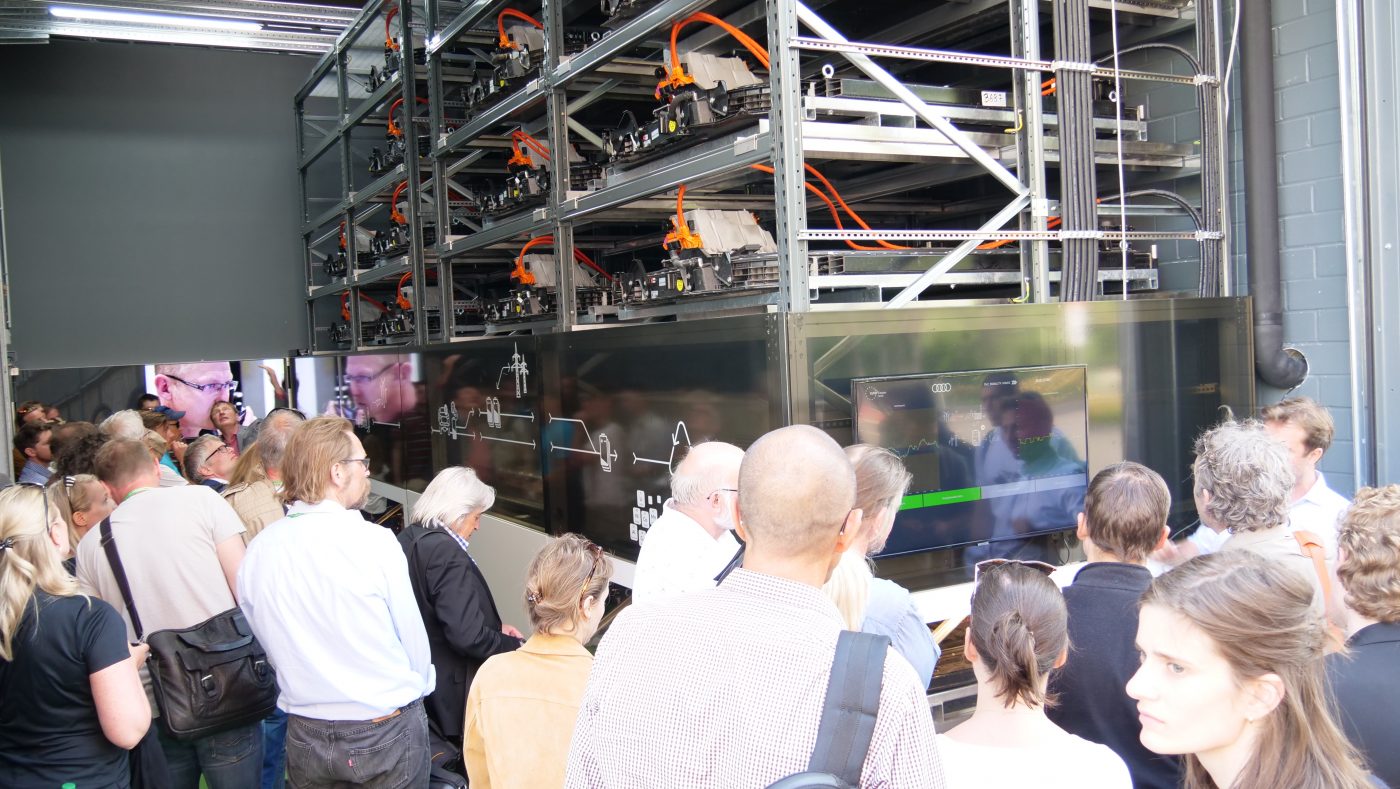
BELECTRIC has completed a 1.9MWh energy storage system using second life electric vehicle (EV) batteries, for Audi in Berlin.
The project has been built at the EUREF Campus, a high-tech, low carbon innovation cluster. The system uses 20 batteries from test vehicles owned by Audi.
“On the EUREF Campus, we’ve seen a present-day example of how the energy and transport sectors can work together effectively and [harmonious] in the future. I’m pleased that BELECTRIC has been able to be part of this groundbreaking project,” said Frank Amend, the BELECTRIC Management Board member responsible for batteries and hybrid systems.
The Audi install will perform a number of tasks including grid stability, arbitrage, peak shaving, reactive power and partnering with a co-generation plant. A number of buildings on the campus have solar installed.
Try Premium for just $1
- Full premium access for the first month at only $1
- Converts to an annual rate after 30 days unless cancelled
- Cancel anytime during the trial period
Premium Benefits
- Expert industry analysis and interviews
- Digital access to PV Tech Power journal
- Exclusive event discounts
Or get the full Premium subscription right away
Or continue reading this article for free
“This battery storage system will allow Audi to provide an important link between volatile generation from renewable energy sources, different consumers and state-of-the-art power grids,” said Amend. “At BELECTRIC, we assisted with system integration for this storage facility by drawing on the wide experience we’ve been able to gain from our extensive track record of implementing other storage projects.”
The installation is part of the Mobility2Grid project, which has brought together a consortium of companies including Audi, BMW, Cisco and Siemens.