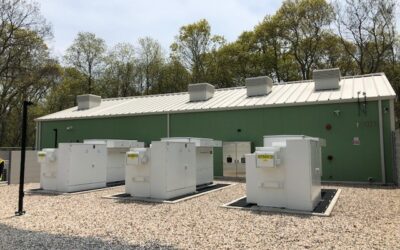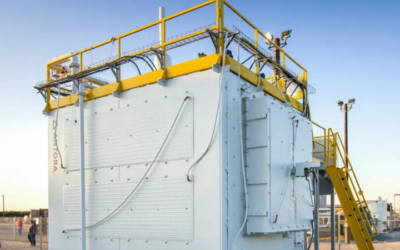
New Jersey is the latest US state to set itself targets for the deployment of energy storage, with newly passed legislation calling for 600MW of the technology within three years.
A bill, S2314/A3723, passed last week as one of three sustainability and low carbon measures for the state going forward, calls on the New Jersey Public Utilities Board to analyse the costs and potential benefits of energy storage as well as making revisions for community solar, energy efficiency, peak demand reduction and solar renewable energy certificate programmes.
Local independent system operator PJM Interconnection is famed in the energy storage world as the first local transmission organisation in the US to favour clean, fast-acting batteries to provide frequency response in a competitive market. PJM has been instructed to conduct analysis with the Public Utilities’ Board.
Six months after the creation of a report, the Utilities’ Board should “initiate a proceeding to establish a process and mechanism for achieving the goal of 600 megawatts of energy storage by 2021 and 2,000 megawatts of energy storage by 2030,” a Senate Budget and Appropriations Committee statement issued earlier this month read. The report itself must be put together one year after the passing of the bill, giving a possible 18 month lead time from this month until deployments must begin.
Try Premium for just $1
- Full premium access for the first month at only $1
- Converts to an annual rate after 30 days unless cancelled
- Cancel anytime during the trial period
Premium Benefits
- Expert industry analysis and interviews
- Digital access to PV Tech Power journal
- Exclusive event discounts
Or get the full Premium subscription right away
Or continue reading this article for free
Required analysis
The PJM-Utility Board analysis must consider a range of metrics and possible values for energy storage. These include:
- An assessment of how renewable energy, stored, can benefit electric ratepayers, providing emergency backup, “offsetting peak loads and stabilising the electric distribution system”.
- The impact of renewable energy storage on EVs, EV infrastructure and electric car uptake by consumers.
- The benefits and costs of energy storage technologies for local ratepayers, governments and electric power utilities.
- Setting the levels of energy storage appropriate for deployment in the state – which could obviously impact those proposed target levels.
Solar portfolio
Also in the bill was a provision to accelerate the state’s path to meeting renewable energy targets, solar in particular. Electric power suppliers and “basic generation service providers” should provide a greater portion of their energy from solar each year, up to 5.1% by 2021 and gradually easing off to 2033.
The bill will also initiate the decline of solar alternative compliance payments (SACP), the amount of money load-serving entities must pay per megawatt-hour that they do not generate themselves in order to meet state-wide Renewable Portfolio Standards (RPS). SACP has been set at US$268 for 2019 and will be reduced by US$10 each year up to 2033.
By the beginning of 2020, 21% of all kilowatt-hours of electricity sold will have to come from “Class I” renewable sources, while new RPS will be set at 35% by 2025 and 50% by 2030.
Joining other states in setting targets
New Jersey now joins a select handful of US states with energy storage deployment targets either in place or proposed for introduction. California and New York are the most prominent examples, with Arizona’s proposed Clean Peak standard – described recently by one expert as a “wake-up call to other states” – and Massachusett’s ‘aspirational’ utility target not far behind.