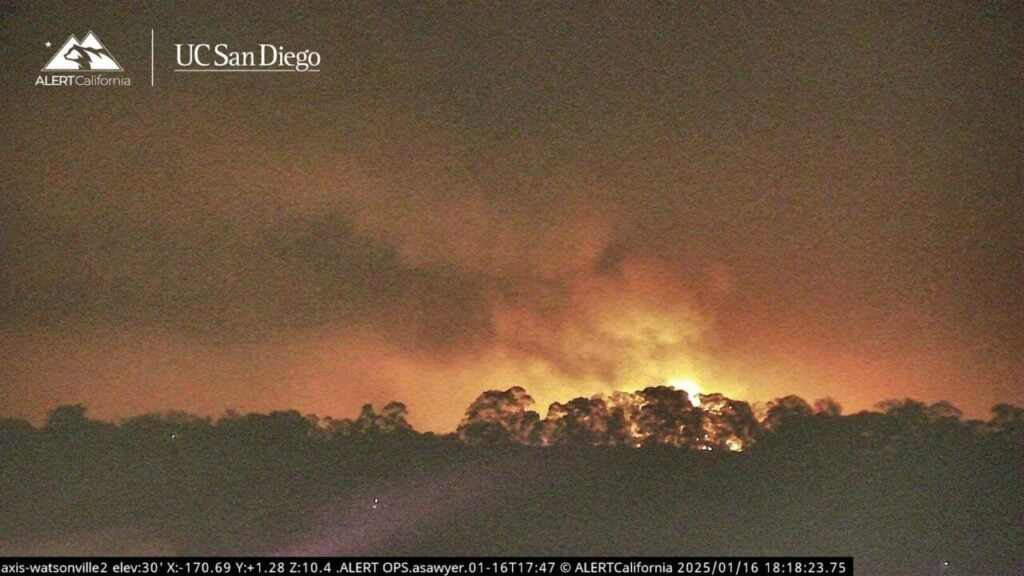
We caught up with a partner at insurance broker Lockton about recent developments in the space, including the ramifications – or lack thereof – of the recent Moss Landing fire on insuring BESS projects going forward.
It’s now been nearly two months since the Moss Landing fire of 16 January, 2025, but the local and industry-wide ramifications of the event may be felt for some time.
As Energy-Storage.news reported last week, numerous California County and State-level policies are being enacted that will put more controls and requirements on battery energy storage system (BESS) project development. Local residents have also reported continued negative health effects from the event, which was among the largest BESS fires we have ever seen.
But what are the implications for the BESS insurance sector, which pays out for events like these?
Try Premium for just $1
- Full premium access for the first month at only $1
- Converts to an annual rate after 30 days unless cancelled
- Cancel anytime during the trial period
Premium Benefits
- Expert industry analysis and interviews
- Digital access to PV Tech Power journal
- Exclusive event discounts
Or get the full Premium subscription right away
Or continue reading this article for free
Industry will pay for this, just like any other event
“Fire events have an impact as these claims will be paid by the insurance market via the premiums everyone pays. That’s the case for the Moss Landing fire, just as any other,” Michael Bogdan, partner and BESS specialist at global insurance broker Lockton told Energy-Storage.news.
However, as many industry sources have pointed out, the specific, indoor BESS project that caught fire at the Moss Landing site (which has several separate BESS projects alongside a gas plant) is very different to what is being deployed today and insurers will recognise that, he added.
“Insurers are sophisticated enough to know the difference between the design of the Moss Landing project and the design which the vast majority of projects are using today. Indoor batteries will probably face much more scrutiny as a result of the incident, but the vast majority of others don’t match the Moss Landing profile.”
Bogdan pointed to the example of a fire on 19 February 2025 at an under-construction BESS in England, UK, which Energy-Storage.news revealed to be at a project from owner-operator Statera. The event was reported to be limited to one unit and was contained within 24 hours and handed back to site management, with the site re-opening for construction activities the following day (21 February).
Bogdan: “That is the story of BESS fires and the types of loss events that we expect to see for the BESS market going forward. I do not see Moss Landing as a market-moving event for BESS insurance.”
New BESS product
Bogdan was talking to us as Lockton launched its ‘BESS Lock’, a new specialised insurance facility designed to streamline coverage for BESS.
“The underwriting process for BESS is very rigorous and our team has built up specialist knowledge around that. This facility is basically a way that clients (project owners) can input information into preset parameters to get an insurance product quickly that is competitively priced,” he said.
“It makes sure getting insurance doesn’t slow anything down, by pre-underwriting the project. Project owners can suffer from info fatigue, we help them provide the project details in the right way.”
The product includes a full-follow facility of up to £250 million (US$323 million) in capacity. The full-follow facility is the amount of insurance coverage that will be put in by those ‘following’ a lead insurer. The lead insurer sets the terms and will cover, say, the first 30%, with multiple insurers filling out the rest, Bogdan explained.
The full-follow facility means that projects worth around £300 million in capex can be covered by the product, which would roughly equate to a 1GWh BESS project today, Energy-Storage.news notes.