The government of Mauritius has welcomed the commissioning of a 20MW battery storage project which will provide frequency regulation to the East African island nation’s grid.
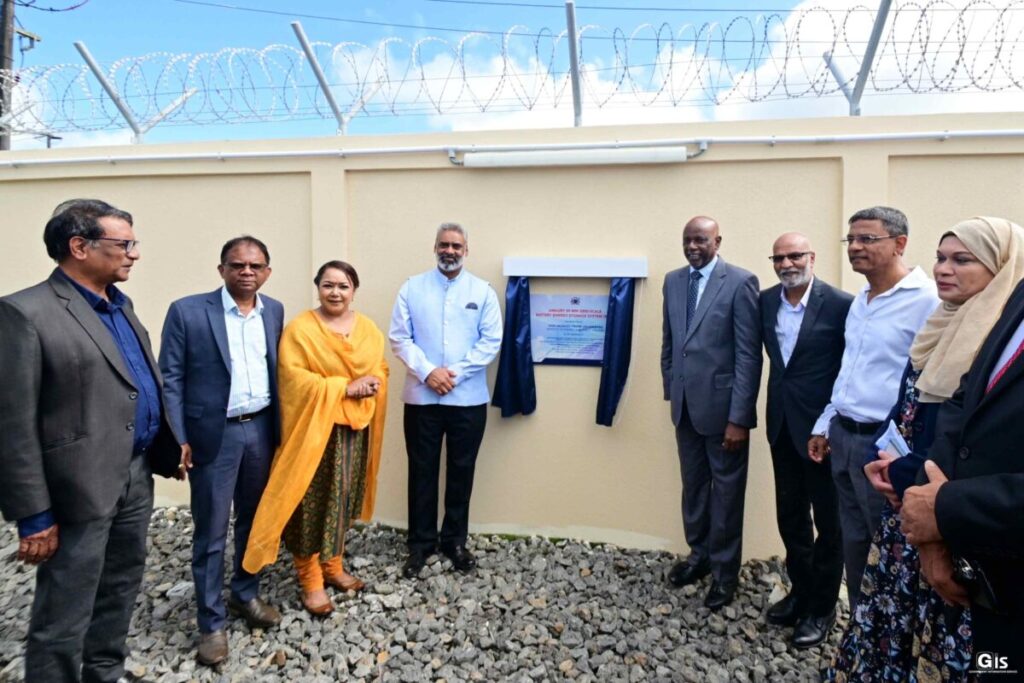
The large-scale battery energy storage system (BESS), provided by German engineering company Siemens, was inaugurated on the morning of 28 May, with dignitaries in attendance including the country’s minister of energy and public utilities Georges Pierre Lesjongard.
It brings the total BESS capacity operated by the government-owned Central Electricity Board (CEB) to 38MW. That includes two 2MW systems built first in 2018, followed by 14MW of batteries split across four sites at substations, three of 4MW and another 2MW connected to the grid.
The BESS resources are aimed at enabling Mauritius to reach its energy policy goals, including a target of sourcing 60% of its electricity from renewables by 2030 and reducing greenhouse gas (GHG) emissions 40% and ending the burning of coal for electricity by that year.
Try Premium for just $1
- Full premium access for the first month at only $1
- Converts to an annual rate after 30 days unless cancelled
- Cancel anytime during the trial period
Premium Benefits
- Expert industry analysis and interviews
- Digital access to PV Tech Power journal
- Exclusive event discounts
Or get the full Premium subscription right away
Or continue reading this article for free
CEB is responsible for electricity transmission, distribution and supply to the island, producing about 37% of the country’s total power requirement from four thermal power plants and 10 hydroelectric plants, and along with coal, heavy fuel oil are the main sources of generation, and both are expensive, imported and polluting.
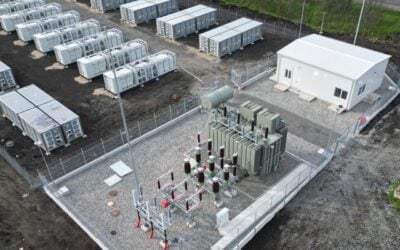
The new system at Amaury substation’s total cost was cited at MR700 million (US$15.5 million), installed and commissioned by the French subsidiary of Siemens. A government media statement noted that the containerised system will be capable of sub-20 millisecond response times to fluctuations in grid frequency.
Siemens also delivered the earlier 14MW, four system portfolio, the cost of which was given at around US$10 million as it was completed in late 2021.
At the Amaury projects inauguration this week, CEB general manager Rajden Chowdharry described it as a crucial step towards a more stable and resilient power grid helping to buffer against frequency and voltage deviations, while also performing peak shaving applications by shifting off-peak solar-generated power to output to the grid during afternoon and evening peaks.
According to official statistics, in 2020, 23.9% of the Indian Ocean island state’s electricity was from renewables, with the largest share generated from sugarcane waste.
Under the 2022-2023 national budget, the government committed to initiatives including setting up 140MW of hybrid renewables-plus-storage facilities with private entities, investment in about 30MW of ground-mount and commercial solar PV, and the new 20MW battery storage system.
CEB launched a tender for 90MW to 110MW of hybrid renewables facilities in March 2022. French independent power producer (IPP) Qair Energy was awarded contracts for 60MWac of solar PV paired with an undisclosed capacity of energy storage at four sites in the country, representing the solicitation’s biggest win, announced in March the following year after the RFP launched.
The government also brought in measures to promote the adoption of rooftop solar PV through loans and concessions, while regulations to allow private individuals and businesses to generate their own renewable energy up to 150% of their own energy demand were introduced, as was a feed-in tariff (FiT) for medium-scale distributed generation.