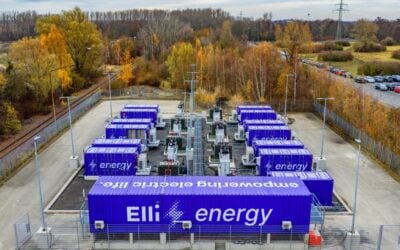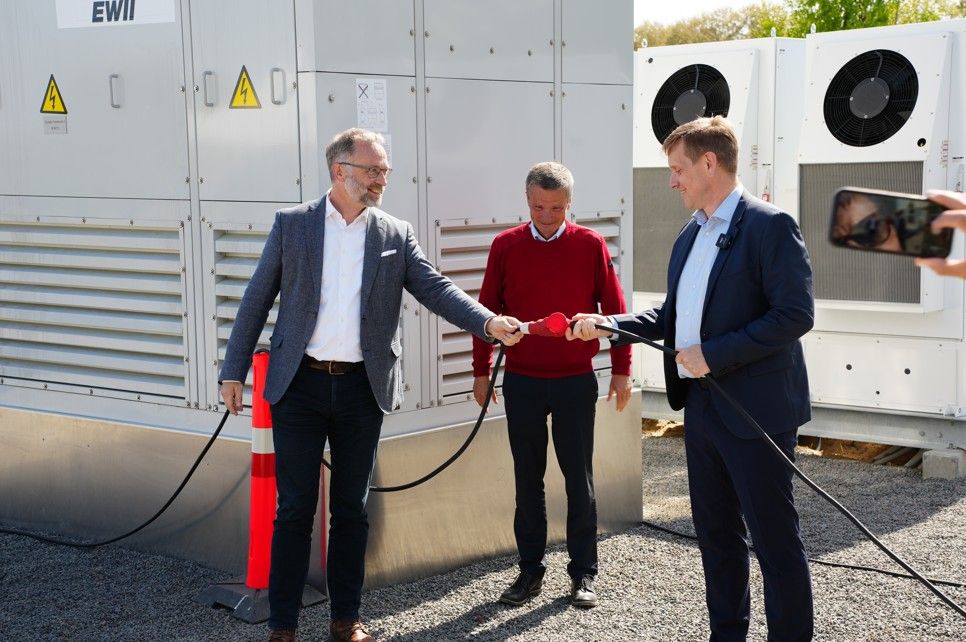
Utility EWII has connected a 30MW/43MWh BESS unit to the grid on the island of Bornholm in Denmark, which has the potential to act as an emergency backup in case a nearby interconnector to Sweden fails.
The project in Hasle is the largest battery energy storage system (BESS) in the country, EWII said, and will provide flexibility services to transmission system operator (TSO) Energinet as it decarbonises the grid. It is comprised of 116 battery units.
Alongside smaller operational BESS in Kolding, Munkebo and Korsør and a soon-to-be-commissioned project in Svenstrup, North Jutland, EWII will soon have a total BESS fleet of 49MW/82MWh.
Claus Møller, commercial director for EWII, said that the company was focusing on BESS as ‘it works’ while other clean energy technologies are facing technological and commercial hurdles.
Try Premium for just $1
- Full premium access for the first month at only $1
- Converts to an annual rate after 30 days unless cancelled
- Cancel anytime during the trial period
Premium Benefits
- Expert industry analysis and interviews
- Digital access to PV Tech Power journal
- Exclusive event discounts
Or get the full Premium subscription right away
Or continue reading this article for free
“While large energy projects such as energy islands, wind supply and hydrogen plants are stranded on the drawing board, we are focusing on battery technology because we know it works. With our digital platform, both we and our customers can trade with flexibility, which is why we will invest further in BESS plants and energy storage in the coming years,” said Møller.
The Bornholm project could in the future power the island for 1-2 hours if problems arise with a subsea interconnector cable to Sweden, Møller added: “If the submarine cable fails, the battery at Hasle could quickly connect and supply the island while boilers at the local power plant heat up. This is not a current option today, but we hope it will be a solution in the long term.”
Other companies deploying grid-scale BESS in Denmark include (primarily) solar developers Better Energy, Eurowind Energy and Nordic Solar as well as BESS developer-operator Dais Energy, with CEO Daniel Connor discussing the market with Energy-Storage.news late last year.
Denmark has strongly underlying merchant revenues and there is also talk of bringing in a capacity market (CM), but for now the merchant stack makes financing relatively challenging, Connor said.