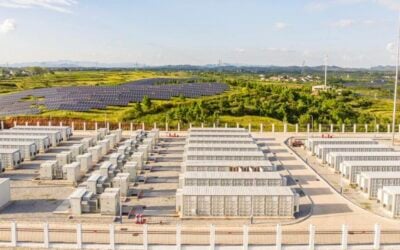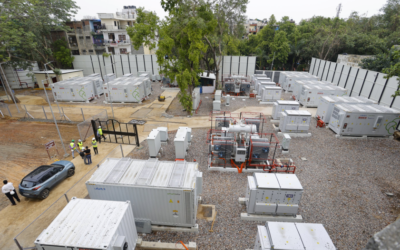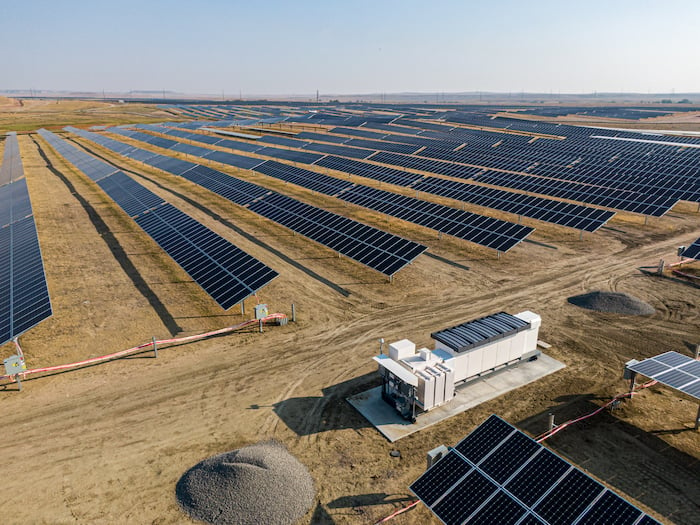
US solar EPC firm DEPCOM Power has 650MWh of battery energy storage system (BESS) projects in execution.
The portfolio adds to 4GW of utility-scale solar PV projects under the Arizona-headquartered company’s belt, and a further gigawatt under construction and in pre-construction stages. DEPCOM also has 2GW of solar PV assets to look after in operations and maintenance (O&M) contracts.
The announcement comes a few months after Koch Industries’ subsidiary Koch Engineered Solutions (KES) acquired DEPCOM in a deal which closed late last November.
The move marked KES’ entry into the renewables space, with the acquiring company citing the growing competitiveness of unsubsidised utility-scale solar as a major driver behind the move. KES VP of business development Don Brown noted DEPCOM’s “impressive growth over the last few years”.
Try Premium for just $1
- Full premium access for the first month at only $1
- Converts to an annual rate after 30 days unless cancelled
- Cancel anytime during the trial period
Premium Benefits
- Expert industry analysis and interviews
- Digital access to PV Tech Power journal
- Exclusive event discounts
Or get the full Premium subscription right away
Or continue reading this article for free
The new owners’ reach and investments in a wide range of areas will be leveraged by the EPC firm’s energy storage division, adding bankability to its fully-integrated technology and services offerings: the company offers energy optimisation, access to top-tier battery equipment, integrated energy management system (EMS) and long-term service agreements (LTSA).
DEPCOM claimed it has access to suppliers of certified technologies that de-risks procurement and gets it competitive pricing, financial energy optimisation that can optimise battery life and improve IRR, provides 24/7 monitoring, EMS with SCADA controls and fully-wrapped LTSAs.
“We partner hand-in-hand with asset owners to deliver technology-agnostic systems through an end-to-end solution that reduces complexity and risks for maximum revenue and ROI,” the company’s executive VP for energy storage Steve Chun said.
CEO Johnnie Taul said that recent investments by Koch Industries into areas including battery recycling (with over US$100 million invested into Li-Cycle), next-generation battery technology (with investments into zinc battery maker Eos, iron flow battery company ESS Inc and a partnership on building US advanced battery gigafactories with Norway’s FREYR Battery) and global logistics would make the end-to-end solution offered by DEPCOM a “compelling fully integrated solution”.
Koch Strategic Platforms, one of the industrial conglomerate’s venture capital (VC) investment arms, also recently committed to invest US$150 million in Aspen Aerogels, a company making a ‘thermal runaway barrier’ gel technology.
DEPCOM did not reveal the customers or locations of its portfolio, the applications they will serve or the types of market they will participate in. Energy-Storage.news has made enquiries on this and some other points to the company but had not received a reply at time of publication.
In an interview on the EPC company’s corporate blog, DEPCOM Power chief engineer Rob Rynar said the company worked with Tesla on a recent solar-plus-storage project, combining a 3MW solar array with a 3MWh Tesla Megapack BESS unit.
Rynar said the fully integrated design of the Megapack, including cells, inverters, HVAC and controls meant it required “virtually no field assembly,” which differentiated Tesla from many of its competitors.
“There is little debate about the immense future of energy storage’s role in global electrical systems,” Rynar added.
“The benefits that ESS can bring to all levels of the electrical transmission, distribution and demand side are numerous. Not only does BESS compliment the intermittent renewable energy capacity, but it also allows itself to be a backup in case of grid failure.”