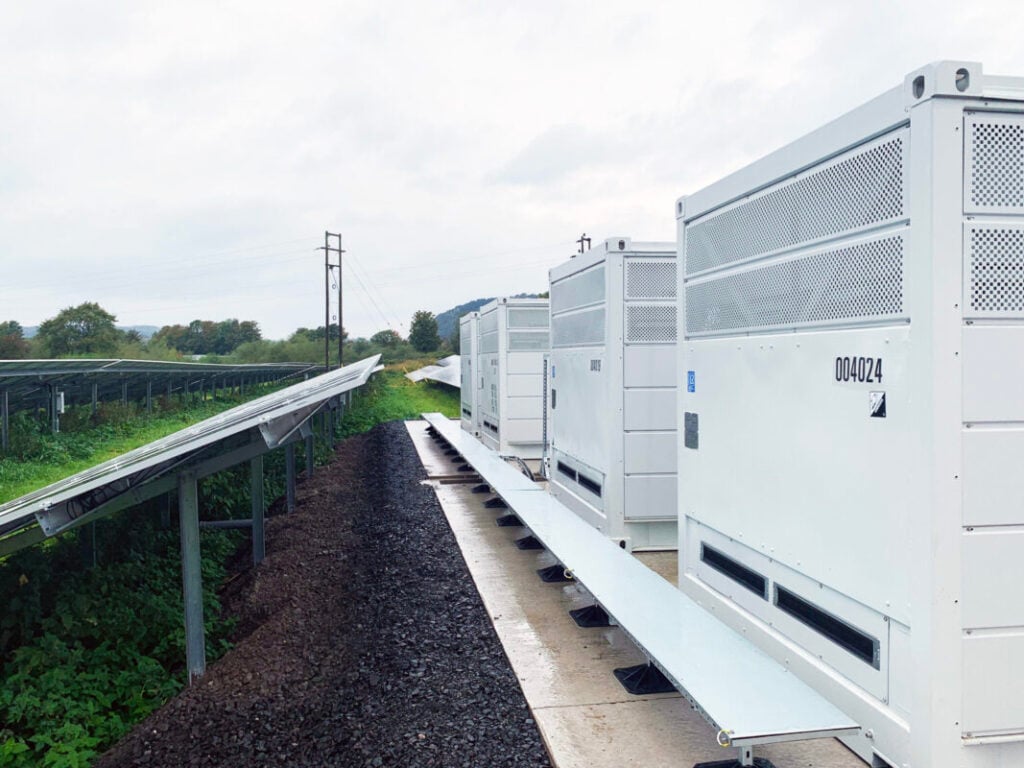
Invinity Energy Systems has been given the green light to deploy a 20.7MWh vanadium redox flow battery system in the UK, the largest in the country.
The UK Department for Energy Security and Net Zero (DESNZ) has given the London Stock Exchange-listed technology provider and manufacturer the go-ahead on the project, which is the largest to be deployed by the company worldwide.
Invinity has begun manufacturing the VS3 batteries that will comprise the vanadium flow battery (VFB) system at its Motherwell factory in Scotland. Construction is expected to begin in the second half of 2025. Operation is expected to begin in 2026.
The project will be installed in the South East of England and will be the first commercial battery project in the UK to co-locate a long-duration battery energy storage (LDES) system with onsite generation.
Try Premium for just $1
- Full premium access for the first month at only $1
- Converts to an annual rate after 30 days unless cancelled
- Cancel anytime during the trial period
Premium Benefits
- Expert industry analysis and interviews
- Digital access to PV Tech Power journal
- Exclusive event discounts
Or get the full Premium subscription right away
Or continue reading this article for free
Invinity expects to co-locate the project with a solar PV array that will be developed separately by a third party.
The project is being developed as part of a demonstration competition held by DESNZ. The Longer Duration Energy Storage (LODES) competition made over £69 million of capital funding available across two competition streams.
In 2023, it was announced that Invinity had been awarded £11 million through the LODES competition. The company said today that the total project cost is expected to be up to £20 million, of which £7-10 million will be funded through DESNZ’s competition.
With full ownership and control of the project, Invinity says it will use its unrestricted access to trading and operating data from the site to fully optimise the battery to showcase its capabilities. It will also receive the ongoing revenue from the system’s grid balancing and energy trading services.
The firm discussed its move from solely being a technology provider to having part or full ownership in projects with Energy-Storage.news in May 2024 (Premium access).
See the full original version of this article on our sister site Solar Power Portal.