
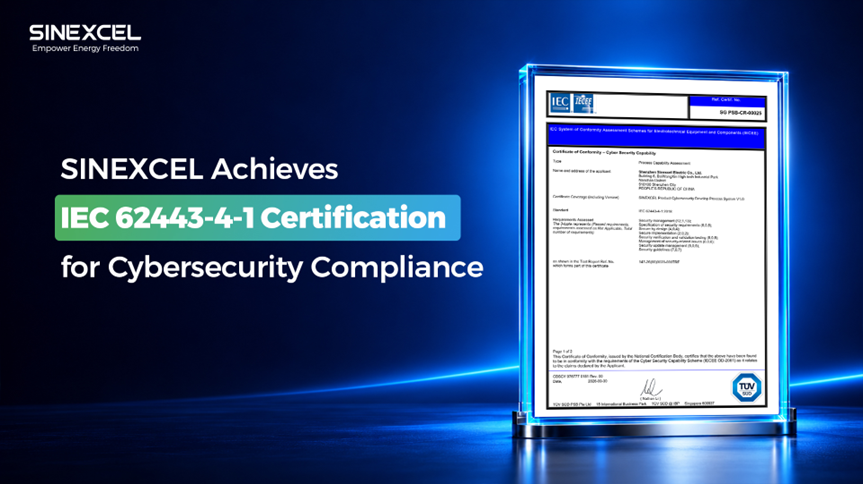
SINEXCEL has received IEC 62443-4-1:2018 cybersecurity certification from TÜV SÜD following an independent assessment of its Product Cybersecurity Development Process System V1.0. This milestone demonstrates the company’s ongoing commitment to internationally recognized secure product development practices.
As industrial and energy systems become increasingly interconnected, cybersecurity has become essential to operational reliability and resilience. The IEC 62443 series provides an internationally recognized framework for industrial automation and control system security, supporting manufacturers in establishing robust cybersecurity practices throughout the product lifecycle. Its principles also provide a foundation for addressing evolving regulatory and customer requirements, including the EU Cyber Resilience Act (CRA), NIS2 Directive, NERC CIPand cybersecurity expectations across other international markets.
During the assessment, TÜV SÜD systematically evaluated SINEXCEL’s cybersecurity development processes against IEC 62443-4-1:2018, covering the eight key areas of security management, security requirements specification, secure-by-design principles, secure implementation, security verification and validation testing, management of security-related issues, security update management and security guidelines for users.
The assessment confirmed that SINEXCEL’s Product Cybersecurity Development Process System V1.0 meets the applicable requirements of IEC 62443-4-1:2018, establishing a structured framework for integrating cybersecurity into product development and lifecycle management.
Company cybersecurity expert Marx Zhao commented: “Cybersecurity is not just about meeting standards. It is about building security into every stage of product development. Achieving IEC 62443-4-1 certification marks an important milestone in strengthening our secure development practices. It reinforces our commitment to delivering reliable, secure energy technologies while helping customers navigate evolving cybersecurity requirements across global markets.”
