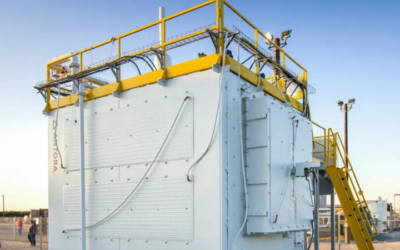
Approval is being sought for a 400MW advanced compressed air energy storage (A-CAES) project with eight hours of storage to be built in California by technology provider Hydrostor.
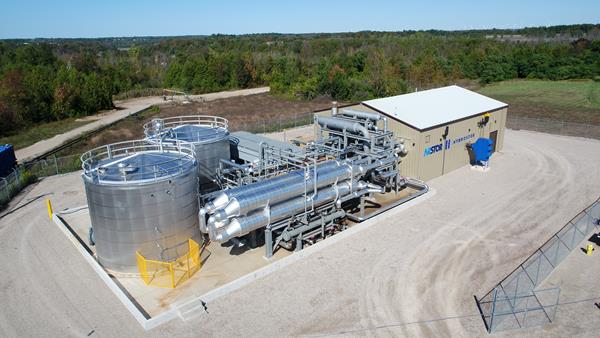
The Canada-headquartered company is the first in the world to have built an operating commercial A-CAES facility, a much smaller 1.75MW project in Goderich, Ontario, with about 10MWh capacity based on its own technologies.
Hydrostor has now filed an Application for Certification with the California Energy Commission for the 400MW / 3,200MWh Pecho Energy Storage Center it wants to build in the state’s San Luis Obispo County. Application for Certification (AFC) is the standard licensing process for power plants 50MW or greater that fall within the commission’s jurisdiction.
The long-duration project would be bigger than even the gigawatt-hour scale lithium-ion battery storage systems that are being built in California, at double the size of the 1,600MWh Moss Landing Energy Storage Facility that was completed earlier this year. California lithium-ion battery plants also have an upper limit of four hours’ duration for which they can be economical to build while capturing market opportunities.
Try Premium for just $1
- Full premium access for the first month at only $1
- Converts to an annual rate after 30 days unless cancelled
- Cancel anytime during the trial period
Premium Benefits
- Expert industry analysis and interviews
- Digital access to PV Tech Power journal
- Exclusive event discounts
Or get the full Premium subscription right away
Or continue reading this article for free
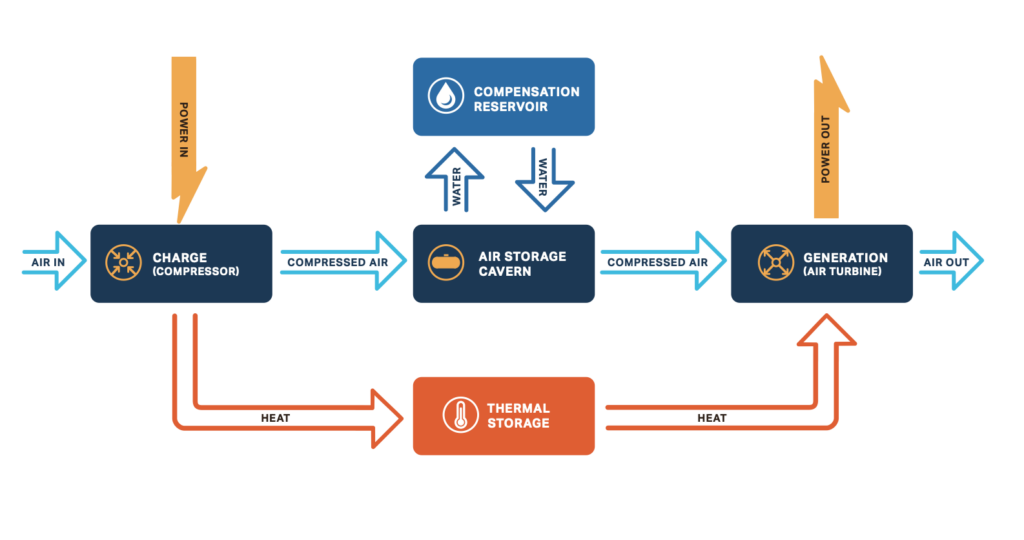
The A-CAES technology developed by Hydrostor uses electricity to compress air which is then stored in a large underground cavern. Heat produced by the compression process is simultaneously run off as thermal storage.
The compressed air is stored at constant pressure using water reservoirs which provide hydrostatic compression. When electricity is needed, the system is discharged by forcing air to the surface using hydrostatic pressure. The air is then combined with the stored heat and passes through turbines, generating electricity.
Hydrostor said the Pecho Energy Storage Center project would require about US$820 million of capital investment and could be part of the state’s strategy to ease the strain of retiring the 2,200MW Diablo Canyon nuclear power plant facility as planned by 2025.
The company said the A-CAES plant could be up and running by 2026. Filing the AFC triggers the California Environmental Quality Act review and permitting process, for which CEC is the lead agency. Local and federal authorities will also have their input into that process.
In addition to helping replace fossil fuels and nuclear in the local energy mix, Hydrostor said Pechos will also create 200 to 450 skilled labour jobs during construction and up to 40 full-time equivalent, well-paid employment positions once operational.
Hydrostor wants to interconnect the plant to the grid at an existing Pacific Gas & Electric (PG&E) substation and the company claimed it will be well-located to utilise the area’s new and existing renewable energy facilities and aid reliability of the electric system in preventing blackouts.
The project would be in line with a decision made by the regulator California Public Utilities Commission (CPUC) to procure 1,000MW of long-duration energy storage to come online between 2026 and 2028, Hydrostor argued. In fact, the company said back in April that it believed California could play host to 15GWh of A-CAES.
A report published yesterday by the newly-formed Long Duration Energy Storage Council argued that between 85TWh and 140TWh of long-duration energy storage deployment worldwide by 2040 could keep the planet on track to limit global warming to 1.5°C.
Hydrostor has several other large-scale projects in development in North America and was previously discussing building out in Australia too. In April, Energy-Storage.news reported that the company is receiving a few million dollars in funding from the Canadian federal government to deploy the A-CAES technology in its home country.