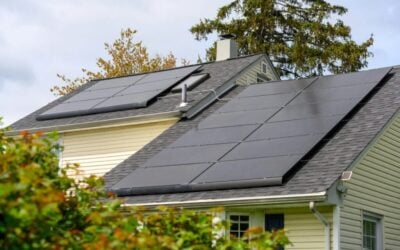
In the year that has passed since Germany began offering subsidies for lithium-ion battery systems for residential use, around 4,000 solar-plus-batteries have been installed, the country’s Federal Solar Industry Association (BSW Solar) has announced.
BSW Solar also said that it expects significantly higher demand this year. The association’s managing director Jorg Mayer said that German people were in increasing numbers looking to become independent of fossil fuels and to bring investments in their homes in line with Germany’s wider energy transition (‘Energiewende’).
Germany’s national development bank KfW reported the news of BSW Solar’s findings to the German media. Other statistics included the fact that close to €66 million (US$90.82 million) was given out in low interest loans by the development bank over the year, while around €10 million (US$13.76 million) was awarded in grants.
Mayer claimed that PV system owners could double the value of their system by storing in some of the energy produced by the panels and urged more people to consider the benefits of adding storage. He pointed out that it was also possible to gain subsidies for retrofits, provided the PV system was installed after December 2012. According to Mayer, more than double the amount of battery storage could be paid for each year in grants by redistributing the money saved by utilities in peak load shaving, for example.
Try Premium for just $1
- Full premium access for the first month at only $1
- Converts to an annual rate after 30 days unless cancelled
- Cancel anytime during the trial period
Premium Benefits
- Expert industry analysis and interviews
- Digital access to PV Tech Power journal
- Exclusive event discounts
Or get the full Premium subscription right away
Or continue reading this article for free
The figure in the low thousands for installed systems is in line with predictions and research made by analysts including EU PD research. Speaking to PV Tech’s sister publication Solar Business Focus in February this year, EU PD head Markus Hoehner said that the subsidy programme had been a success in terms of raising public awareness of storage systems, even while actual uptake under the programme was still limited. Research of the energy storage market in Europe conducted by EU PD also found that two thirds of German installers were also offering storage in combination with solar system installations.
BSW Solar also said that it expects significantly higher demand for residential battery storage systems this year. Image: ASD Sonnenspeicher